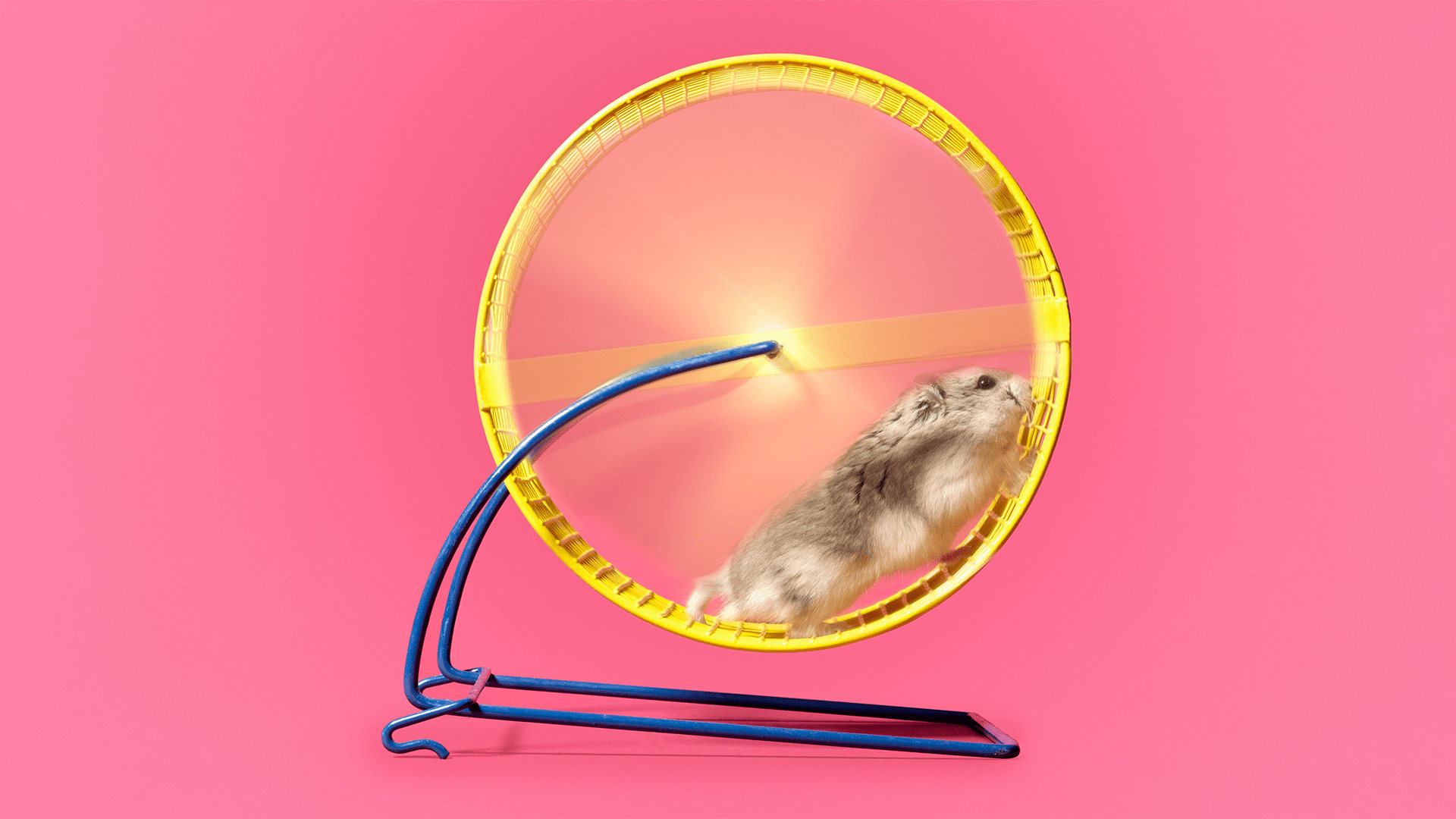
Get the Popular Science daily newsletter💡 Breakthroughs, discoveries, and DIY tips sent six days a week. By signing up, you confirm you are 16+, will receive newsletters and promotional content and agree to our Terms of Use and acknowledge the data practices in our Privacy Policy . You may unsubscribe at any time. Everyone who has ever owned a hamster knows the sound: the small, relentless squeak of the exercise wheel, usually starting around two in the morning. As you watch your cute furball running toward no destination whatsoever, you might wonder: What’s going on here? Is little Hammy acting out of restlessness or boredom? For decades, scientists assumed it was exactly that: a neurosis, an artifact of captivity, the hamster equivalent of doing push-ups in prison. But in 2014, researcher Johanna Meijer conducted a study that suggested a less depressing scenario.…