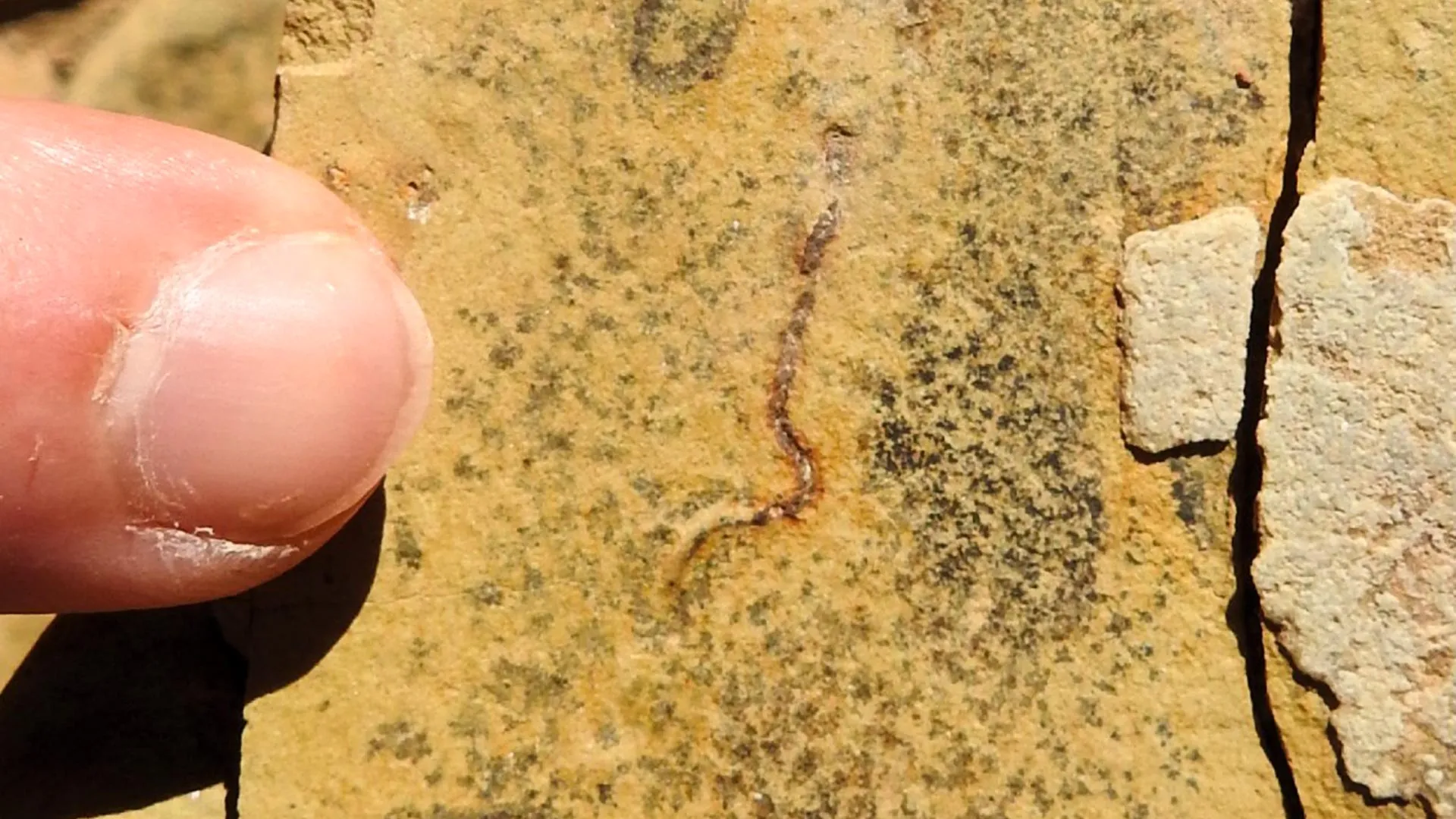
Scientists studying ancient microfossils from Brazil have discovered that structures once believed to be traces left behind by tiny animals were actually formed by communities of microscopic bacteria and algae. The findings challenge previous ideas about when small animals first appeared on Earth and suggest oxygen levels in ancient oceans may still have been too low to support certain forms of animal life around 540 million years ago. The research focused on fossils found in the Brazilian state of Mato Grosso do Sul and was published in the journal Gondwana Research . Earlier studies had interpreted the marks as evidence of wormlike creatures or other tiny marine animals moving through seafloor sediment during the Ediacaran period, which came just before the Cambrian explosion. "Using microtomography and spectroscopy techniques, we observed that the microfossils have cellular structures -- sometimes with preserved organic material -- consistent with bacteria or algae that existed during that period.…