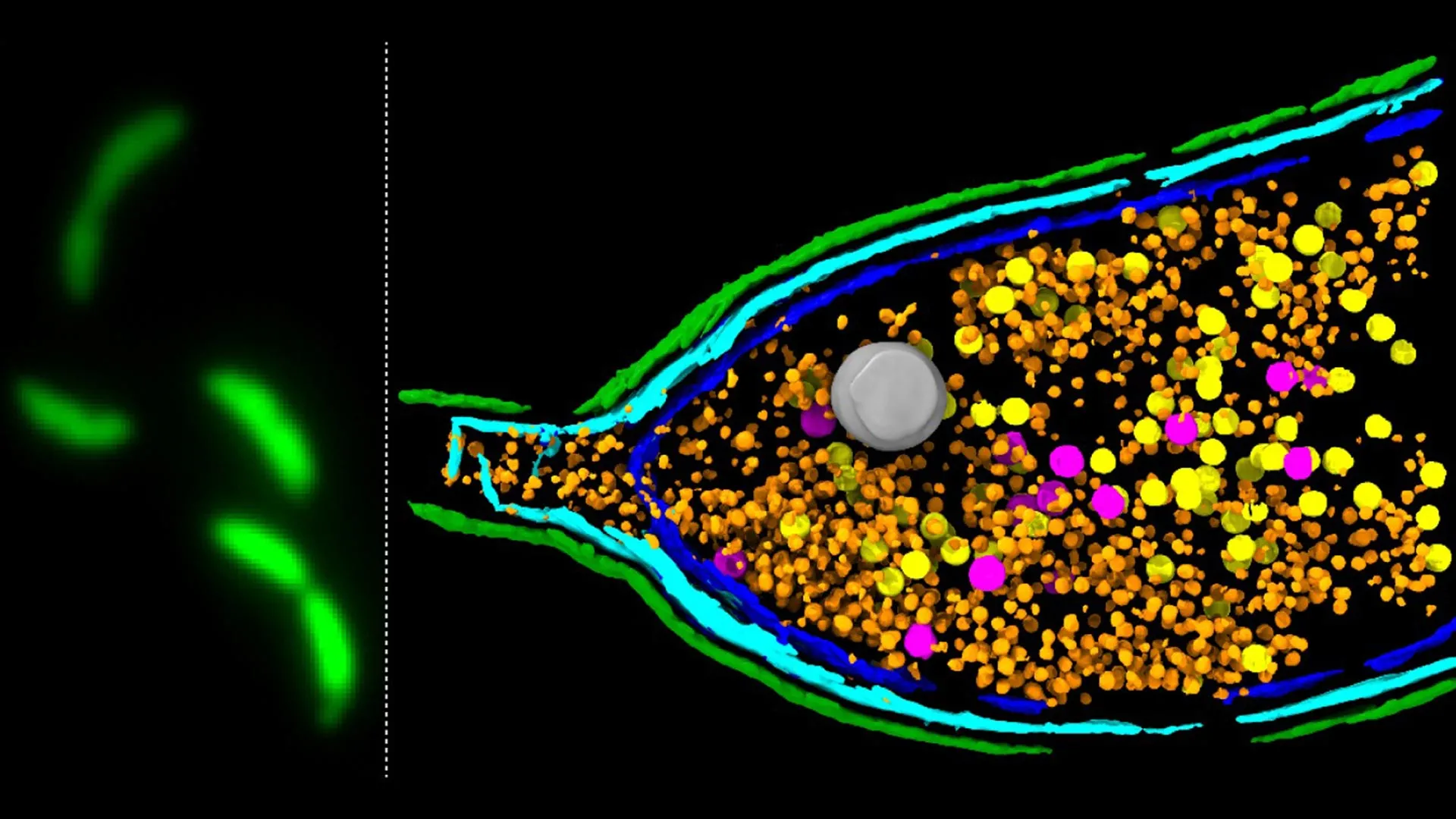
Scientists have uncovered new details about how bacteria share genes, including those that drive antimicrobial resistance (AMR), a growing global health threat. The findings come from researchers at the John Innes Centre, who studied unusual particles known as gene transfer agents (GTAs). GTAs resemble bacteriophages (viruses that infect bacteria), but they are no longer harmful invaders. Instead, they are derived from ancient viruses that bacteria have adapted and brought under their own control. Virus-Like Particles Deliver DNA Between Cells These particles act like tiny delivery vehicles. They pick up fragments of DNA from one bacterial cell and carry them to others nearby. This process, called horizontal gene transfer, allows bacteria to quickly share useful traits, including genes that help them survive antibiotic treatments. A key step in this process is host cell lysis, the breaking open of a bacterial cell so that GTA particles can be released.…