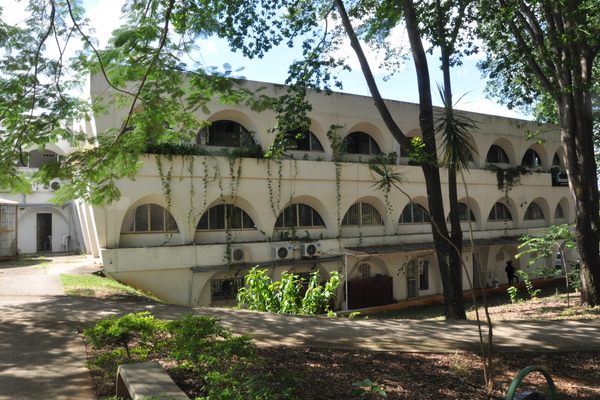
About In the south of Berlin, beyond the tourist orbit of Mitte and Kreuzberg, a quiet residential district curves around a long pond. From above, its shape reveals itself: a monumental horseshoe, enclosing green space like an architectural embrace. This is the Hufeisensiedlung/“Horseshoe Estate” - one of the most ambitious social housing experiments of the 20th century. Built between 1925 and 1933 during the final years of the Weimar Republic, the estate was designed by architect Bruno Taut alongside city planner Martin Wagner. At the time, Berlin faced a severe housing crisis: overcrowded tenements, poor sanitation, and rising inequality. The Hufeisensiedlung was part of a broader effort to rethink urban living from the ground up—not just to house people, but to improve how they lived. The defining feature of the estate is its sweeping horseshoe-shaped building, a continuous arc of apartments wrapped around a central pond. It is both monumental and human-scaled.…