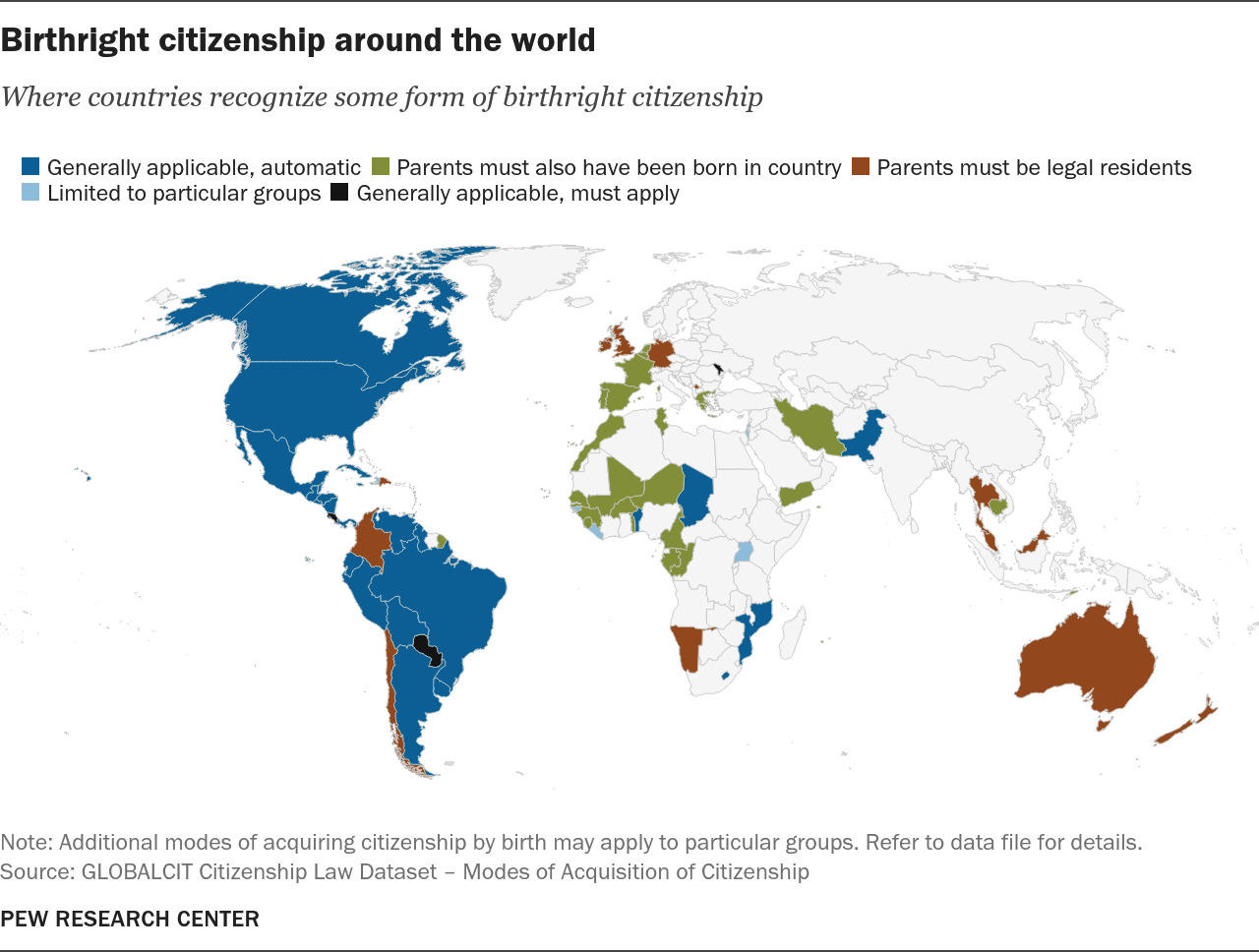
The 14th Amendment to the U.S. Constitution says that “[a]ll persons born or naturalized in the United States, and subject to the jurisdiction thereof, are citizens of the United States and of the State wherein they reside.” That broad language, granting U.S. citizenship automatically to virtually anyone born in the country, is now under challenge. The Supreme Court is considering whether President Donald Trump can, by executive order , limit “birthright citizenship” to children born in the U.S. to citizens or legal permanent residents. Since a landmark 1898 Supreme Court decision , courts have generally held that the 14th Amendment covers everyone except children of foreign diplomats, members of occupying foreign forces or members of Native American tribes. Congress extended birthright citizenship to Native Americans by statute in 1924. About this research This Pew Research Center analysis looks at birthright citizenship laws around the world. It comes as the U.S.…