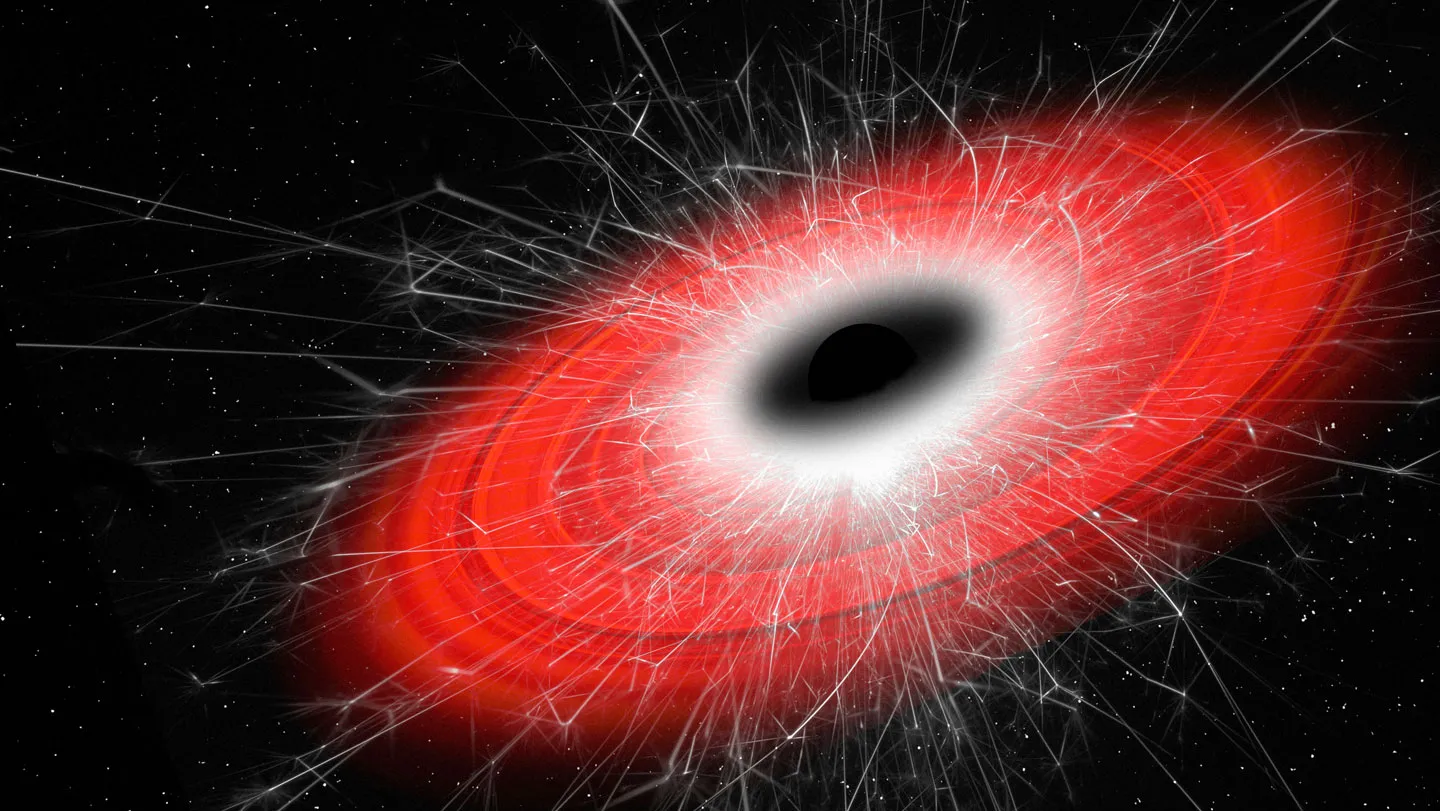
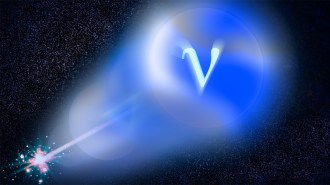
A link between particle physics and gravity applies to Hawking radiation Hawking radiation is the faint emission of particles from a black hole (illustrated). It’s too weak to be seen directly, so physicists are coming up with new ways of studying it theoretically. " data-large-file="https://www.sciencenews.org/wp-content/uploads/sites/2/2026/05/050526_EC_Hawkingradiation_main.jpg?w=800"> Hawking radiation is the faint emission of particles from a black hole (illustrated). It’s too weak to be seen directly, so physicists are coming up with new ways of studying it theoretically. VICTOR DE SCHWANBERG/SCIENCE PHOTO LIBRARY Physicists have found a new way to investigate a long-standing black hole enigma using the mathematics of particle physics. Black holes aren’t entirely black. They emit a faint mist of particles called Hawking radiation , a concept central to major puzzles that swirl around black holes. But Hawking radiation is so faint that it’s not possible to observe directly.…