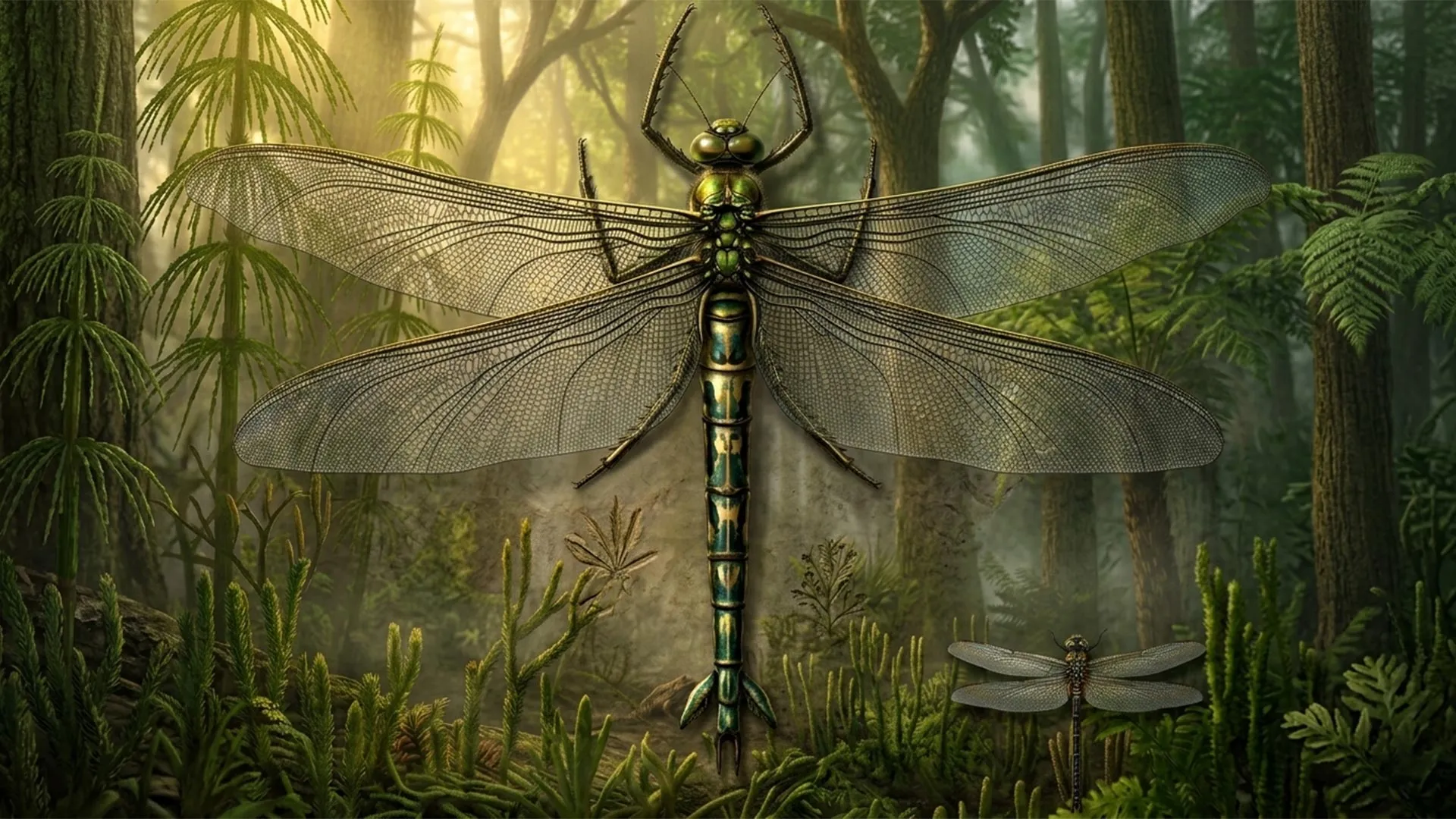
Three hundred million years ago, Earth looked nothing like it does today. The continents were joined together in a massive supercontinent called Pangaea. Near the equator, vast coal-swamp forests stretched across the landscape. Oxygen levels in the atmosphere were much higher than today, and wildfires were frequent. Life was abundant in every environment. Oceans were filled with fish, while land was home to amphibians, early reptiles, crawling arthropods, and even giant cockroaches. Overhead, the skies belonged to insects, some of which reached astonishing sizes. Dragonflies With Massive Wingspans Among these prehistoric insects were mayfly-like species with wingspans of 17 inch (45-cm) and dragonfly-like creatures that reached 27 inch (70-cm). These giant insects, often called "griffinflies," were first identified from fossil impressions found in fine-grained sedimentary rock in Kansas nearly a century ago.…