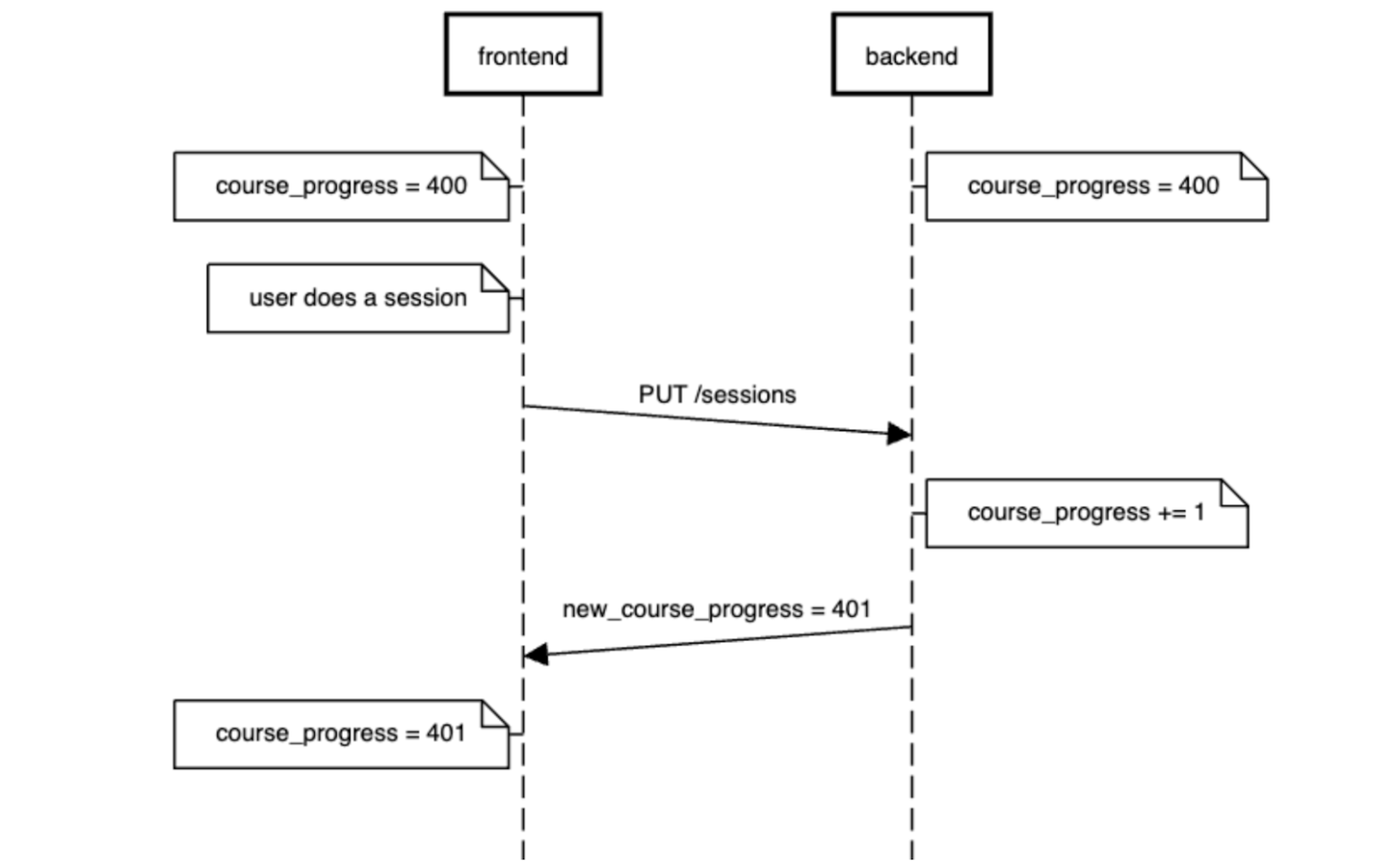
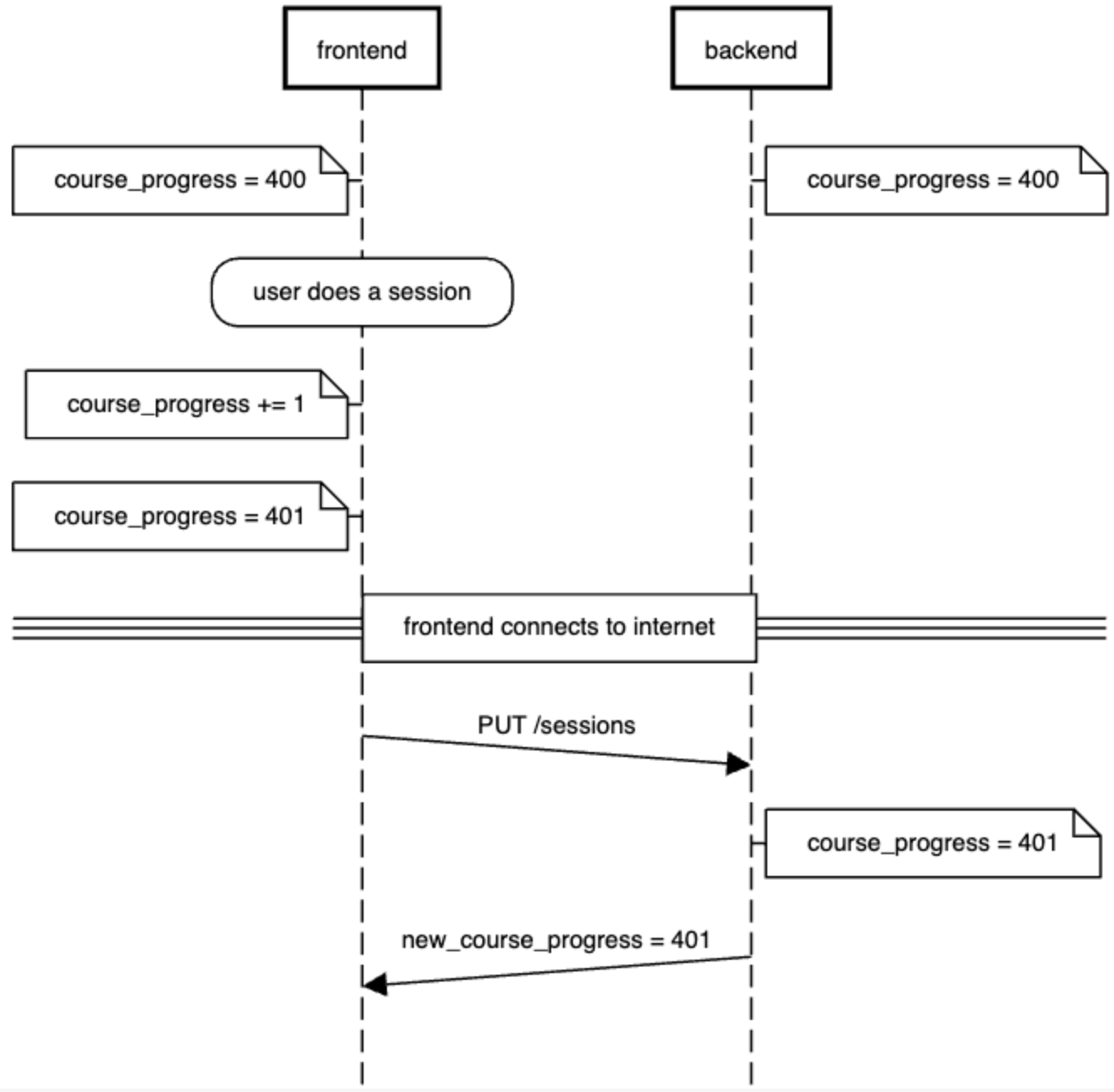
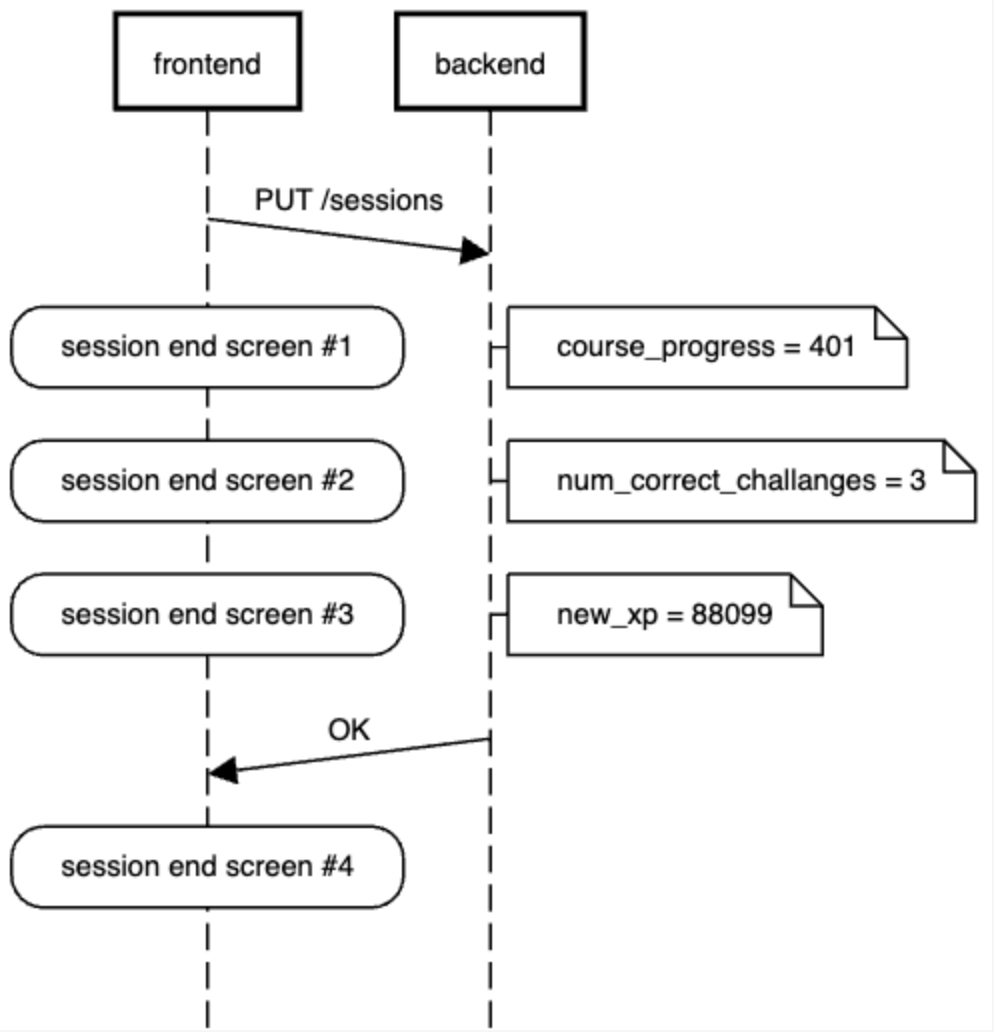
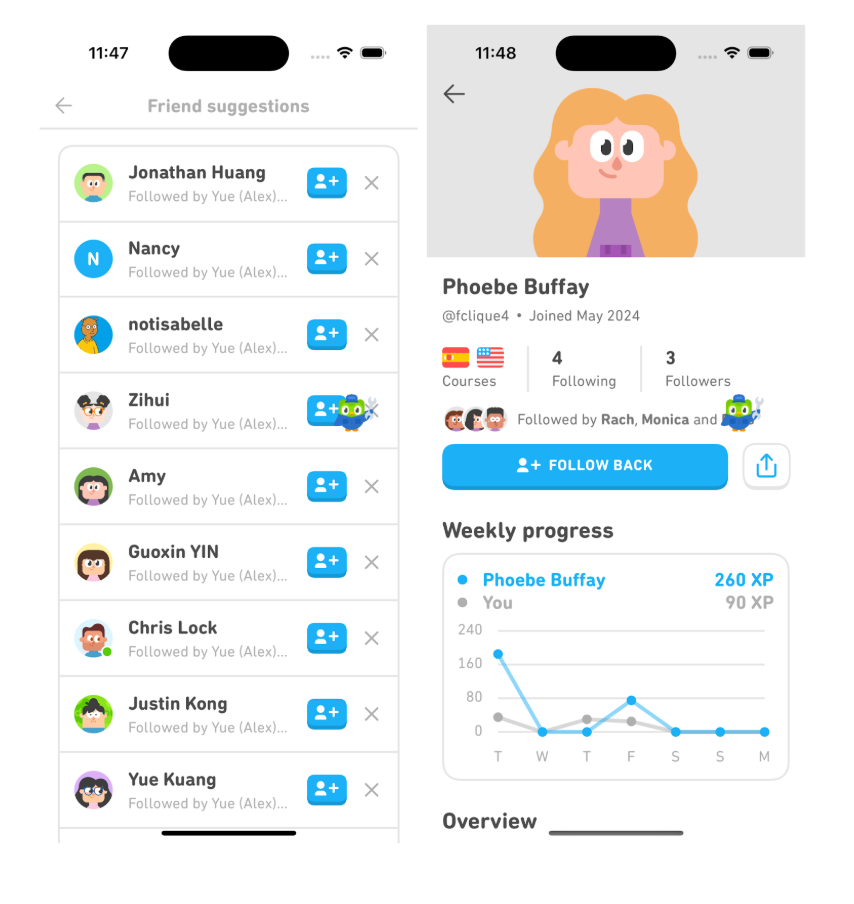
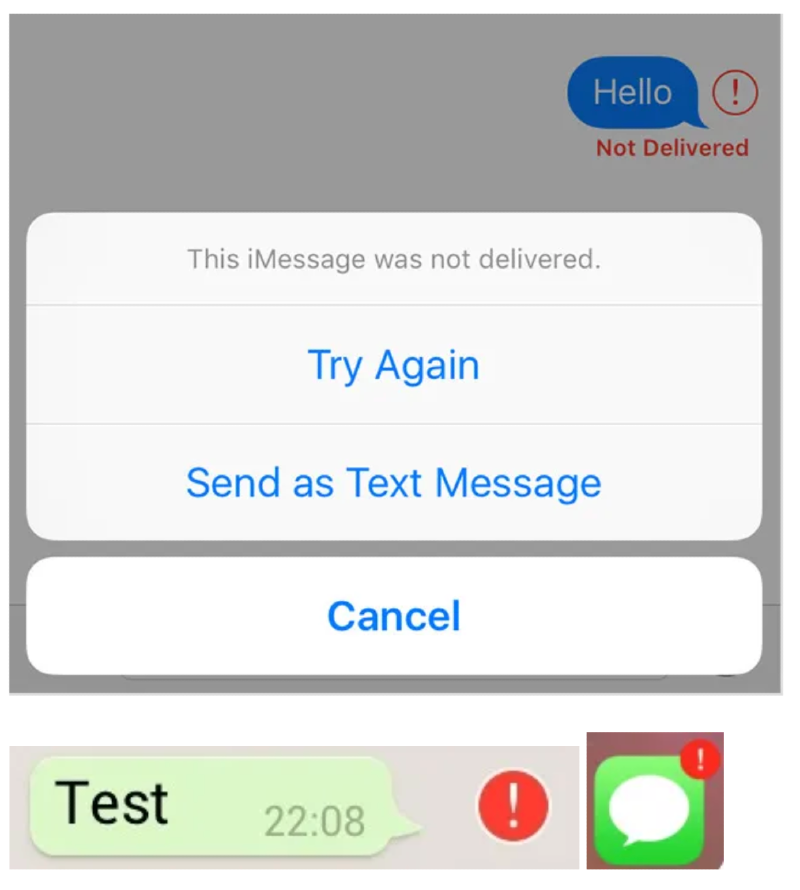
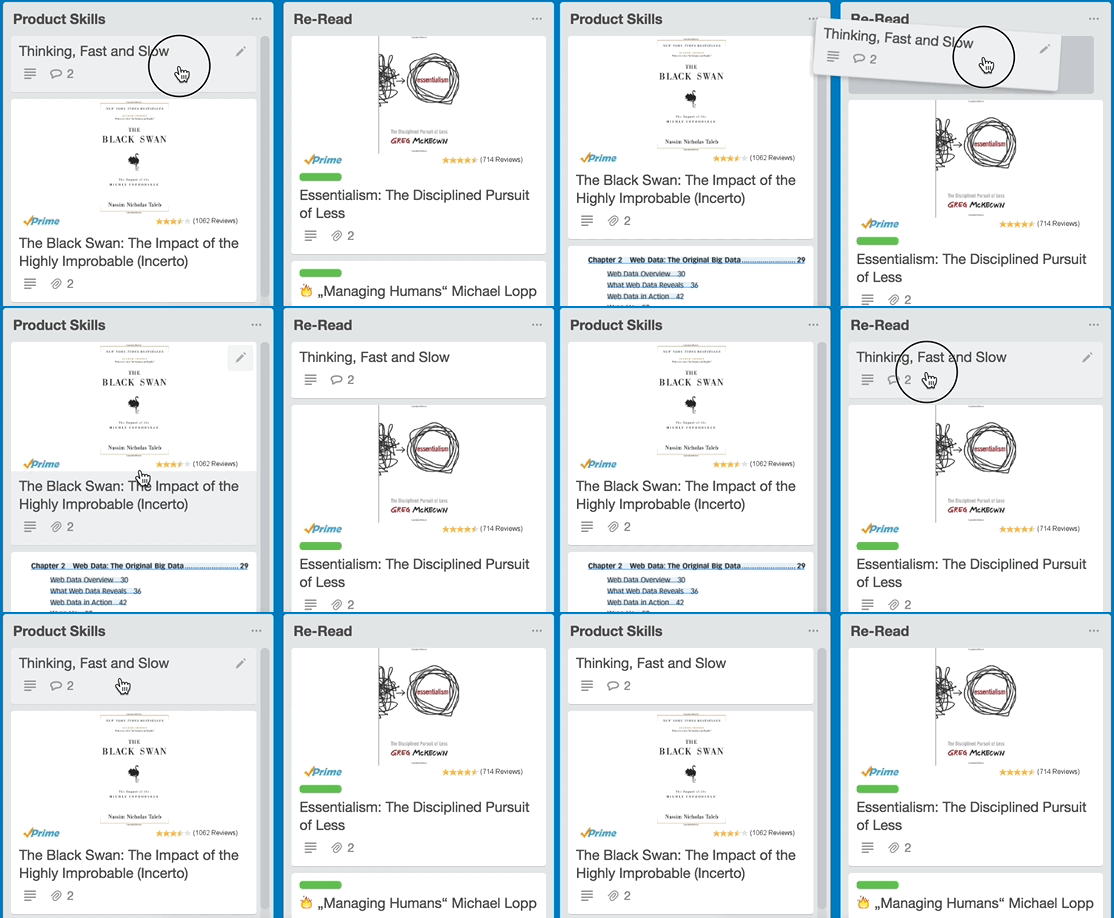
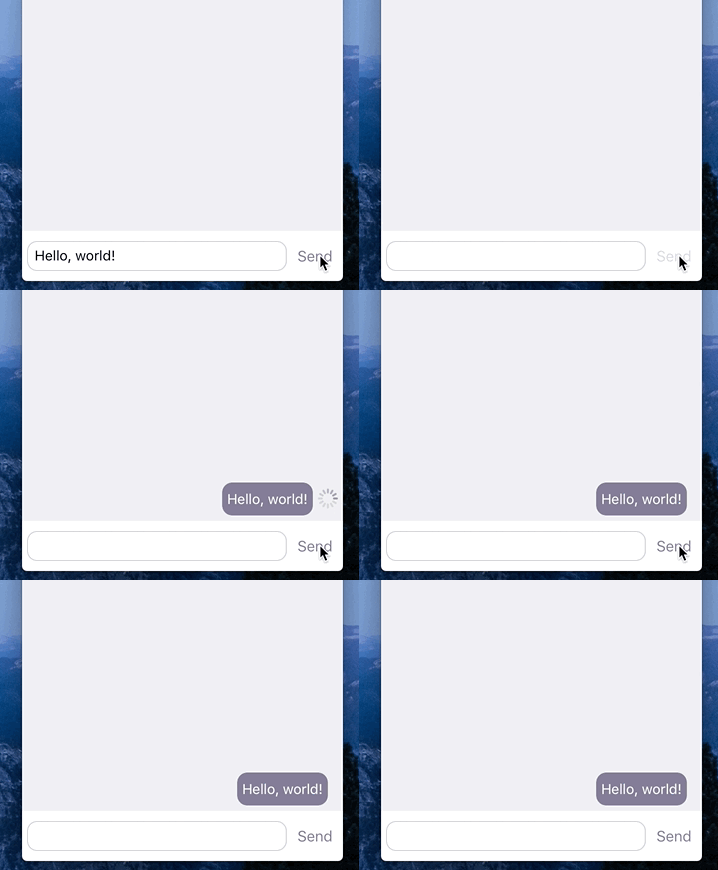
At Duolingo, we constantly explore ways to make our app feel faster, more intuitive, and resilient to poor connectivity. One strategy we rely on is frontend prediction —a technique where the app updates the UI based on a prediction of what the backend response will be. When used thoughtfully, it provides significant benefits in reducing perceived latency and enabling offline functionality. However, it is not without its costs. In this post, we’ll explore what frontend prediction looks like in practice, walk through real examples from the app, and share the tradeoffs we’ve encountered along the way. What is frontend prediction? Frontend prediction—sometimes referred to as optimistic updates —is when the app immediately updates state and UI based on an anticipated backend result. This approach is used in many places throughout Duolingo, especially where we need offline support or want to minimize user-perceived delays.…