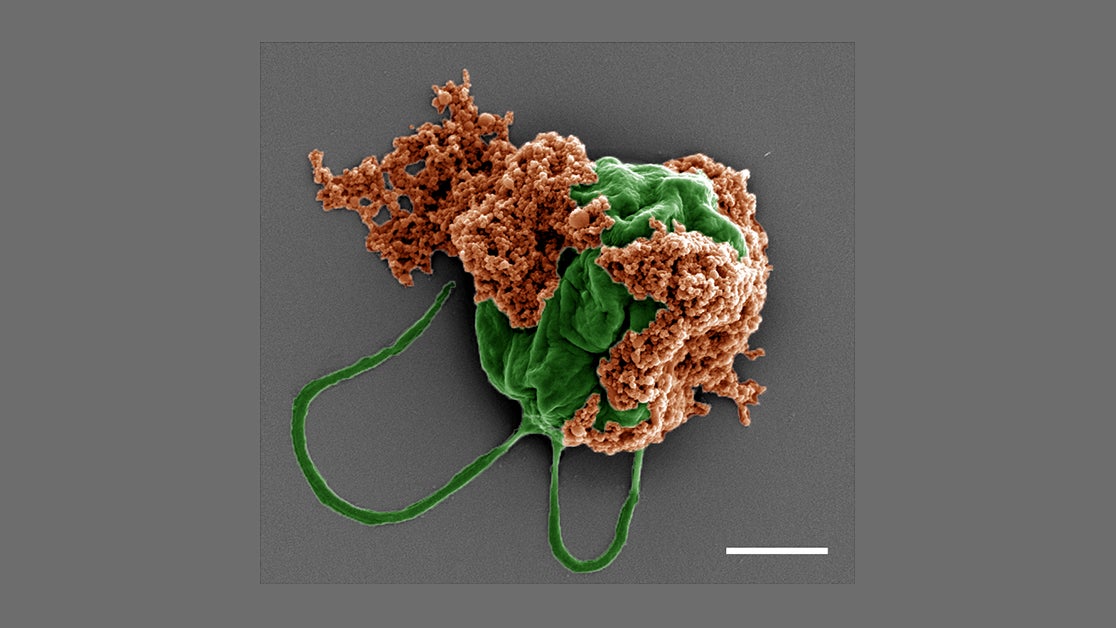
For most of us, a locust swarm sounds like an utter nightmare. For roboticists, it’s inspiration . Nature abounds with creatures that cooperate with a “hive mind.” From bees gathering pollen to schools of sardines grouping to avoid predators, individuals seamlessly move together in ever-changing configurations. Roboticists inspired by these dynamics have designed microrobots —often no more than the width of a human hair—to mimic their behavior. These tiny machines show promise in medicine and environmental cleanup. They easily sail through blood vessels to remove blood clots , deliver chemotherapy to tumors , and bring medicines to the eye and gut . In the wild, they remove plastics and heavy metals from water. Researchers usually steer microbots with sound, magnets , or light. But few systems are able to assemble into swarms and disassemble on command. A University of San Diego team has now engineered a part-biological microbot swarm controlled by shifting colors of light.…