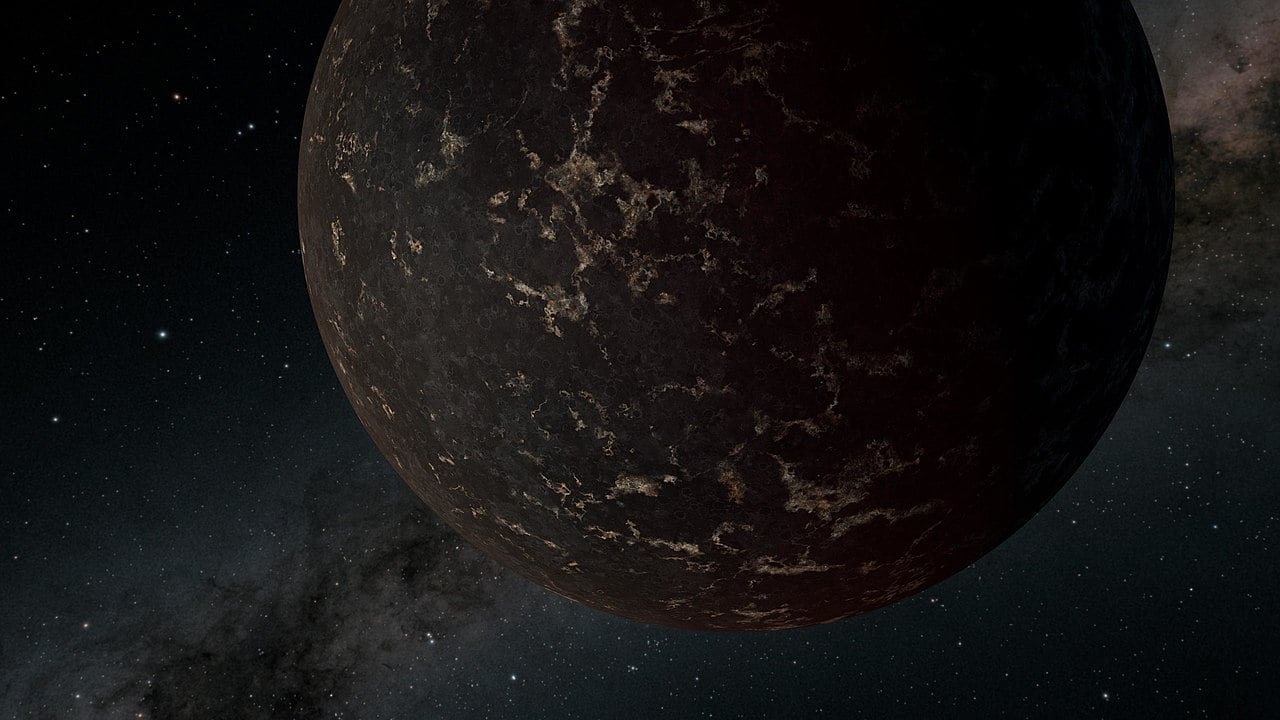
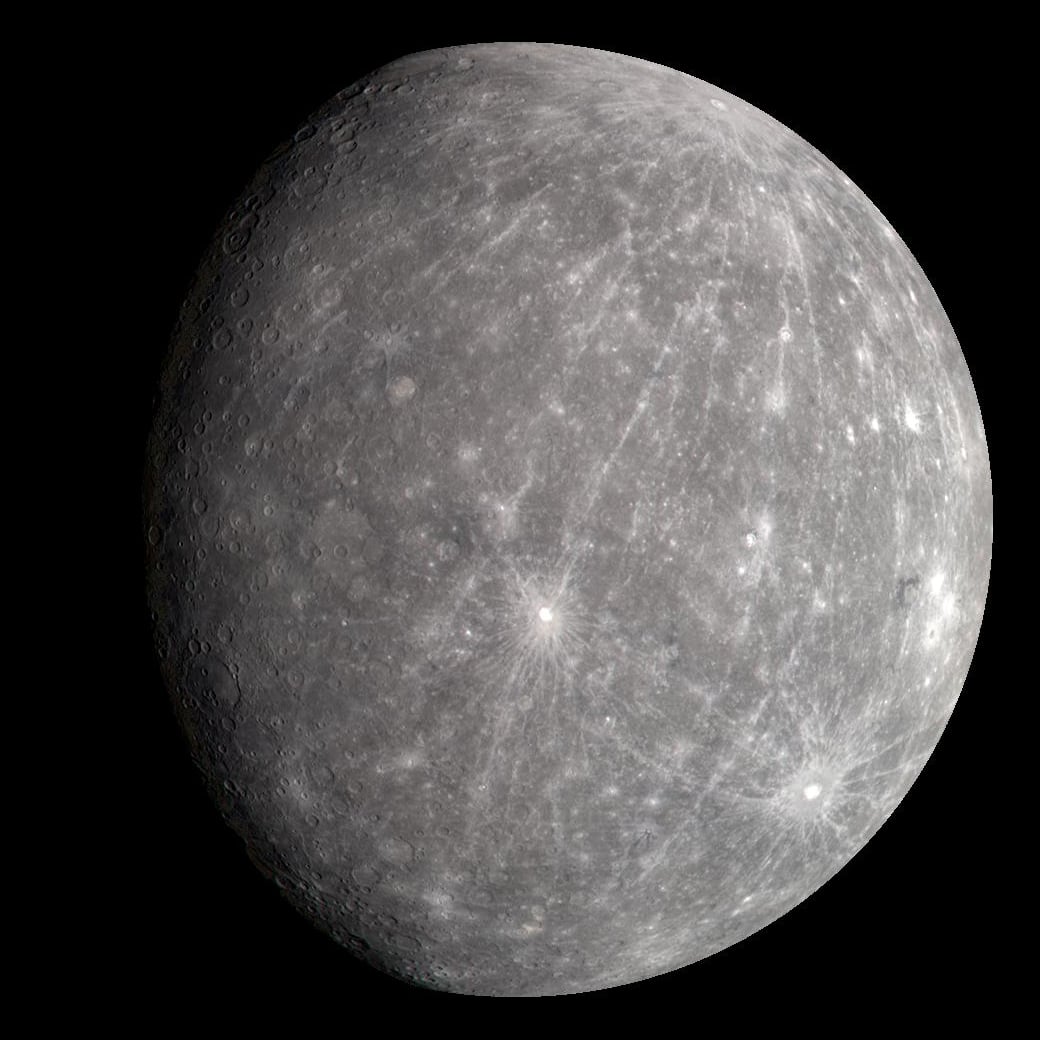
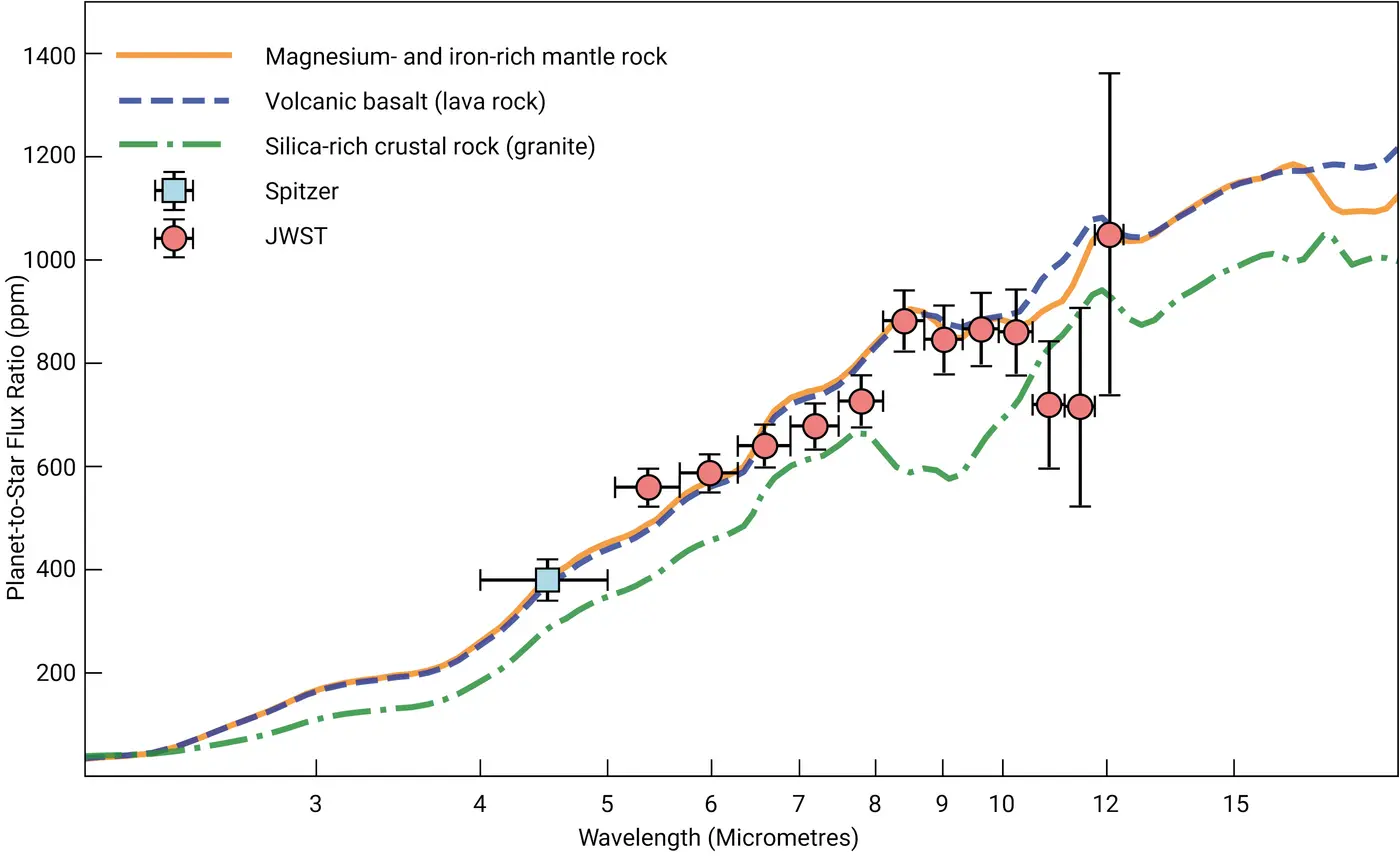
There's a planet out there called LHS 3844 b, orbiting a star about 48 light-years away. The Transiting Exoplanet Survey Satellite (TESS) found it in 2018 when the planet transited across the face of its star. The James Webb Space Telescope zxeroed in on the planet and found it to be a barren, rocky place with no atmosphere. The planet, informally named Kua'kua, after a Central American Bribri word for "butterfly", is about 30 percent bigger than Earth (making it a super-Earth). It orbits its red dwarf star host (named Batsu), once every 11 hours and is in a tidally locked orbit. That means it shows the same face to its star all the time. That tight proximity means Kua'kua's dayside roasts under a constant 1000 Kelvin temperature. As you can imagine, that's not an environment like the Earth we know today. In fact, it may be more like Mercury, only bigger. The exoplanet LHS 3844 b could have a surface appearance very similar to Mercury's (shown here).…