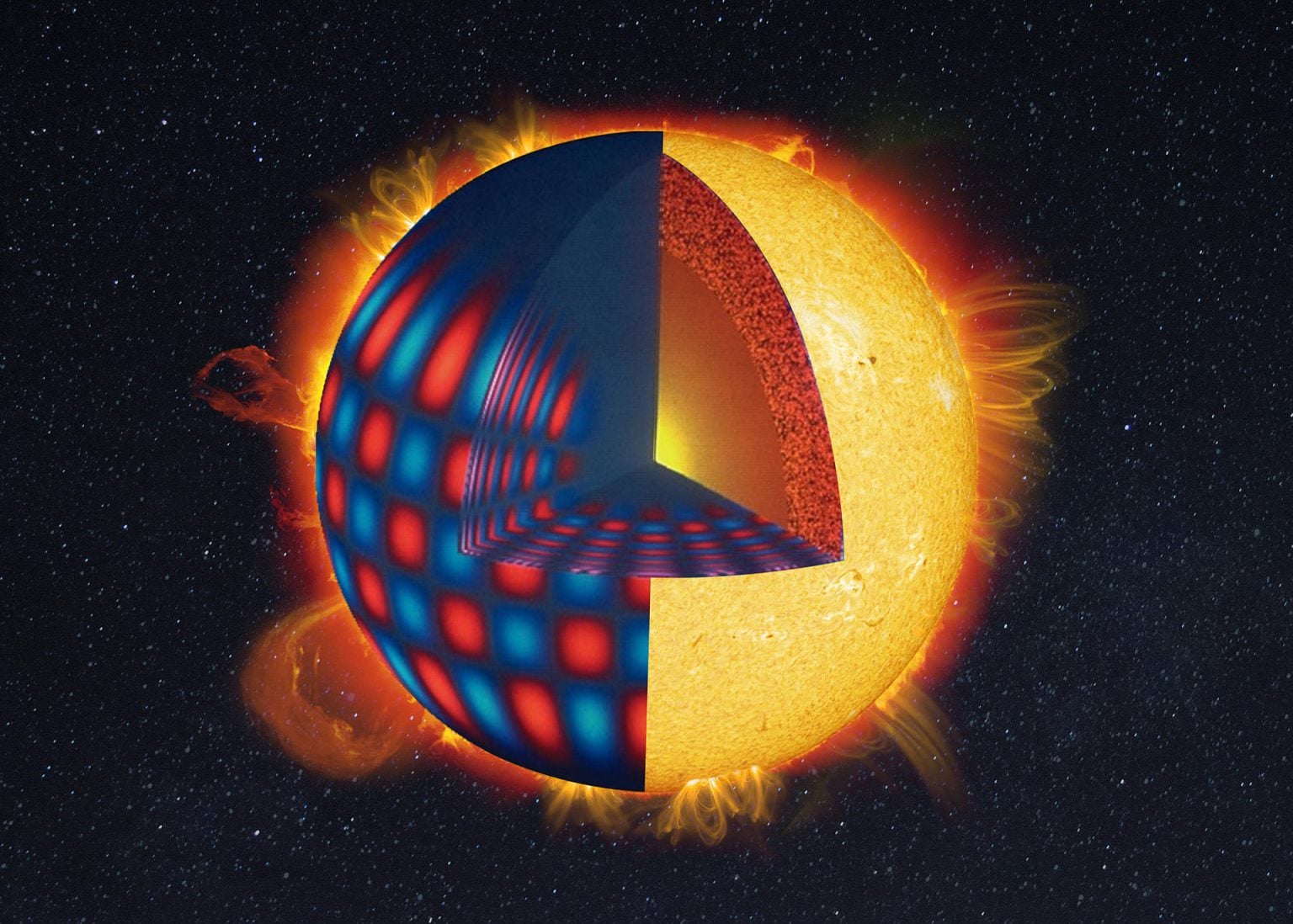
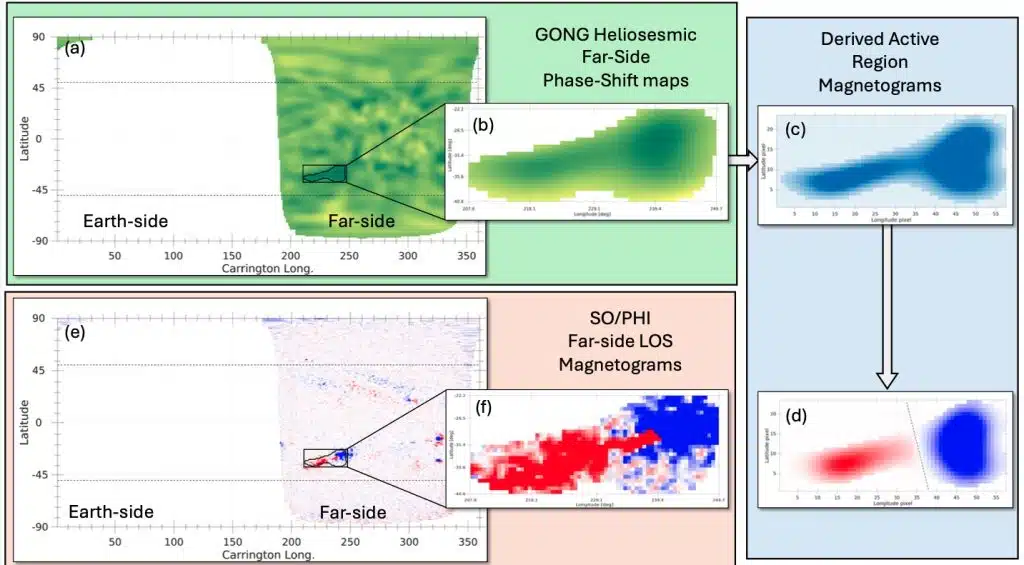
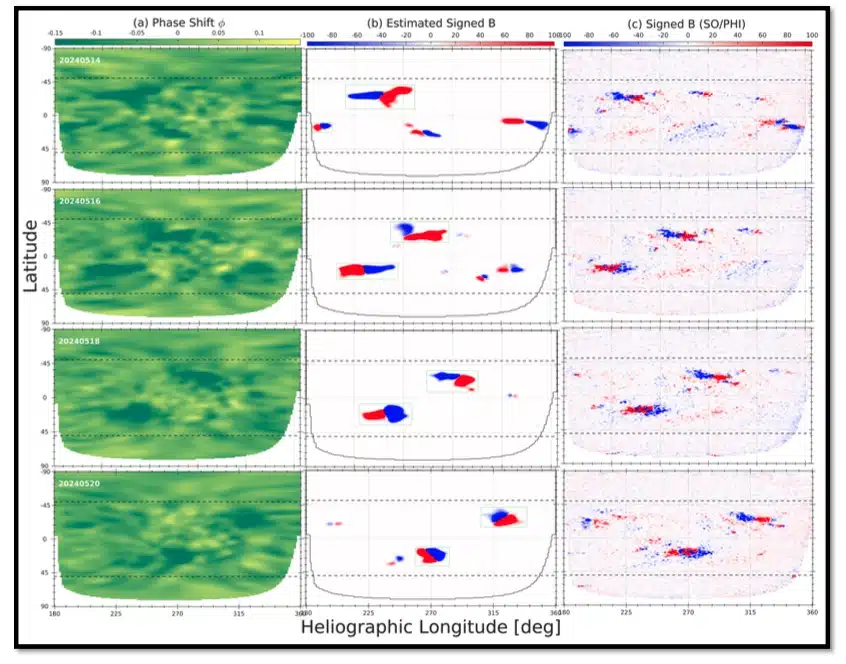
For years, when something happened on the far side of the Sun, it was invisible to us on Earth. Sunspots could form there, flares could lash out and the corona could send masses of material out to space. However, we didn't know about any of this until those active regions rotated around to our view. In the late 1900s, scientists came up with a technique called helioseismology to analyze sound waves influenced by such activity as they echoed through the Sun. According to solar physicist Amr Hamada of the National Solar Observatory (NSO), it's a valuable technique. “Helioseismology has allowed us to detect where active regions exist on the far side of the Sun,” said Hamada. “However, until recently we could not determine one of their most important properties: the magnetic polarity.” So, Hamada and an international team of researchers came up with a way to analyze magnetic polarities using NOAA's Global Oscillation Network helioseismic maps.…