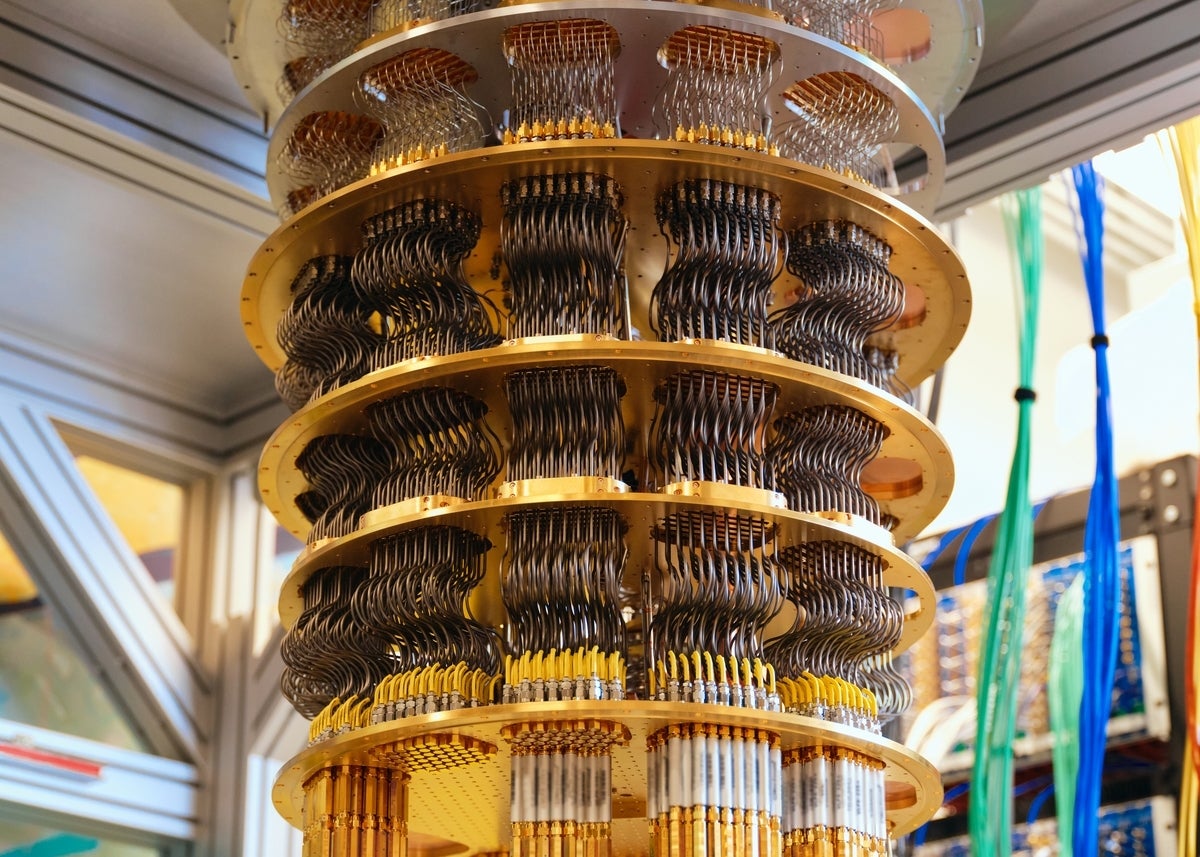
As the race to harness quantum computing accelerates, governments are throwing their hats in the ring. The US Department of Energy is now aiming to build a fully functional, fault-tolerant quantum computer within the next three years. Despite plenty of breathless headlines about the coming quantum revolution, today’s machines remain a long way from being practically useful. It’s widely expected that we will need much larger, more reliable quantum computers before they can tackle real-world problems. That’s largely due to the fact that qubits are incredibly error-prone, which means future machines will need to run algorithms to detect and correct those errors faster than they occur. It’s estimated that the overhead for these algorithms could be as high as 1,000 physical qubits to create a single, error-corrected “logical” qubit that can actually take part in calculations.…