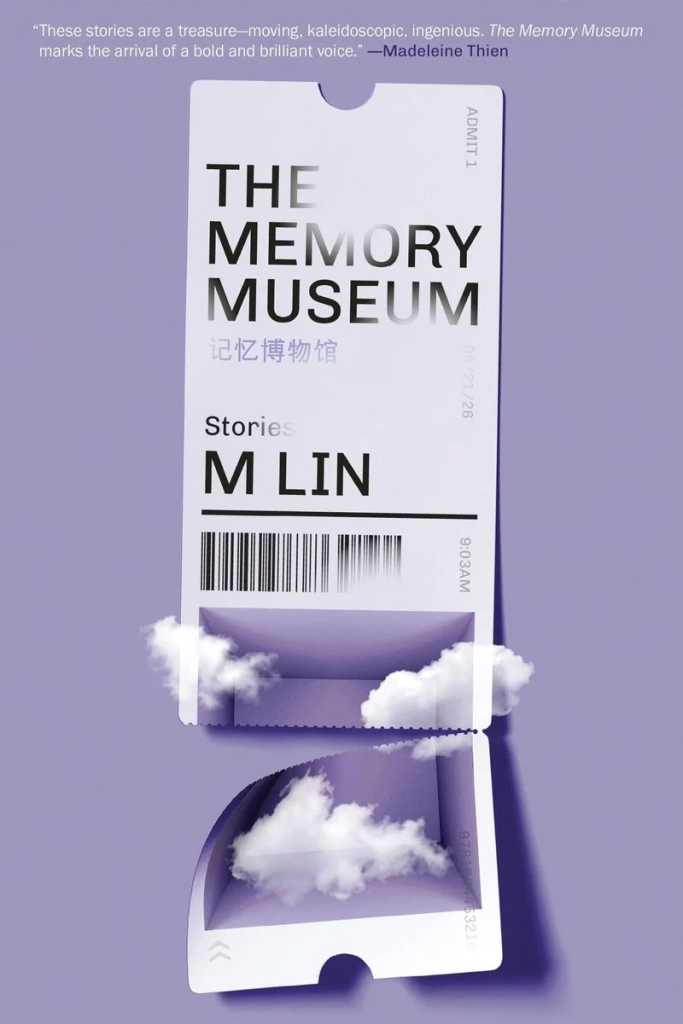
I first encountered M Lin’s writing during our second year of graduate school in the MFA program at Brooklyn College. Her stories were, on my first reading, luminous and unpretentious, chronicling the often conflicting sexual, emotional, and political desires of women from China’s millennial One-Child Generation. Her debut collection, The Memory Museum , is a nostalgic but unflinching expansion of this vision, and a compelling examination of how China’s stratospheric growth has fractured the relationship between its theoretically collective past, uncertain present, and globalized future. What I was most struck by, when reading these stories, is the way they engage with this fluidity of cultural identity through the shifting and unpredictable lens of female desire. In “Shangri-La ,” for example, a young immigrant from a provincial Chinese city embarks on a reckless and passionate affair with her working-class Chinese masseur.…