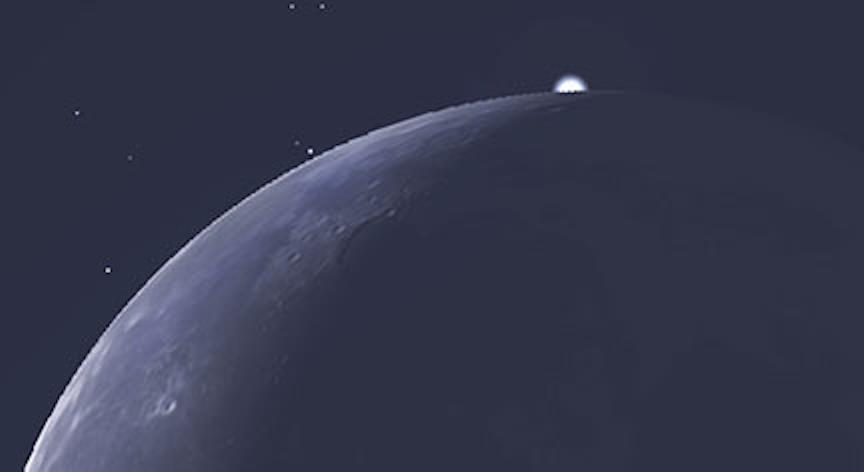
In science, no matter how confident we are in our theories, there’s no substitute for interrogating the natural world by asking it questions about itself directly: through observation and experiment. Sometimes, that requires setting up conditions in a laboratory to create certain events whose outcomes we can measure to whatever precision we desire. At other times, however, it requires looking out into space — at the natural laboratory of the Universe — to observe how nature behaves. No matter what our expectations were beforehand, there’s no substitute for actual data in figuring out how things actually are. Although Pluto was the first object ever discovered out beyond Neptune, spotted way back in 1930 for the very first time , its atmosphere was only directly discovered and measured in 1988 : when an observatory in Earth’s southern hemisphere observed it occulting, or passing in front of, a background star.…