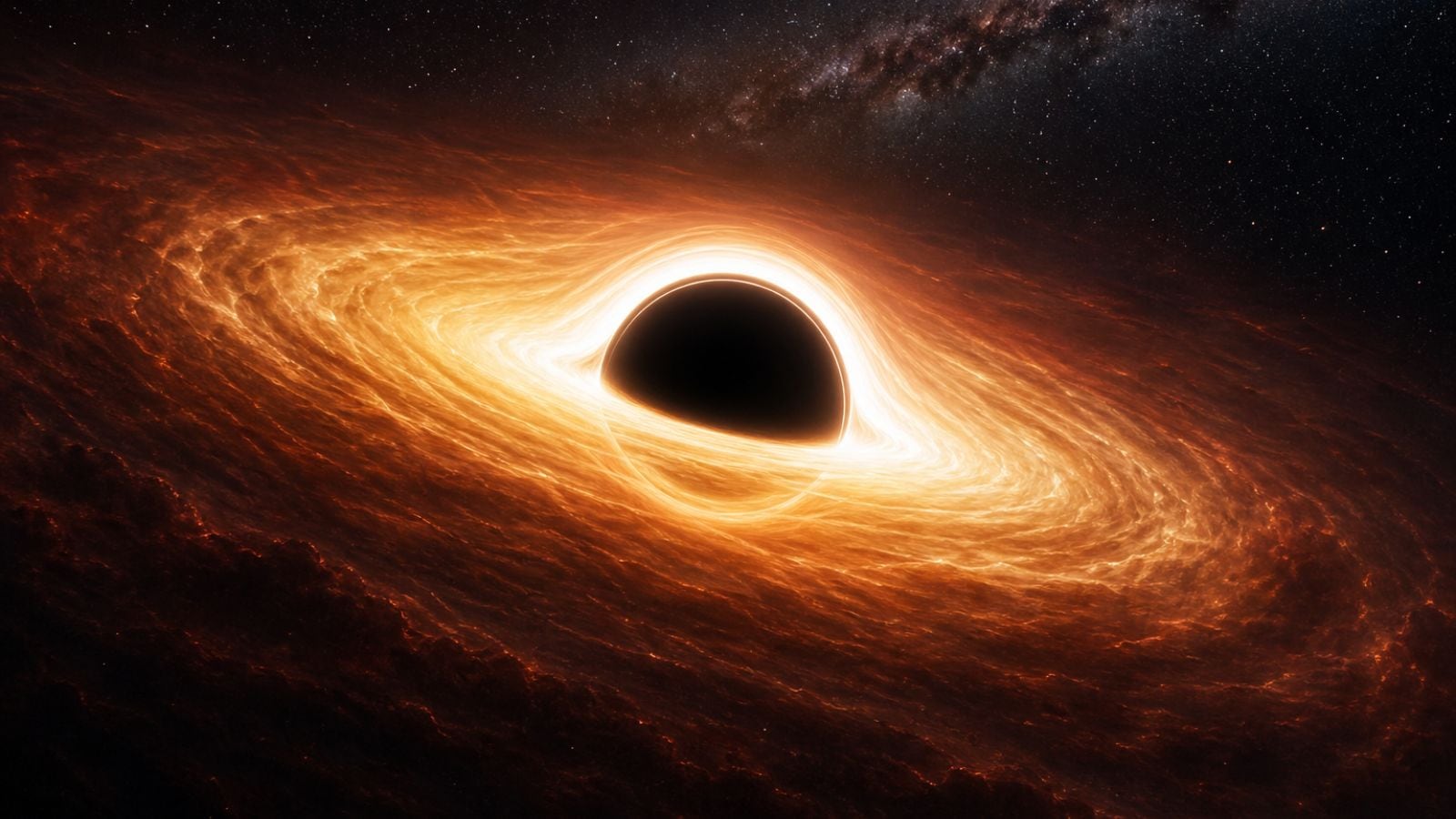
New research suggests decaying dark matter may be the "secret ingredient" behind the early existence of supermassive black holes discovered by the James Webb Space Telescope. (AI-generated image for representation:OpenAI) The James Webb Space Telescope (JWST) has revealed a growing number of supermassive black holes in the early universe, appearing much earlier than many existing formation models had predicted. These supermassive black holes – objects with masses of millions to billions of suns – have been observed as early as around 500 million years after the Big Bang. A research team from the University of California, Riverside, led by Yash Aggarwal, has proposed that decaying dark matter could have played a role in their rapid formation. However, a key challenge remains: scientists are still working to fully understand how such massive black holes formed so quickly, as their early appearance poses a significant challenge to current models of black hole formation. How are black holes made?…