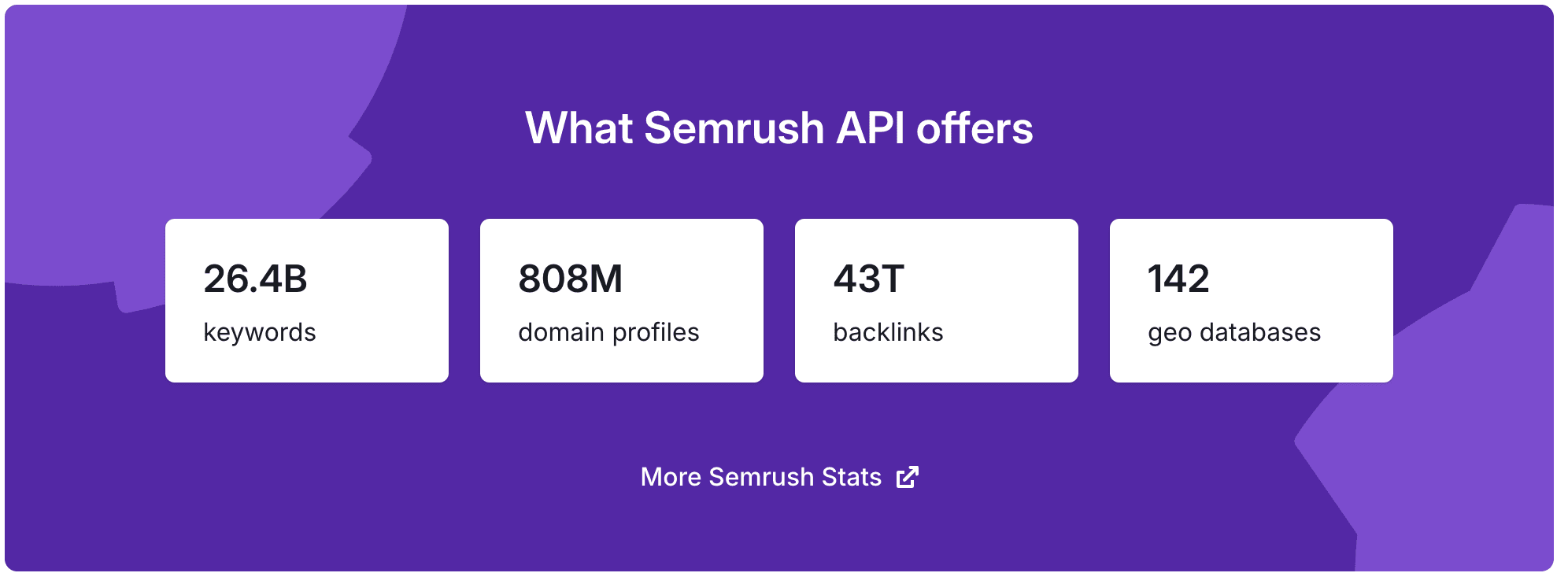
Most marketers treat SEO data like a weather report: you check it when you remember, note the conditions, and hope things look better next time you log in. But static competitive intelligence is inherently limited in value. The landscape is shifting all the time. Your competitor just launched a new content hub. A backlink opportunity expired. A keyword you were targeting just got 10x harder to rank for as your rivals all published content in the past week. The Semrush API solves this value issue. Instead of manually pulling reports, you can programmatically access Semrush's 26+ billion keywords, 808 million domain profiles, and 43 trillion backlinks, and route that intelligence directly into your actual workflows. In this guide, we'll talk through five ways businesses can use the Semrush API to gain competitive advantages that manual research and reporting simply can't deliver. But first, a quick explainer of what the Semrush API actually is, and the different types you can use. What Is the Semrush API?…