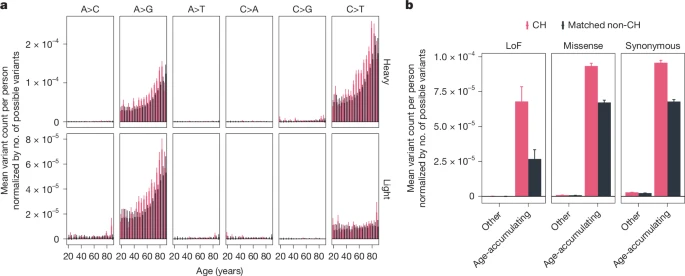
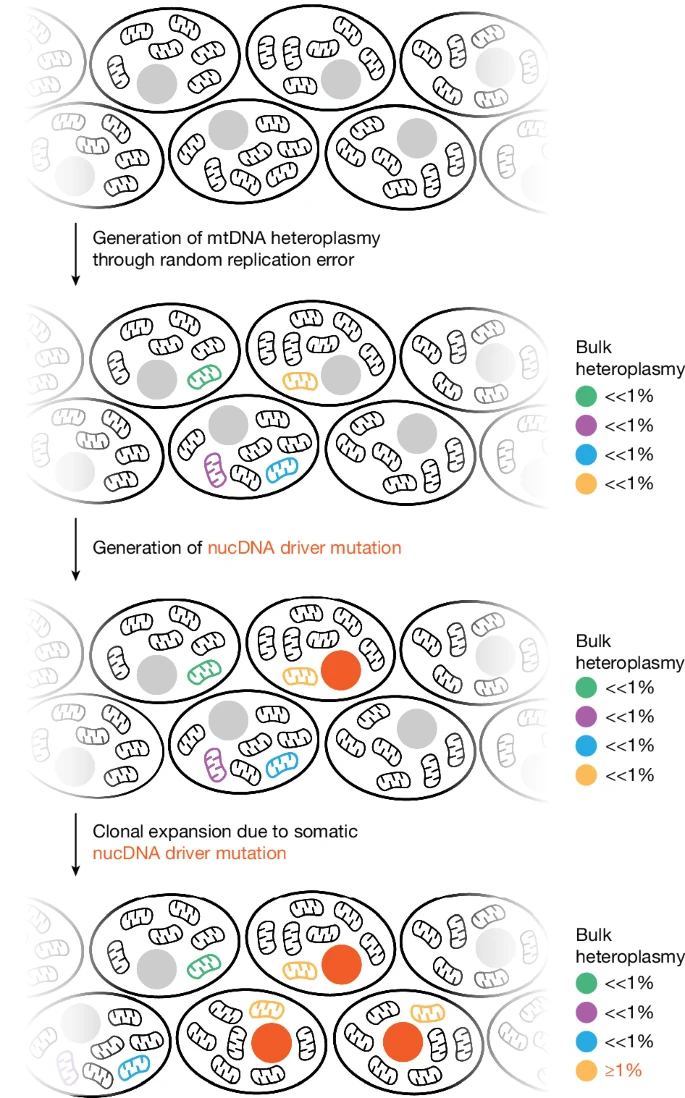
Main Mitochondrial DNA (mtDNA) heteroplasmy arises when a cell or tissue contains a mixture of two or more different mtDNA alleles. Heteroplasmy dynamics tend to be complex, varying across generations, during development, in disease and with ageing. Historically, most studies of mtDNA heteroplasmy in humans have focused on rare, maternally transmitted disorders, which are typically driven by loss-of-function mtDNA mutations at high levels of heteroplasmy. However, there is growing evidence that low levels of mtDNA heteroplasmic variants are found in nearly all humans 3 . Using biobank-scale genomics, we previously reported that nearly everyone harbours two different classes of such variants in blood 4 . ‘Length heteroplasmies’ (insertion/deletion (indel) mutations within polypyrimidine tracts) do not accumulate with age, tend to be maternally transmitted and, once inherited, exhibit levels of heteroplasmy under nuclear genetic control.…