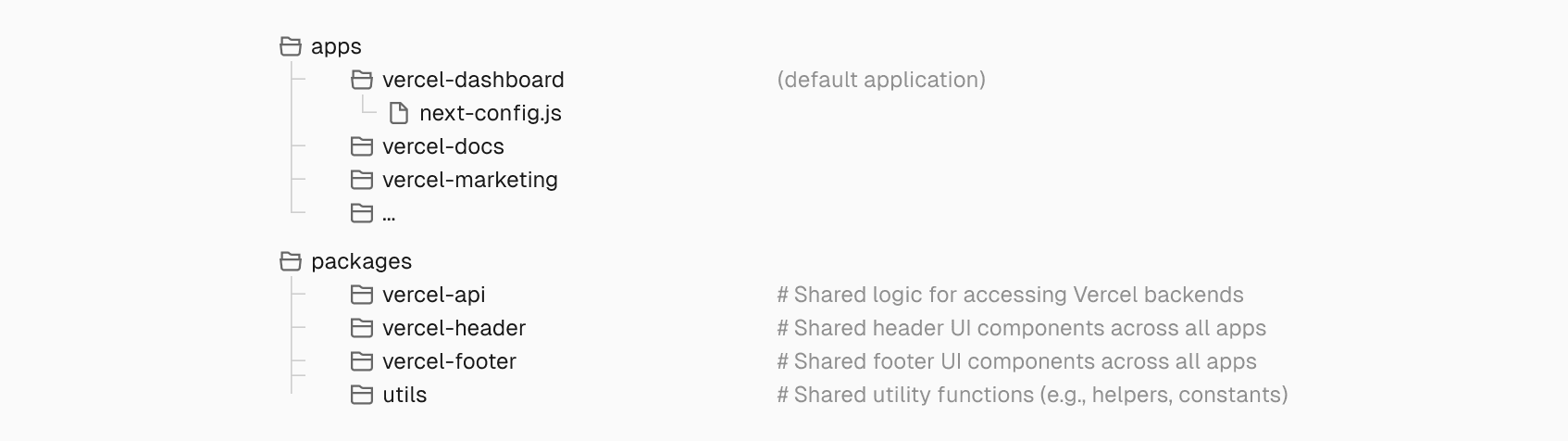
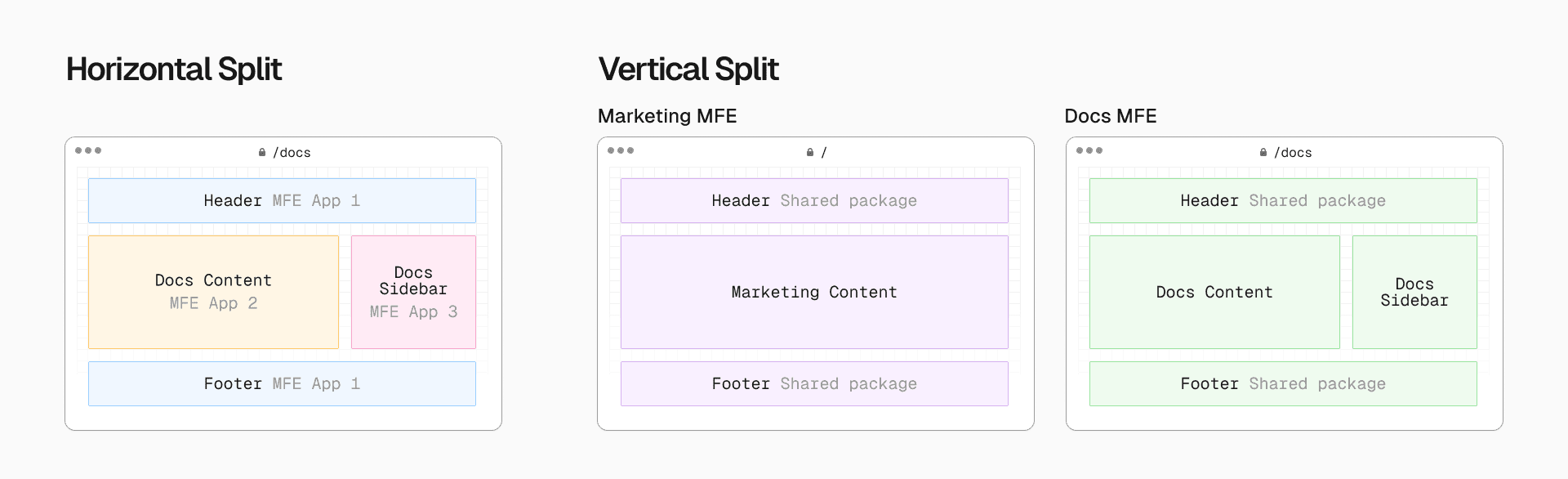
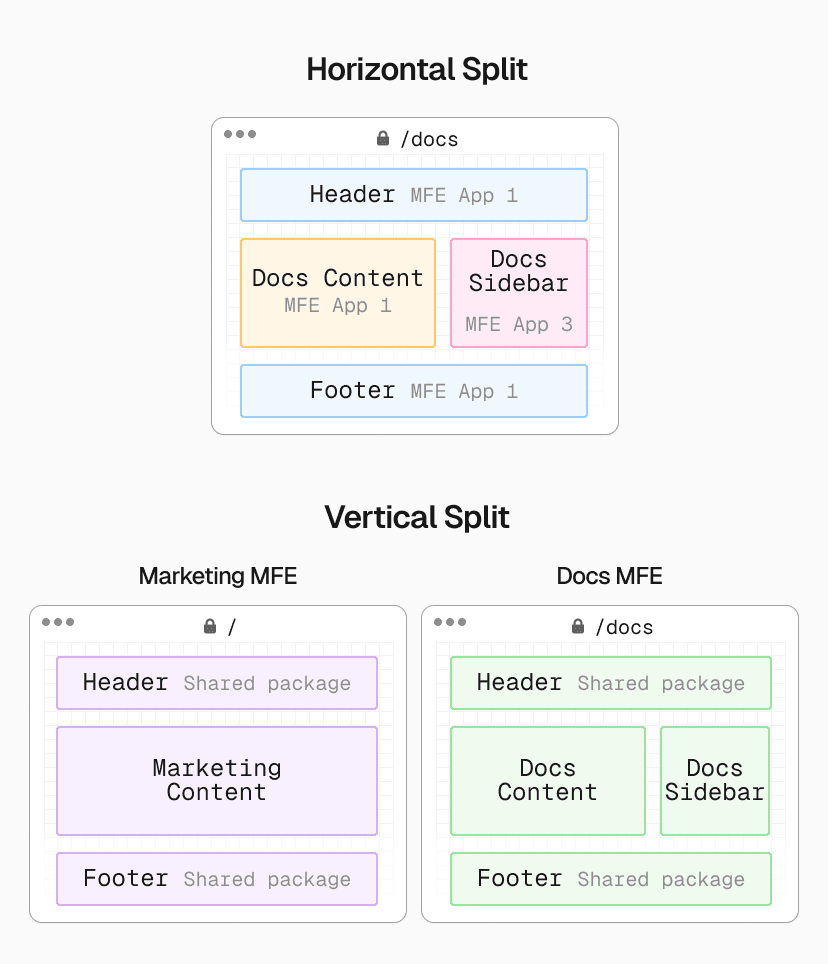
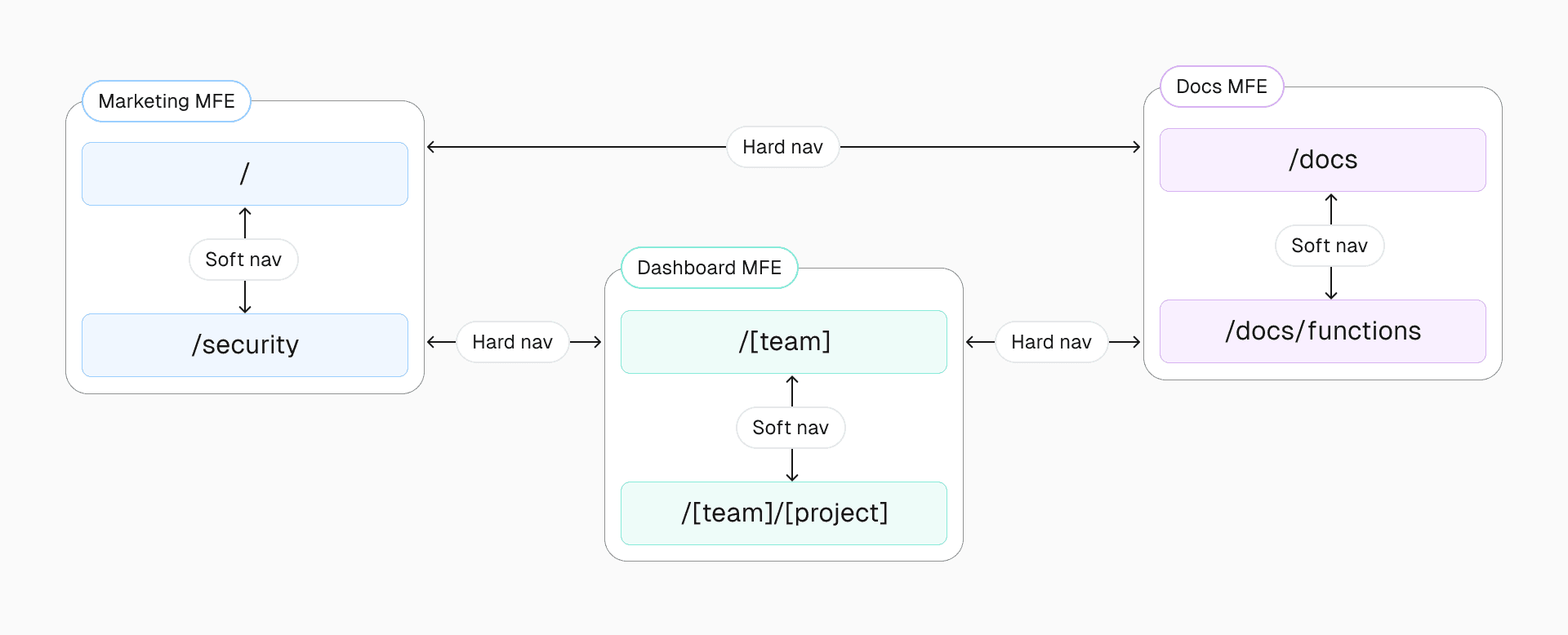
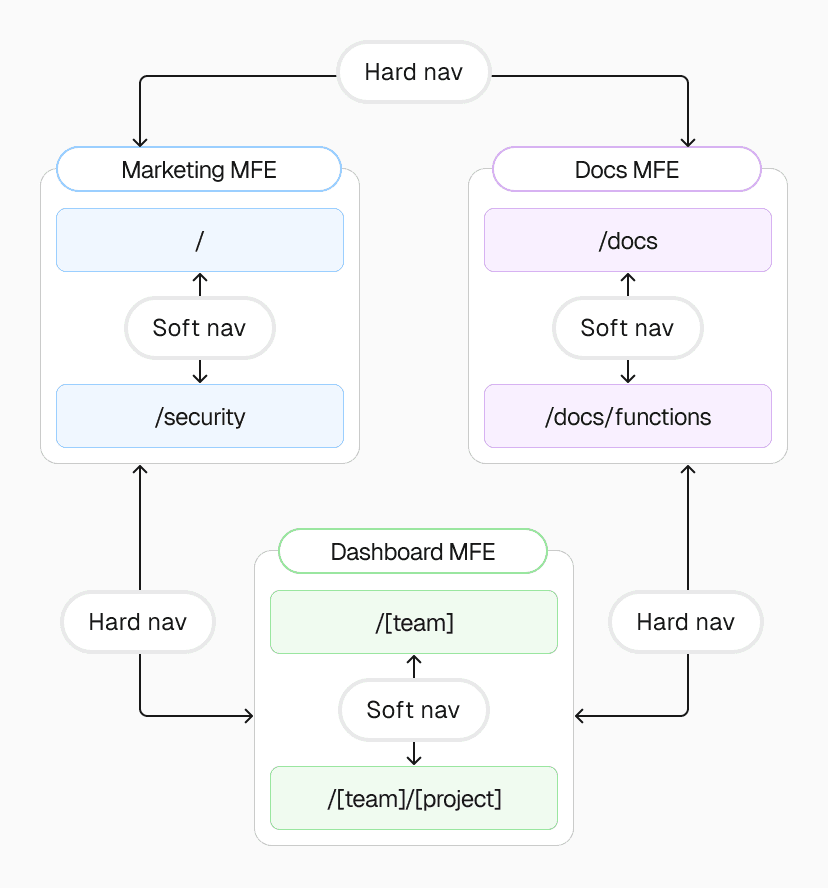
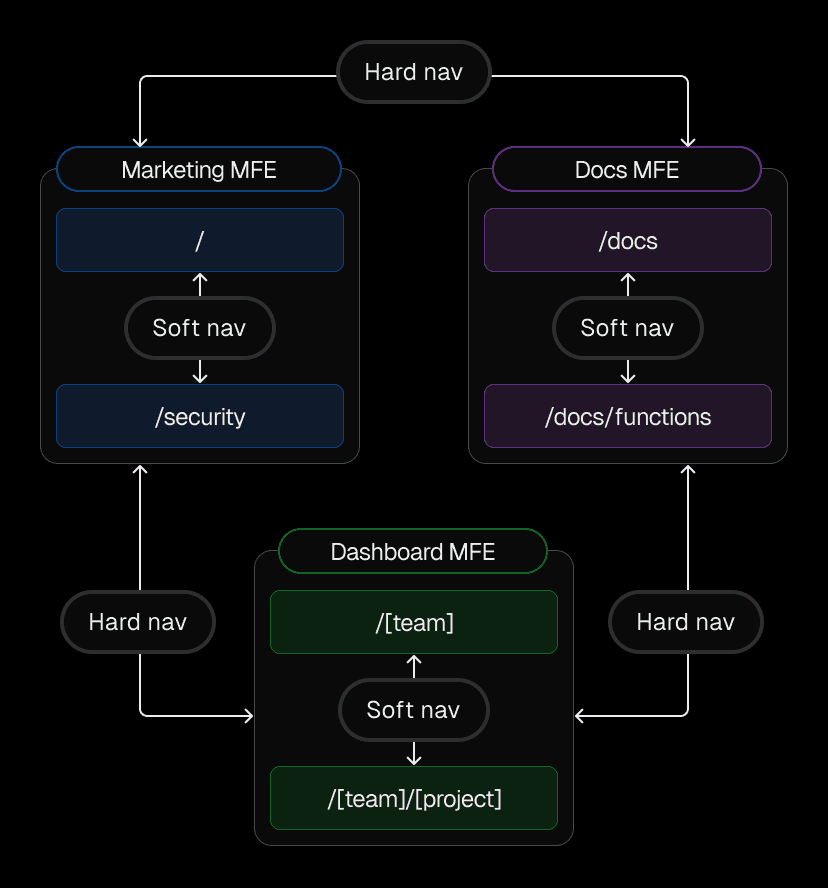
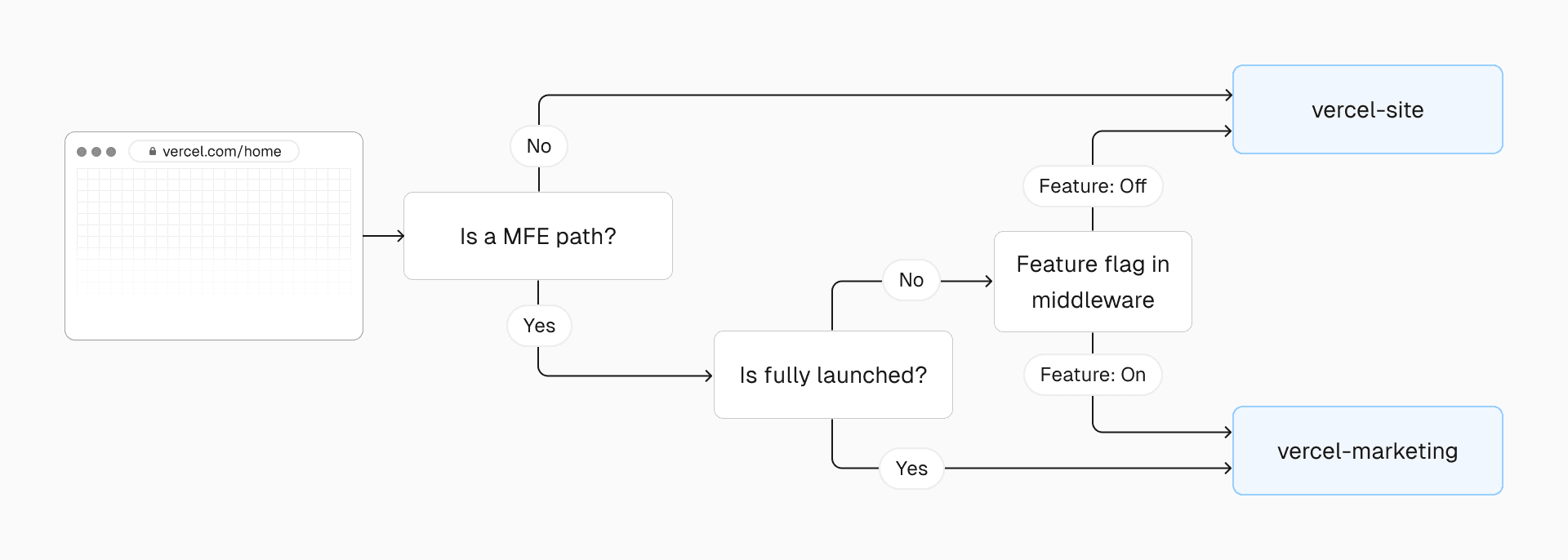
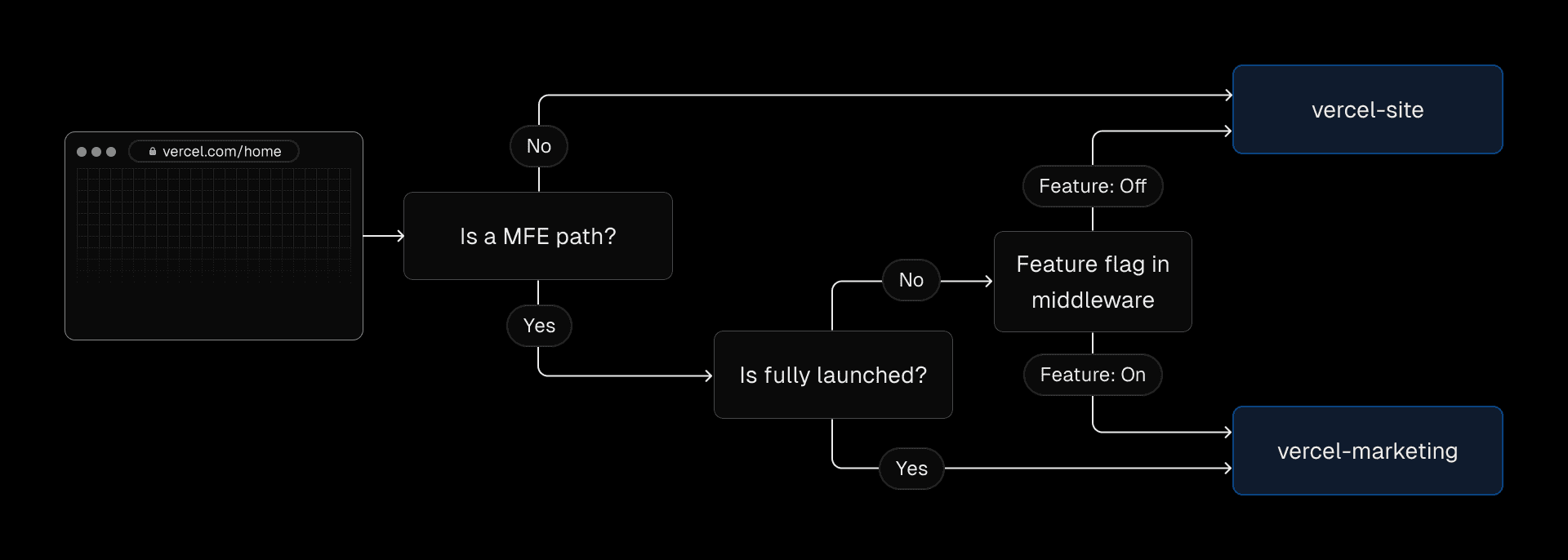
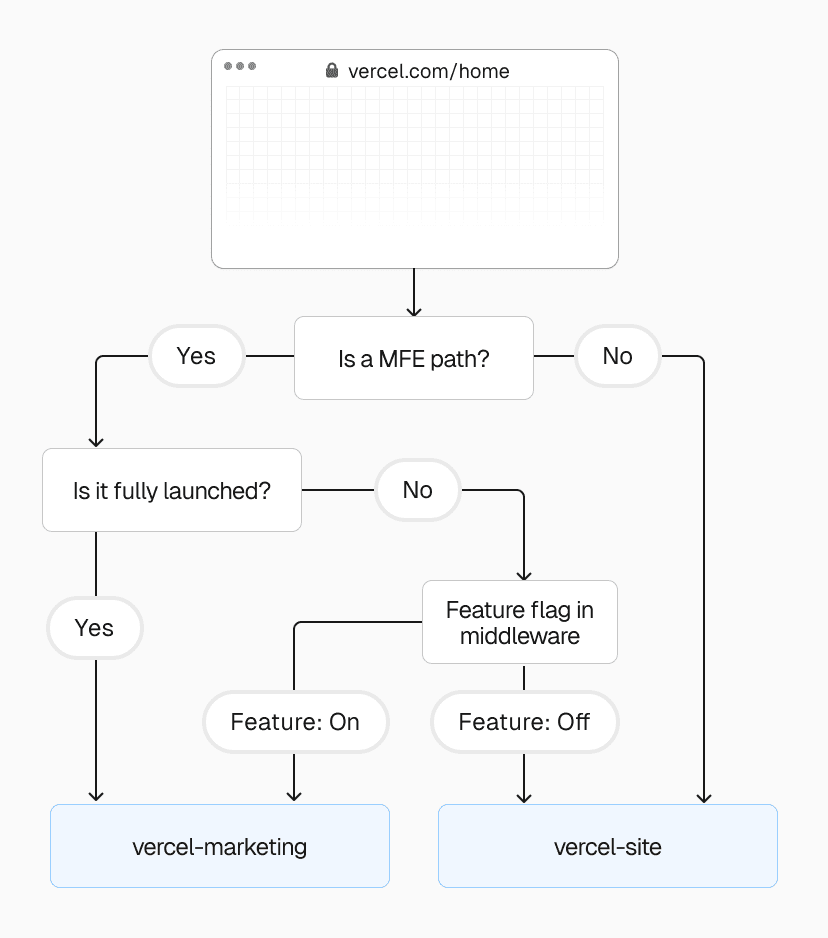
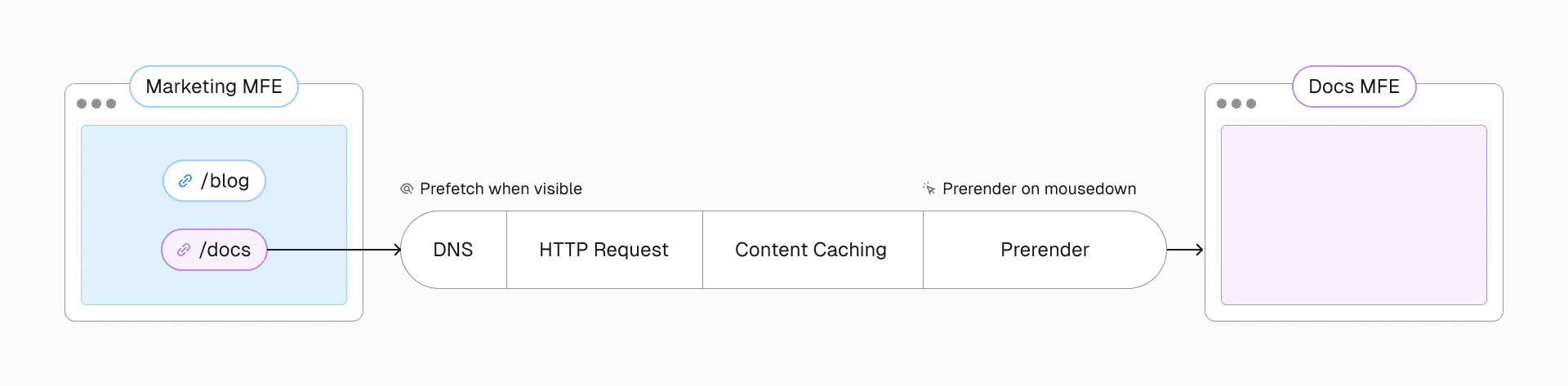
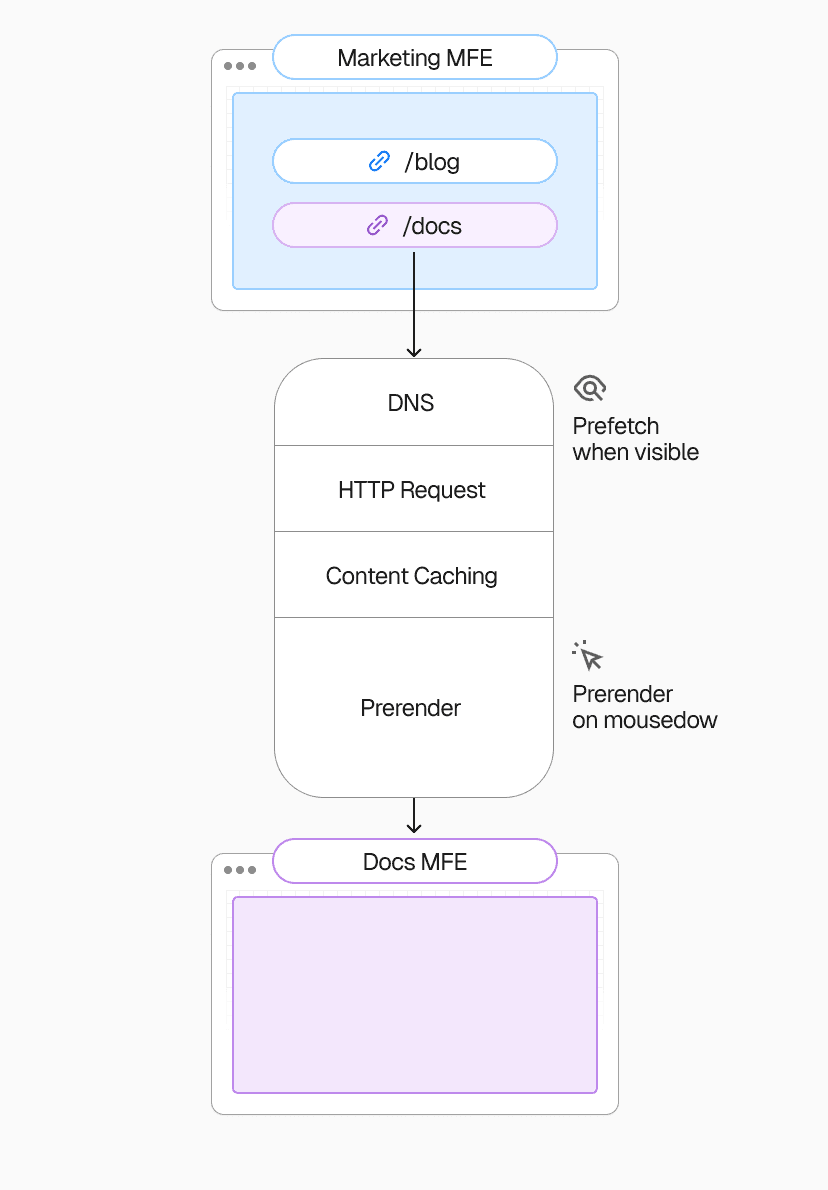
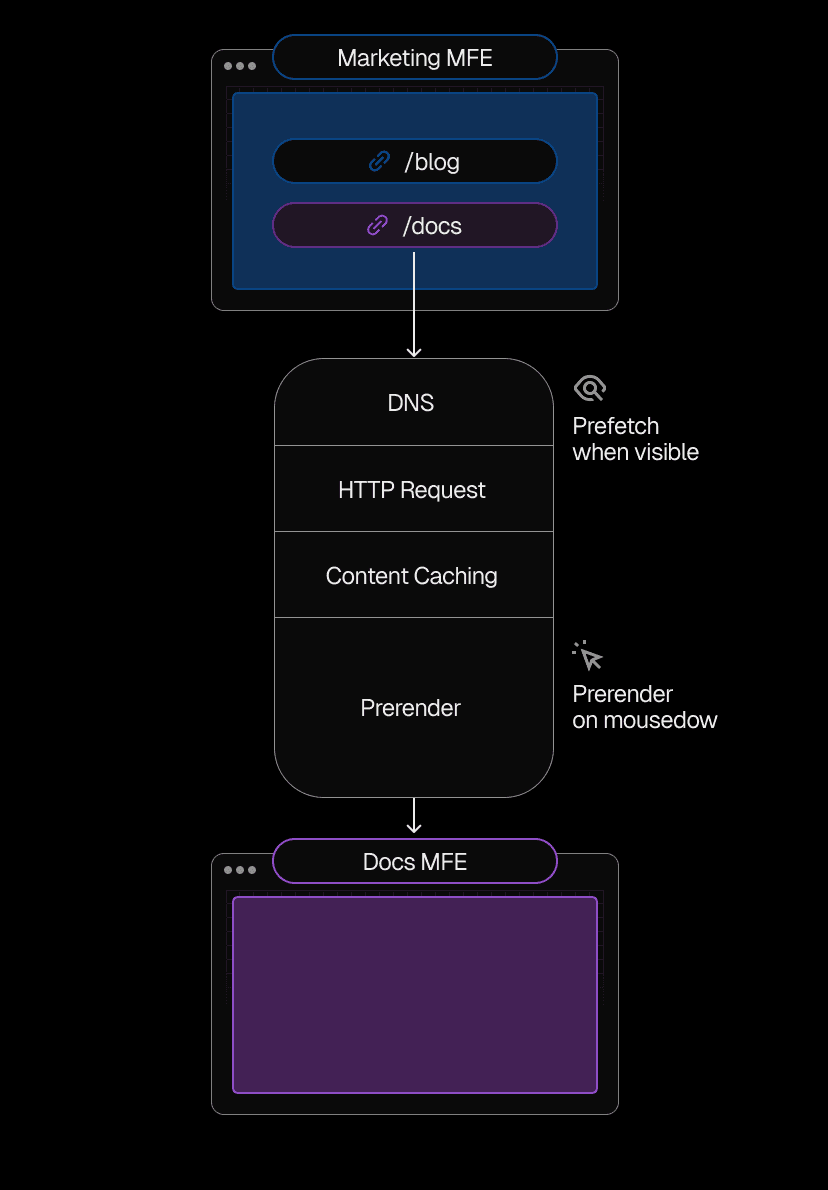
Learn how Vercel cut build times and improved developer velocity while maintaining a smooth user experience with microfrontends. Vercel's main website, once a single large Next.js application, serves both our website visitors and logged-in dashboard. But, as Vercel grew, this setup revealed opportunities for improvement. Build times grew, dependency management became more intricate, and workflows needed optimization. Minor changes triggered full builds, affecting isolated development and CI pipelines. It was clear a change was needed. By rethinking our architecture, we shifted to vertical microfrontends, leading to a simpler development experience and over a 40% improvement in preview build times and local development compilation. Streamlined dependencies by removing code for the other microfrontends also reduced page weight and boosted end-user performance, with gains in Core Web Vitals like Largest Contentful Paint (LCP) and Interaction to Next Paint (INP).…