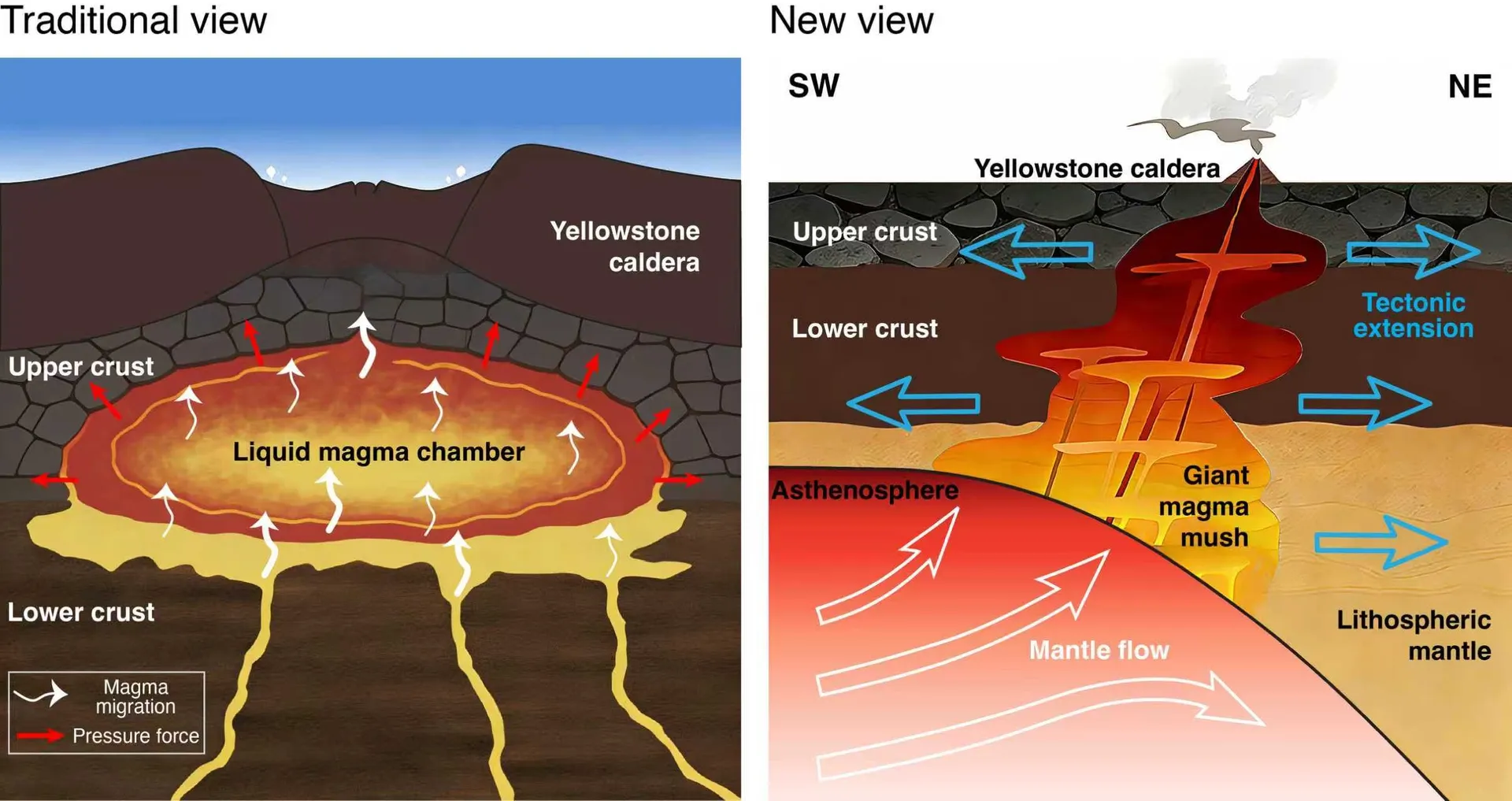
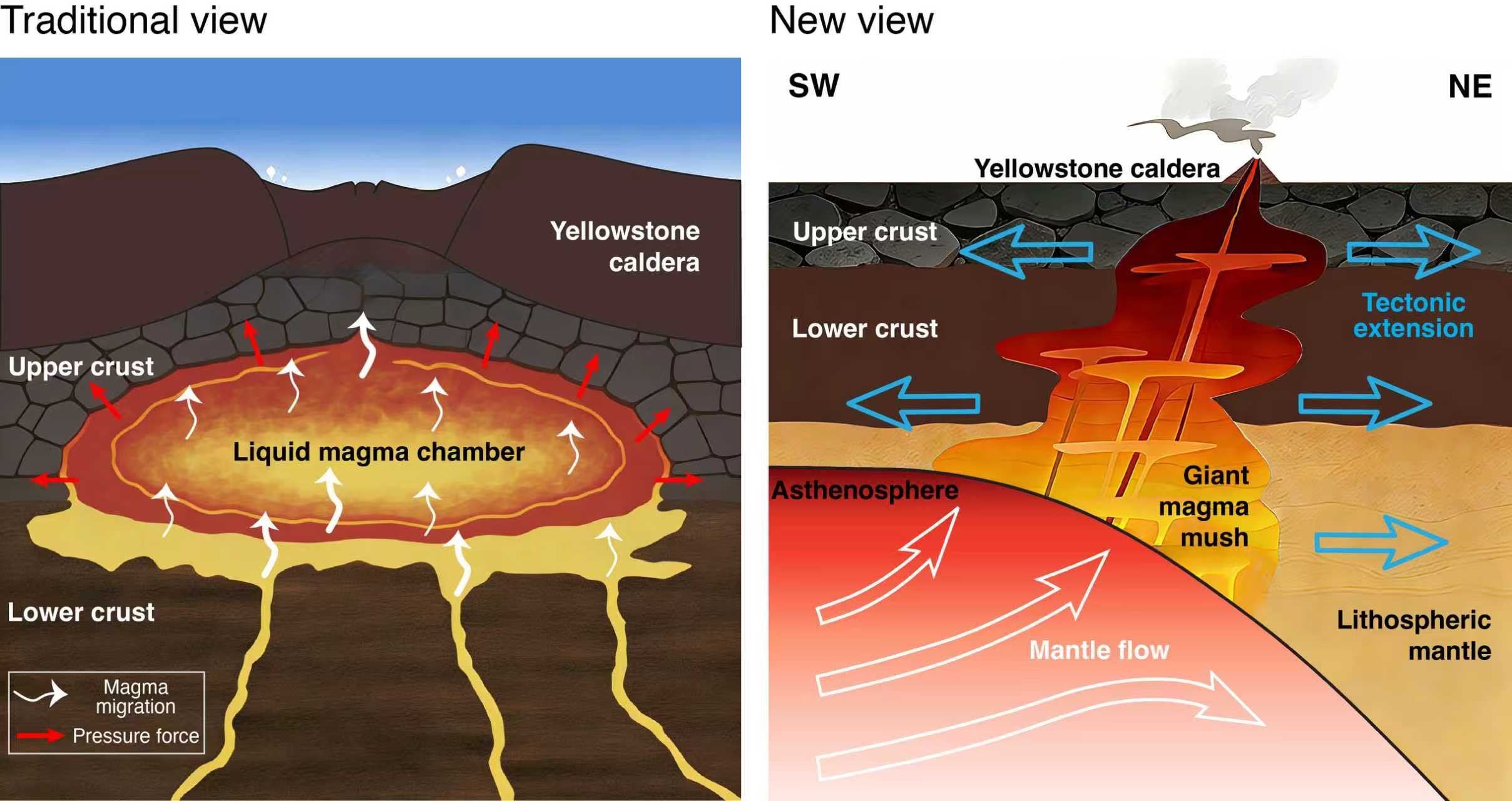
Yellowstone's famous supervolcano is likely being fueled in a completely different way from what many scientists assumed. New research suggests that Yellowstone's volcanic activity is actually driven by shifts in Earth's crust, rather than a deep well of magma underground as previously thought. This finding could help scientists predict future volcanic activity and better understand how the volcano will behave. The Yellowstone area, where Earth's crust is relatively thin, is a hotbed of volcanic activity. In the last 2.1 million years, Yellowstone has seen three major eruptions, with the most recent taking place 631,000 years ago. The last supereruption created the Yellowstone caldera , which is more than 30 miles (50 kilometers) wide. A caldera is the bowl-shaped depression left in the ground after the volcano's molten rock has exploded to the surface. There is a long-standing debate about the origin of Yellowstone's volcanics. Some scientists think there is a deep mantle plume beneath its surface.…