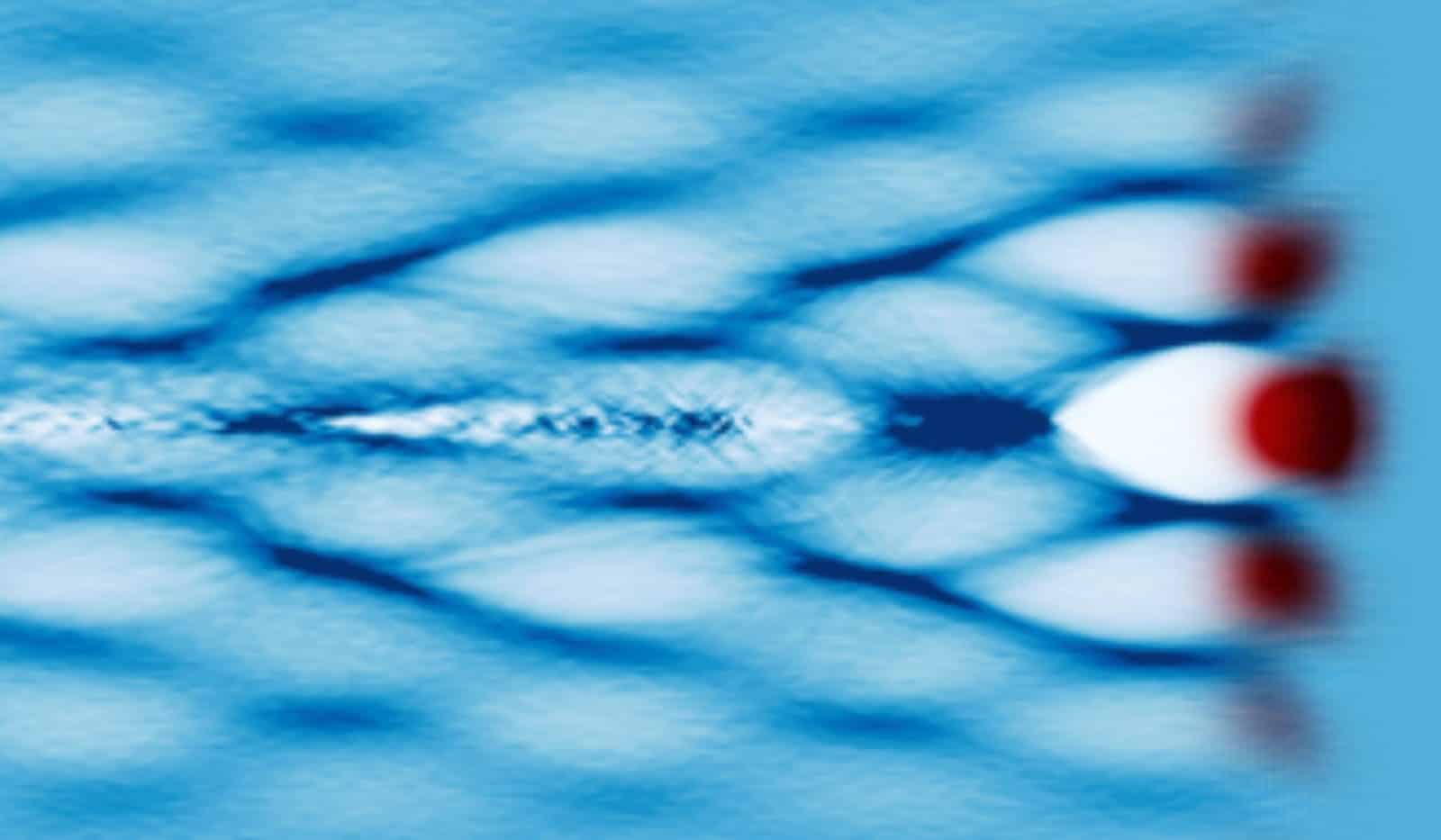
Physicists have directly imaged a novel laser-driven plasma wakefield, taking a large step towards compact, ultra high energy particle accelerators A map of the electron density in the flying focus setup - linked to the acceleration gradient of the plasma wakefield (Credit: A. Liberman). Conventional particle accelerators use radio frequency cavities to push particles to high energies, but these machines are vast and expensive. Laser wakefield accelerators (LWFAs) offer a radically different approach. When an intense laser pulse travels through a plasma, it drives a rippling disturbance called a wakefield. Electrons can be trapped in this plasma wave and surf along it, being boosted to very high energies over just centimetres. However, these electrons tend to outrun the plasma wave that accelerates them, a limitation known as dephasing.…