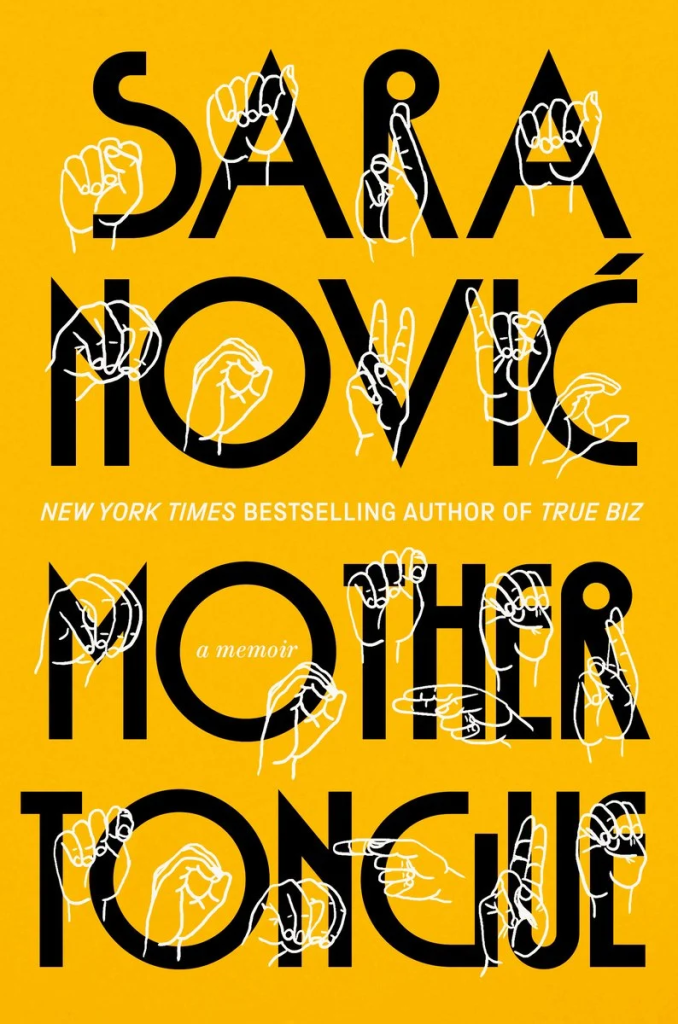
At age 12, Sara Nović went deaf, but not all at once. First, she lost the wind, then the dripping of a leaky faucet, and then certain consonants. She writes in her memoir, “What is a mother tongue, and how do you get one? What if your mother has no tongue? What if you have no mother?” For much of her adolescence, Nović masked both her disability and her queerness, until an experience of spiritual humility led her to claim not only her deafness, but Deafness: the political act, the community. The book’s raison d’etre seems to be about honoring that experience, resisting erasure, and changing the sociopolitical landscape to be one that celebrates difference, rather than trying to stamp it out. Nović takes on the history of deaf ableism in America, including Alexander Graham and the invention of the telephone, as well as the Oralist movement, which grew out of a white supremacist Christian nationalist vision of America.…