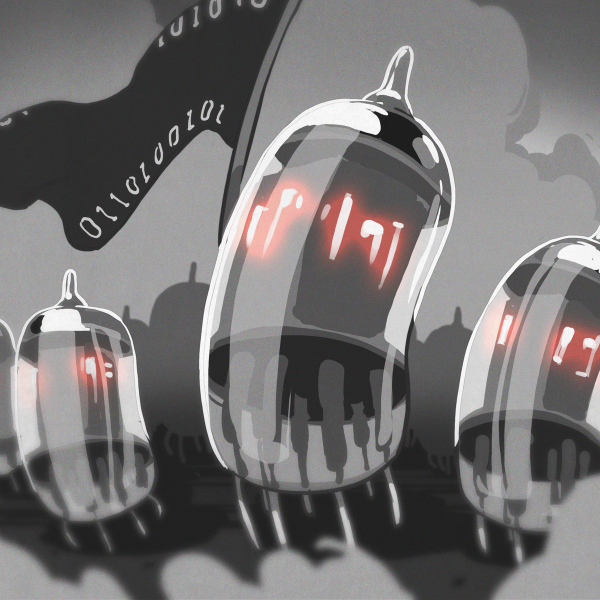
When most people think about vacuum tubes, they picture big glass bottles glowing inside antique radios or early computers. History often treats tubes as a dead-end technology that was suddenly swept away by the transistor in the 1950s. But the reality is much more interesting. Vacuum tube technology did not simply stop evolving when the transistor appeared. In fact, some of the most sophisticated and technically impressive tube designs emerged after the transistor had already been invented. During the final decades of mainstream tube development, manufacturers pushed the technology in remarkable directions. Tubes became smaller, faster, quieter, more rugged, and more specialized. Designers experimented with exotic geometries, ceramic construction, metal envelopes, ultra-high-frequency operation, and even hybrid tube-semiconductor systems. Devices such as acorn tubes, lighthouse tubes, compactrons, and nuvistors represented a last gasp of thermionic electronics.…