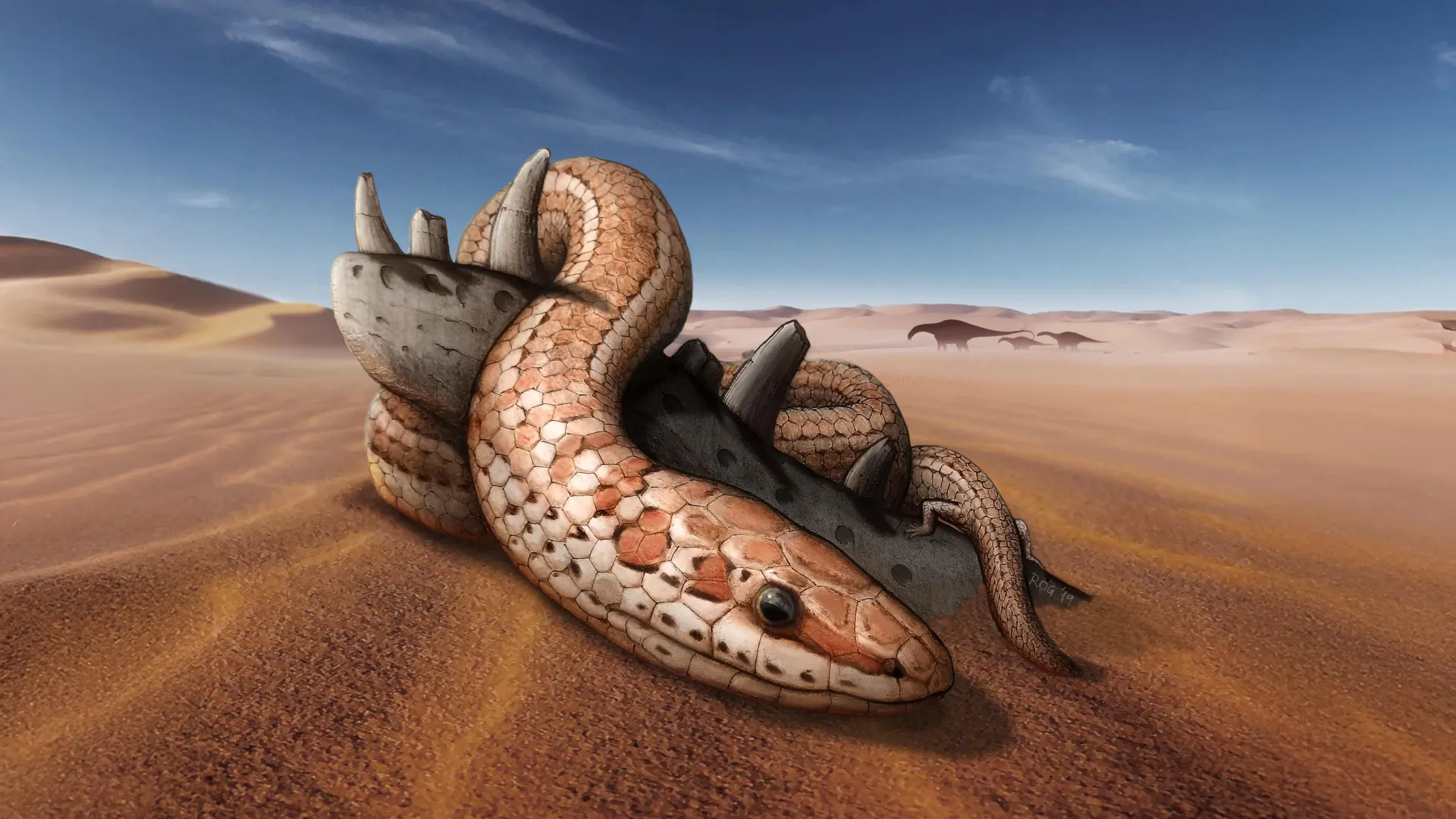
A remarkably preserved fossil from Argentina is helping scientists sharpen the picture of how snakes evolved. The specimen belongs to Najash rionegrina , an ancient rear-limbed snake that lived nearly 100 million years ago. Its skull shows that these early snakes still had a cheekbone, also called the jugal bone, a feature that has almost completely disappeared in living snakes. The 2019 study added an important piece to a fossil record that had long been too sparse to clearly explain the earliest stages of snake evolution. The findings also challenged a popular older idea about snake origins. Instead of beginning as small burrowers, the evidence from Najash pointed to ancestors of modern snakes that were larger-bodied animals with wide mouths. The fossils also showed that early snakes held onto their hindlimbs for a long time before the rise of the mostly limbless snakes alive today.…