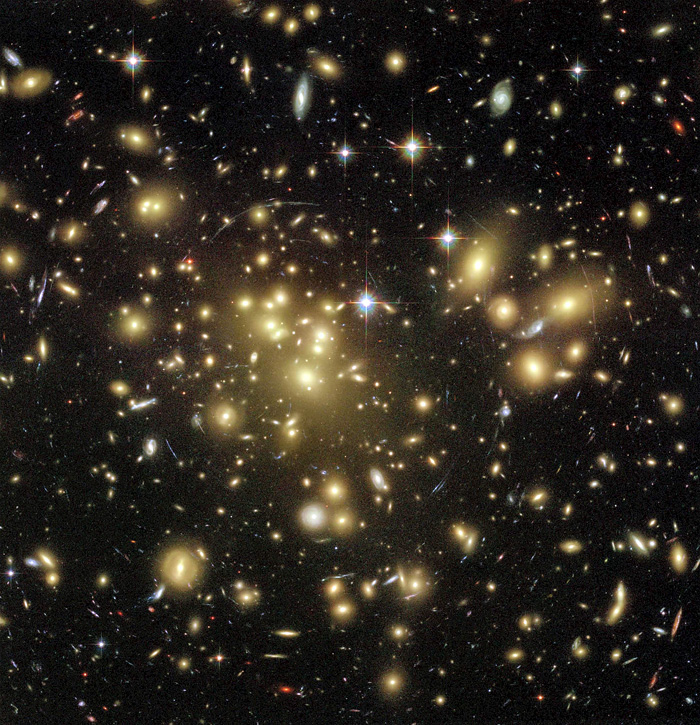
When the gravity of a foreground object distorts and magnifies light from the background, the images surround the object responsible for the lensing. | Published: April 27, 2026 The space-warping galaxy cluster Abell 1689, which lies 2.2 billion light-years away in the constellation Virgo, contains trillions of suns, but most of its matter can't be seen. Still, this unseen mass affects space, bending the light from individual galaxies behind the cluster into multiple curved, bluish arcs. This image is about 2 million light-years across. Credit: NASA/ESA and The ACS Science Team When a gravitational lens magnifies a background galaxy, why don’t we see the object doing the lensing, as we would if looking through an optical lens? Robert Hertrick Pittsburgh Gravitational lensing is one of the more beautiful and unusual phenomena physicists have predicted and astronomers have stumbled across.…