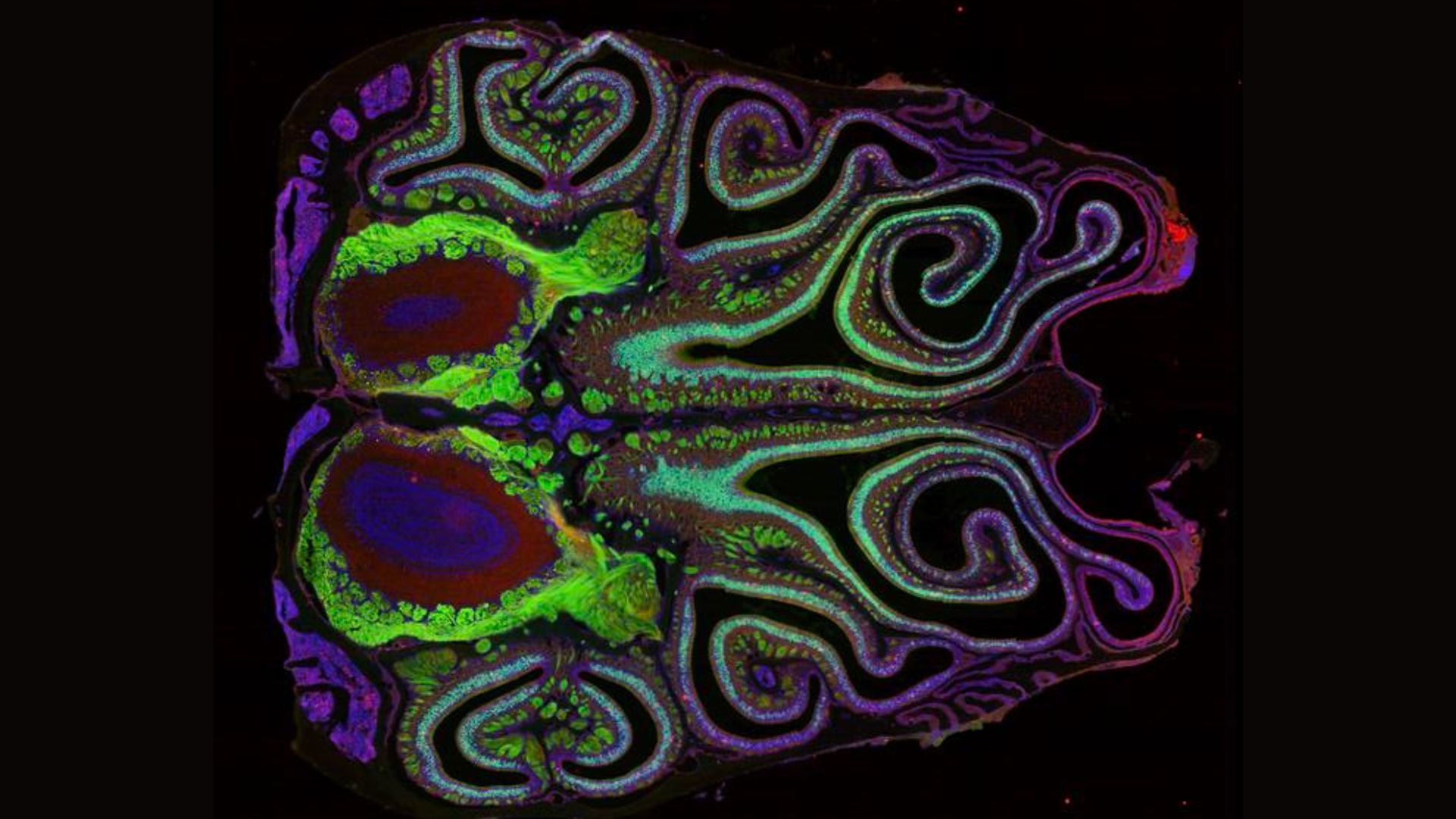
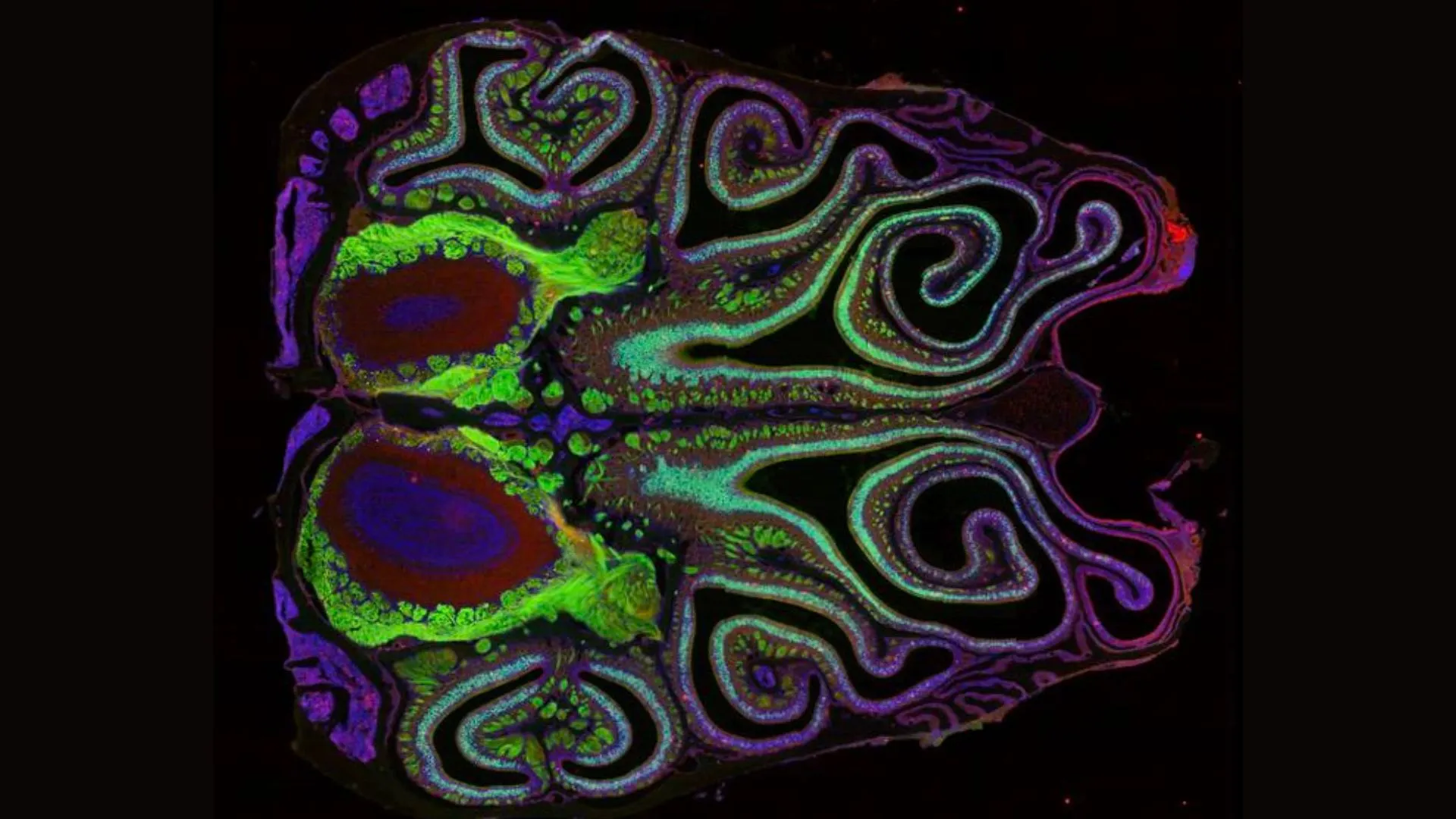
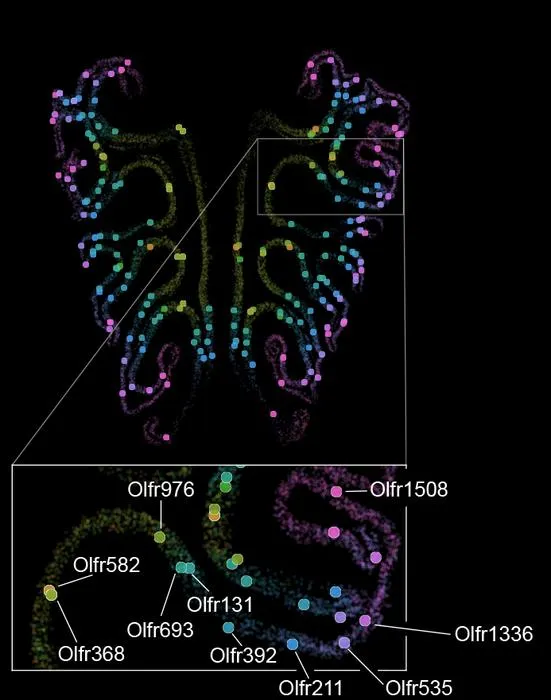
This microscope photo of a cross section of a mouse nose shows scent-sensing neurons in green, as well as dying neurons in red. (Image credit: Datta Lab) Scientists have created a comprehensive map of smell receptors in the mouse nose, revealing a few surprises about this fundamental sense. Smell receptors, or olfactory receptors, were previously thought to be randomly distributed within the lining of the nasal cavity. But now, the first-of-its-kind map shows that they are highly organized, with different types separated into tight bands. Smells are detected by olfactory sensory neurons in the nasal cavity. Each neuron expresses one of 1,172 different receptors encoded in mouse DNA, with each receptor detecting a different type of smell. Other senses — such as touch, vision and hearing — are known to use sensory maps. For example, for hearing , different frequencies are encoded at different positions in the cochlea of the inner ear, and from there, that information is relayed to the brain.…