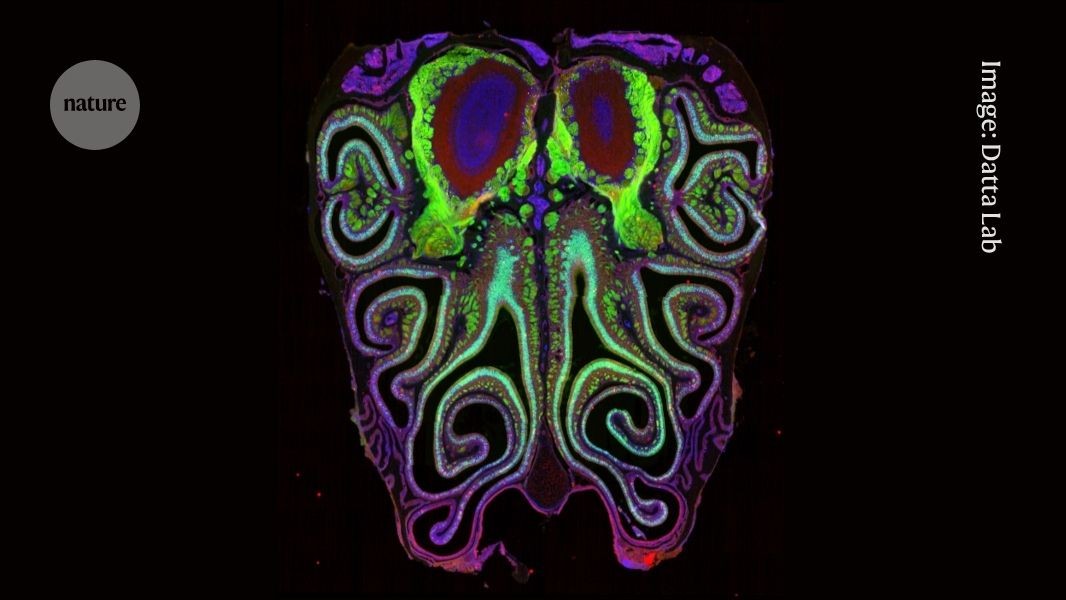
A microscope cross-sectional image of a mouse nose, showing the anatomical structure of the nasal epithelium. Credit: Datta Lab Olfactory receptors in the mouse nose have been mapped out in unprecedented detail — overturning researchers’ understanding of how noses build a sense of smell. The research, published today in Cell 1 , shows how around 1,100 olfactory receptors expressed on sensory neurons are organized in tightly regulated spatial locations in the epithelial tissue that lines the nasal cavity. A second study 2 provides a complementary atlas of olfactory receptor expression in the olfactory epithelium and their neural connections to the olfactory bulb in the brain. “For 30 years, we’ve taught students that the mouse olfactory epithelium is divided into a handful of broad zones, within which receptor choice is essentially random,” says Johan Lundström, a psychologist and experimental neuroscientist at the Karolinska Institute in Stockholm.…