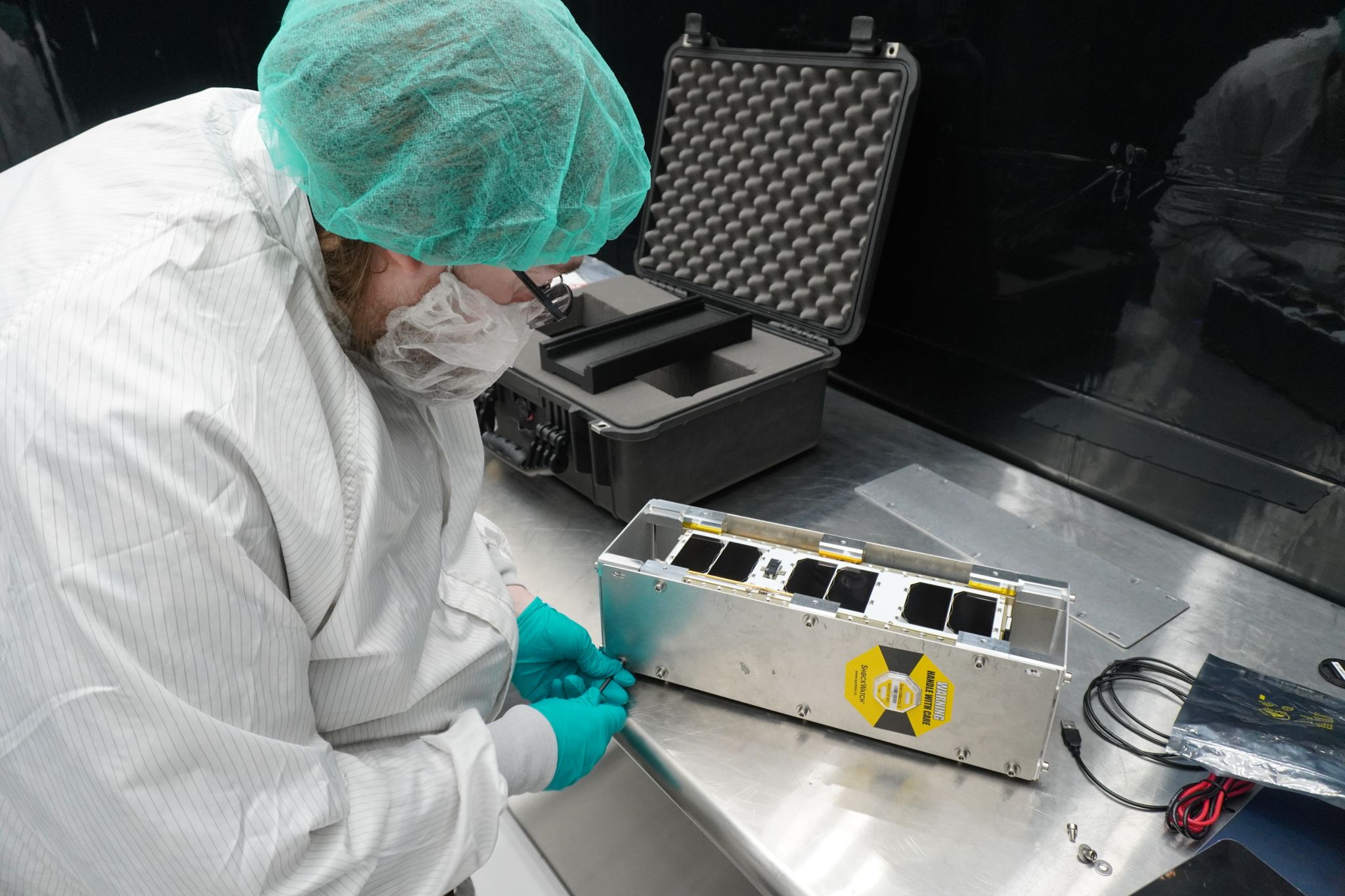
Through NASA, a university-designed small spacecraft is paving the way to studying particles, known as neutrinos, that move through the universe at near-light speeds. The Solar Neutrino Astro-Particle PhYsics CubeSat, known as SNAPPY, launched at 12 a.m. PDT on Sunday aboard a SpaceX Falcon 9 rocket from Space Launch Complex 4 East at Vandenberg Space Force Base in California and was deployed via launch integraor Exolaunch. The SNAPPY project will test a prototype solar neutrino detector in low Earth polar orbit. Weighing approximately half a pound, the prototype detector consists of four crystals and is encased in a shielding block made of epoxy loaded with tungsten dust to match the density of steel. The detector and a dedicated electronics stack for power and readout purposes are housed inside a CubeSat platform from Kongsberg NanoAvionics. The idea behind SNAPPY was sparked by interest in NASA’s Parker Solar Probe mission.…