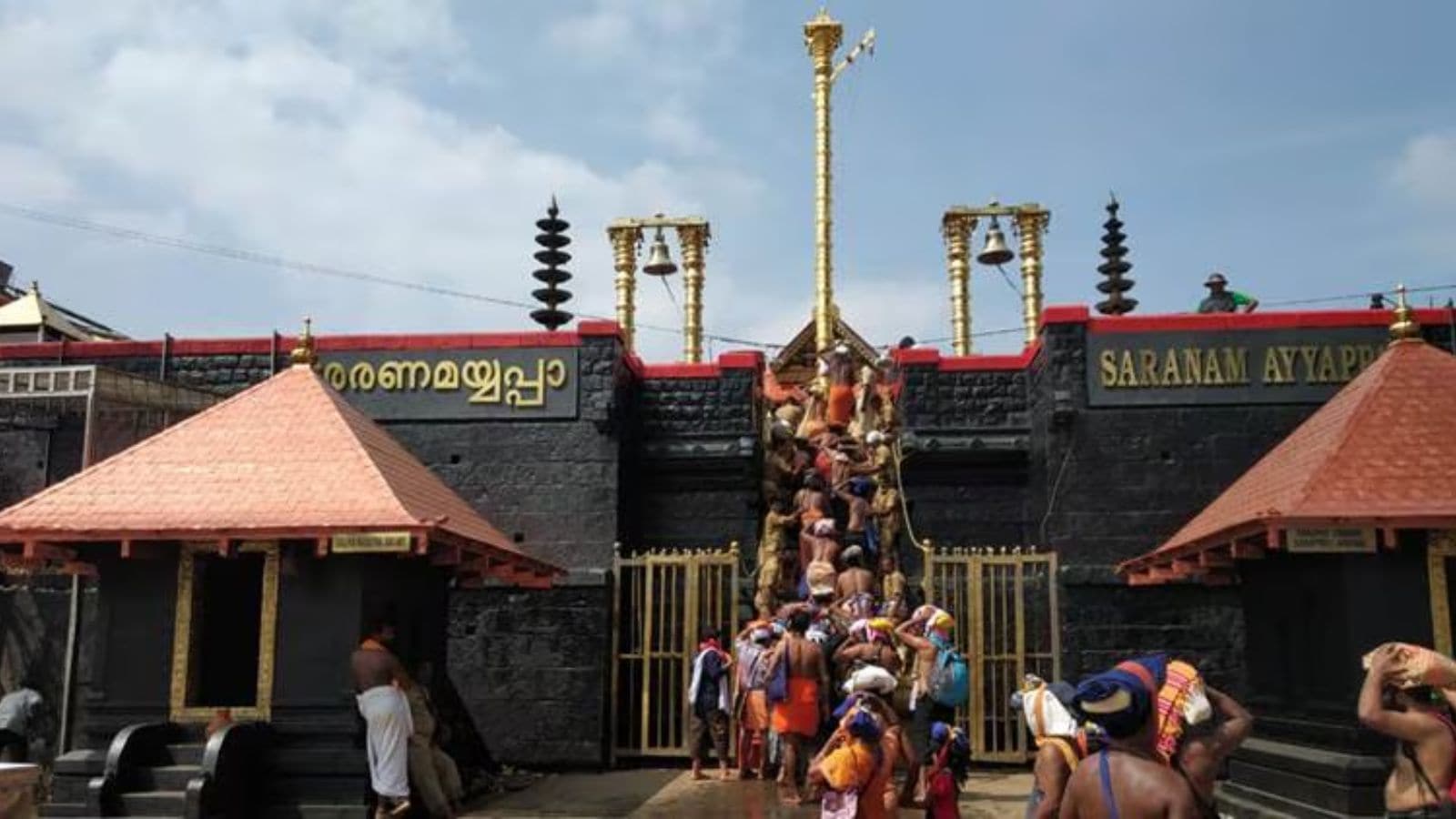
Mehta said he was only arguing that if a practice is directly challenged, the court will ask those challenging it to go to the legislature, but if a law is challenged, the court must examine it. The Constitution “did not create a secular court as the reformatory overlord of the religious traditions of 1.4 billion citizens” and entrusted the mechanism of religious reform to the legislature “to be exercised at the pace at which a democratic society arrives at consensus”, the Centre told the Supreme Court on Wednesday, pitching for denomination status for devotees of the Sabarimala temple deity Lord Ayyappa. “If courts may reform religion in the absence of legislation, whenever they determine that a practice offends the Constitution, there is, in practice, no limit on the judicial reformation of religious traditions. Every denomination’s internal discipline, every temple’s mode of worship, every faith’s institutional arrangements become permanently available for constitutional challenge.…