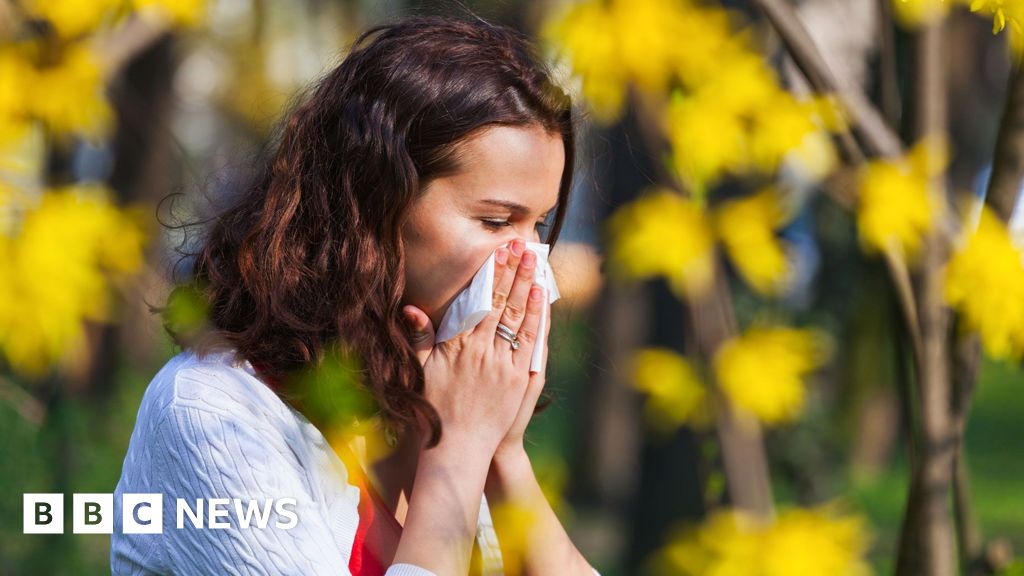
11 hours ago Philippa Roxby and Jim Reed, Health reporters Getty Images Hay fever sufferers must now put up with symptoms for up to two weeks longer than they would have done in the 1990s, according to a major review. A new report by 65 scientists from around the world found that climate change has "prolonged the pollen season". The fine powder released by certain grasses, trees and plants can cause chaos for those who are allergic, with itchy eyes, sneezing and headaches all common symptoms. So what does this mean for millions of people living with hay fever, and is there anything they can do to cope? Why your eyes are so itchy today Why are pollen levels making hay fever so bad? It looked at three trees common in Europe - birch, alder and olive - and found pollination started one to two weeks earlier between 2015 and 2024, compared with 1991 to 2000.…