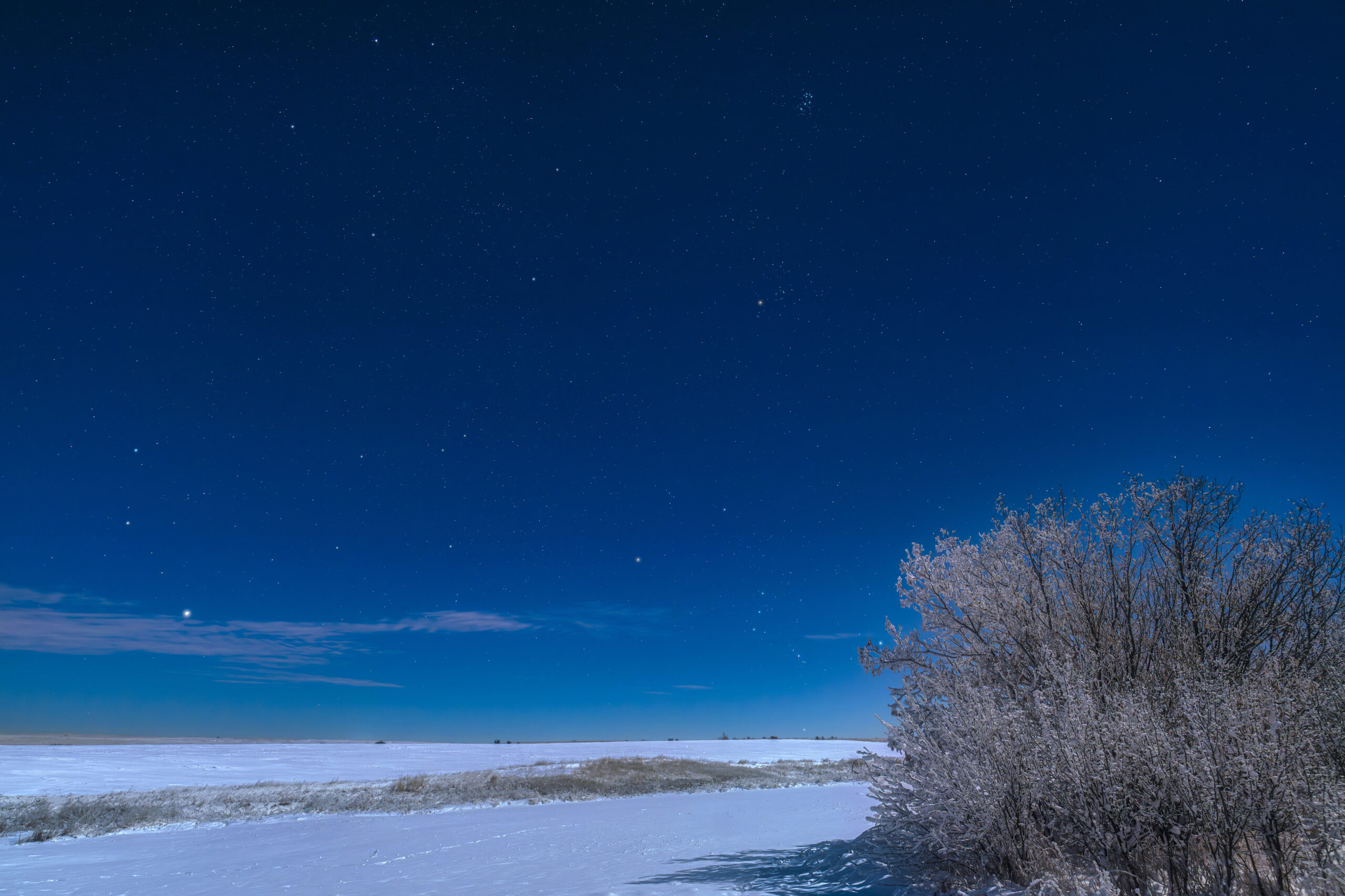
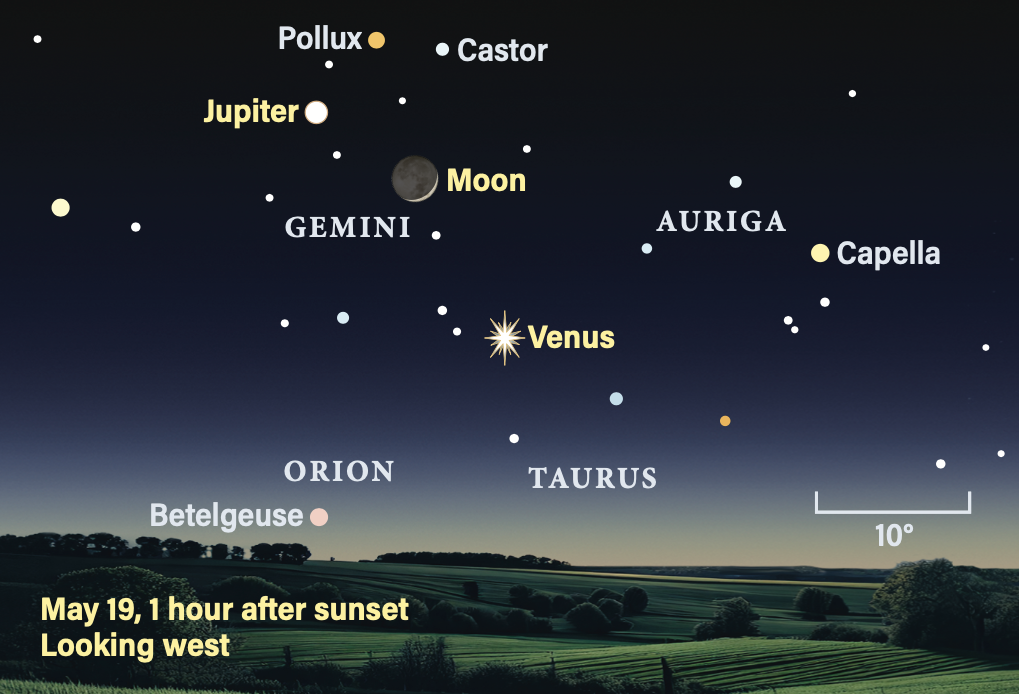
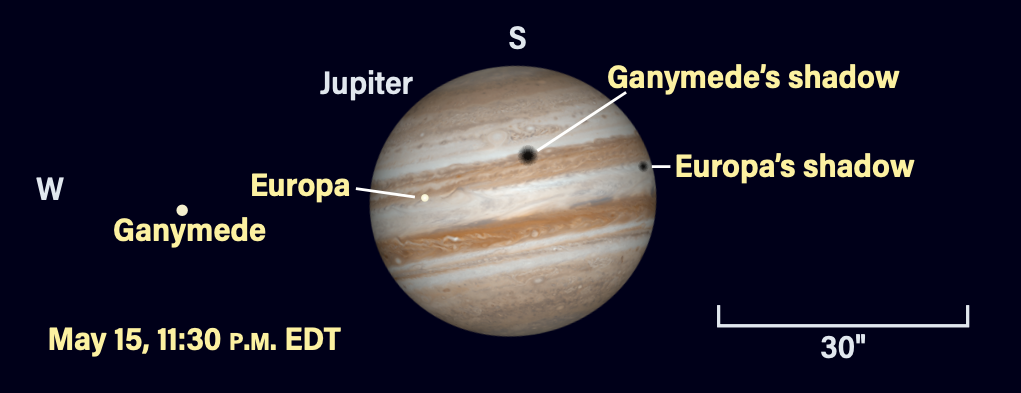
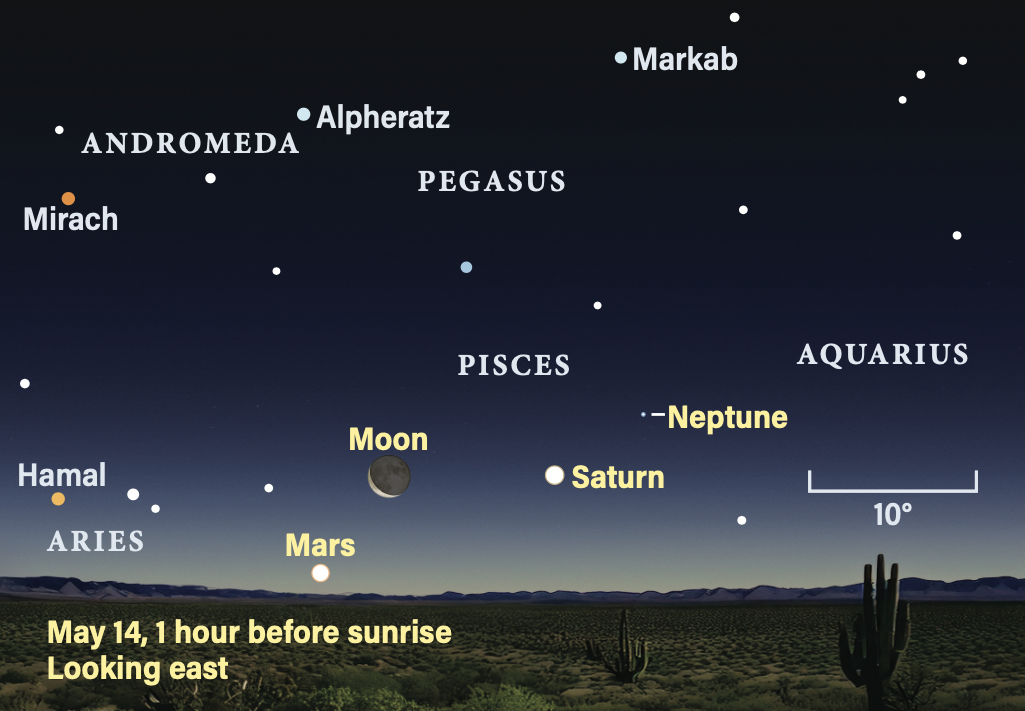
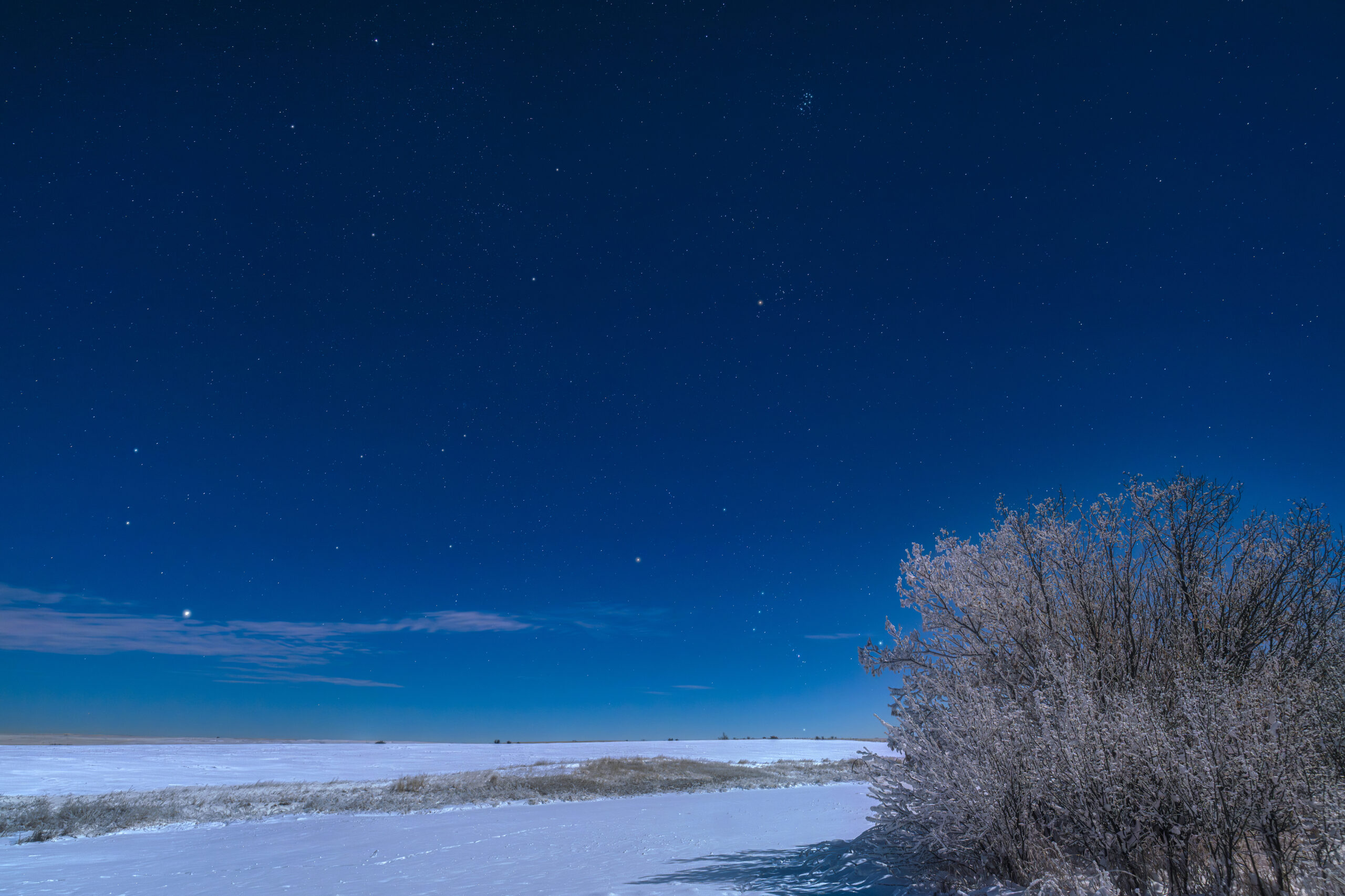
Bright Jupiter shines just above thin clouds at left, below the stars Castor and Pollux, the heads of Gemini. This month offers many transits of the Galilean moons, sometimes together. Credit: Alan Dyer Venus and Jupiter are the top evening features for your observing run after sunset in May. Jupiter also hosts a handful of exciting double transits — and double shadow transits — involving Europa and Ganymede. Saturn and Mars make a brief reappearance in the predawn sky, joined by a crescent Moon. So let’s begin! You’ll find Venus shining brightly in the evening sky soon after sunset. On May 1 it stands 14° above the western horizon an hour after sunset and remains visible until about 10:30 p.m. local daylight time. By May 31 it remains above the horizon until about 11 p.m. A pair of amazing star clusters — the Pleiades (M45) and the Hyades — sit to the lower right and left of Venus, respectively. The latter is punctuated by the nearer bright star Aldebaran.…