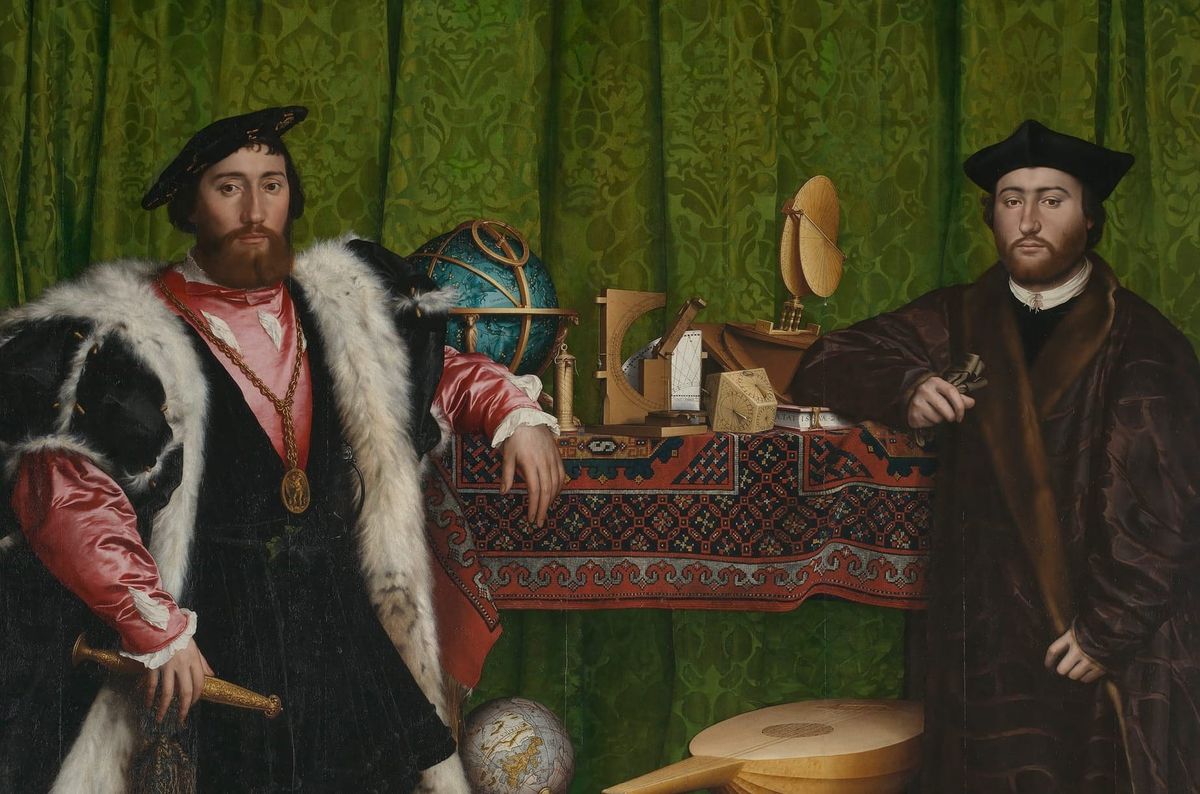
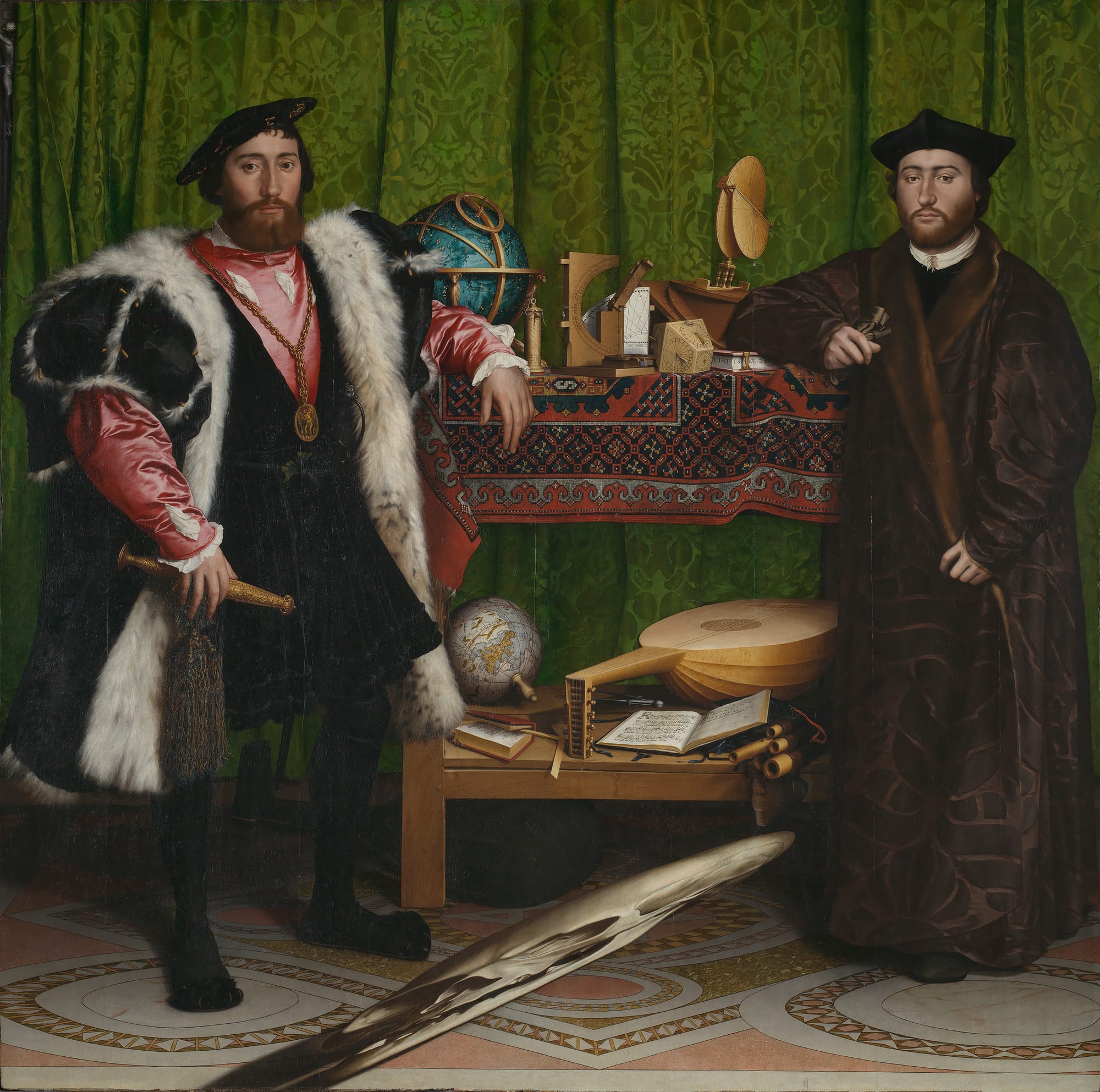
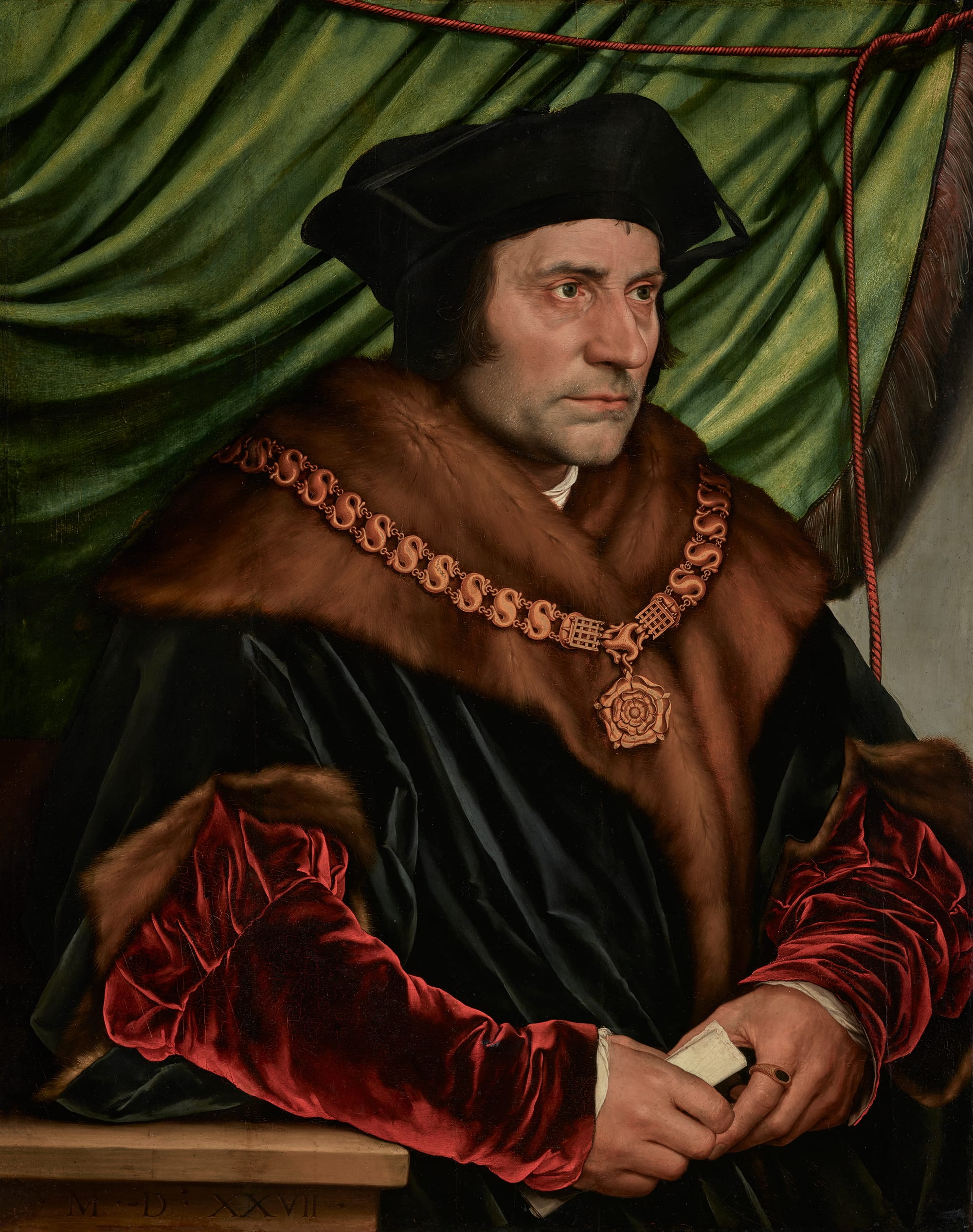
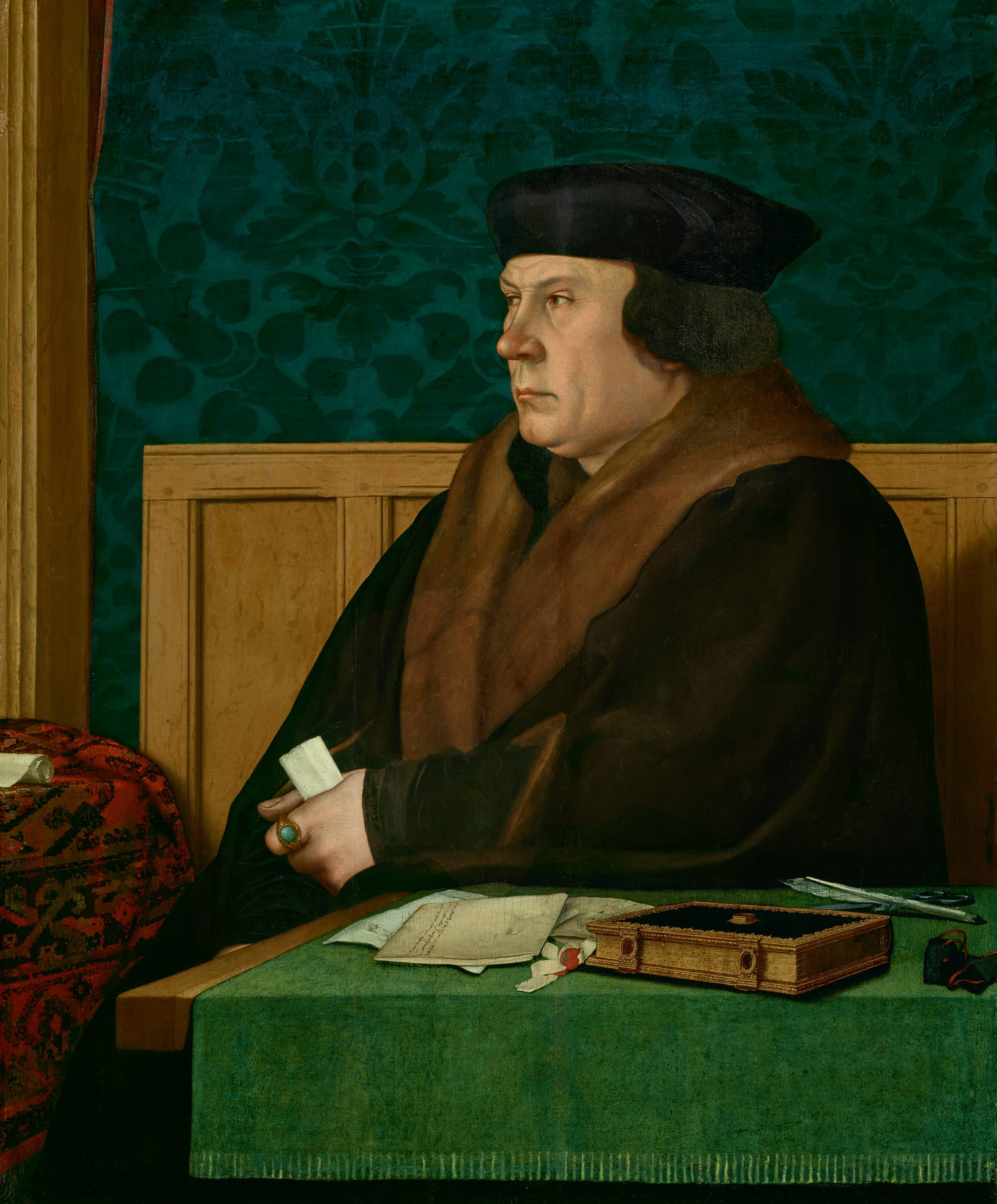
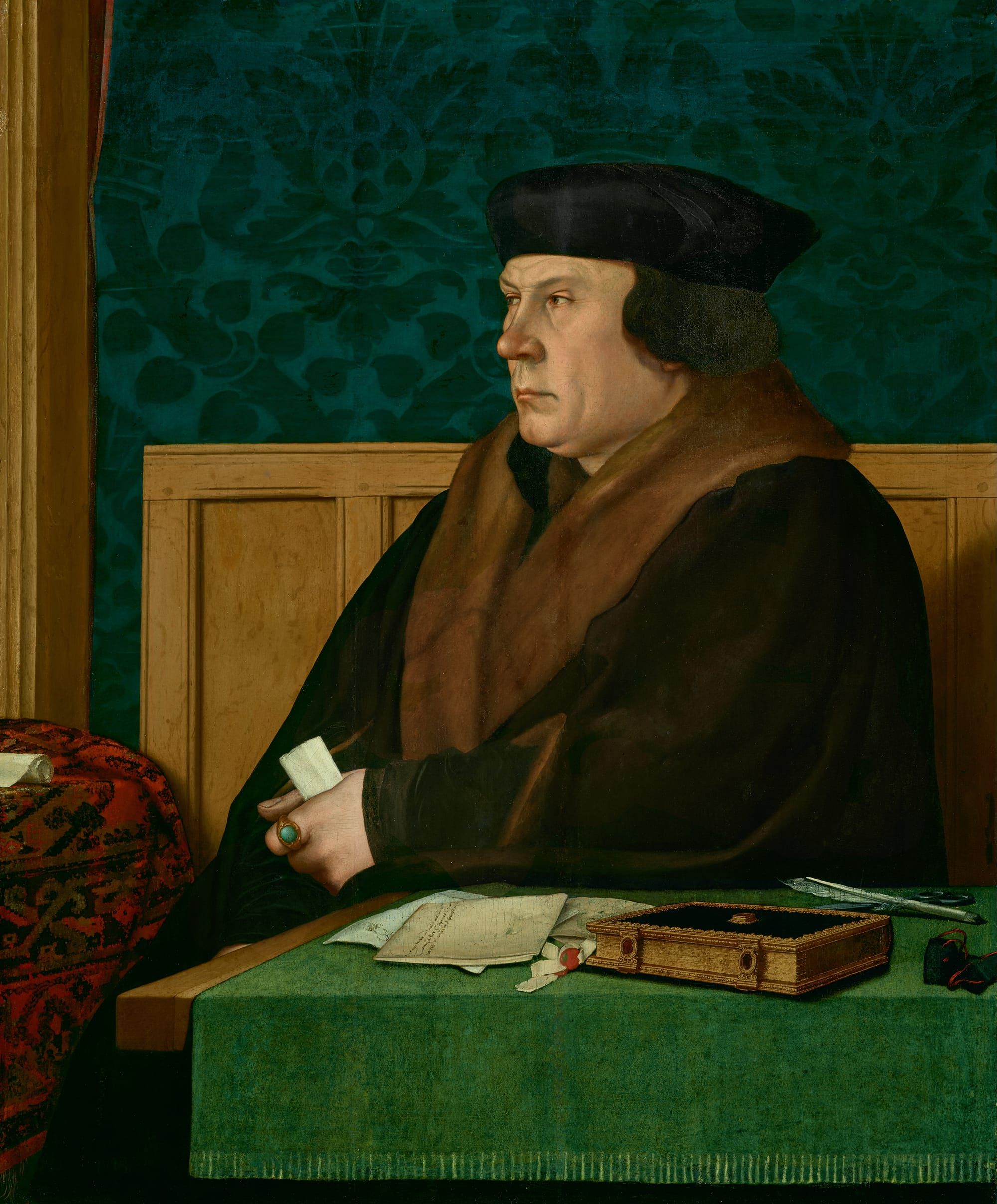
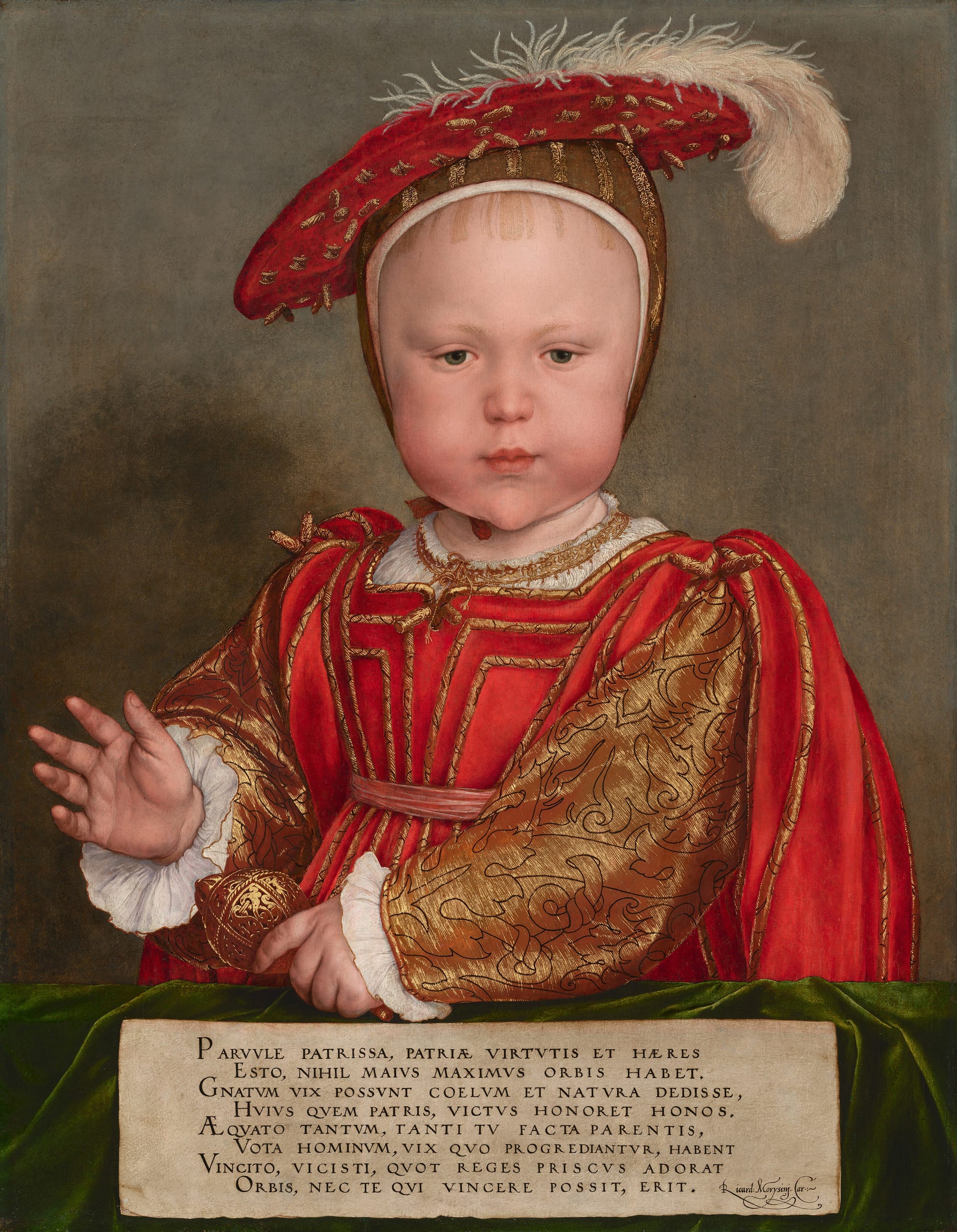
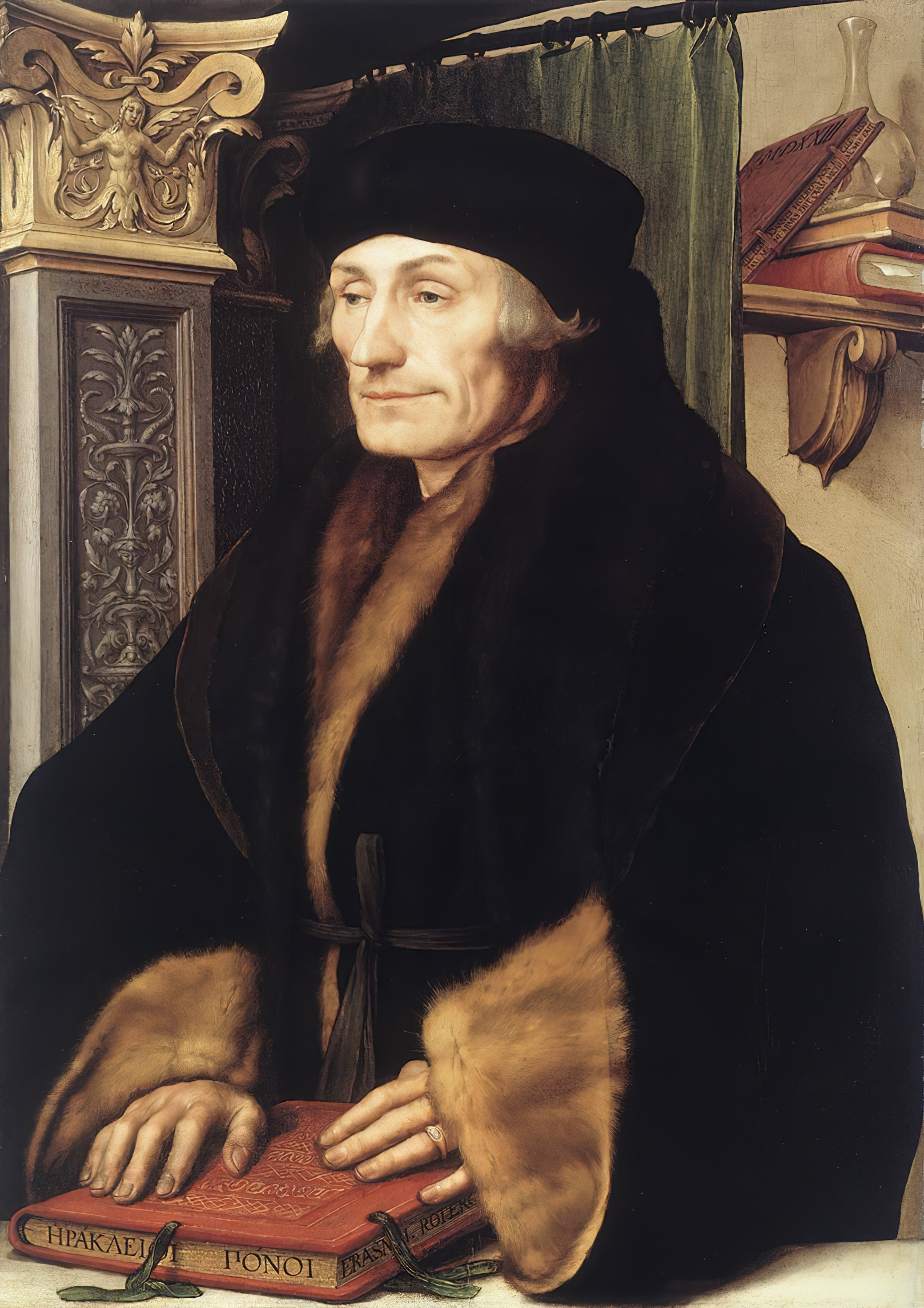
Book Review He surpassed all of his colleagues in the sheer depth, visceral intimacy, and empathy conveyed in his renderings of nobles, aristocrats, and thinkers. April 22, 2026 — 7 min read Holbein, "Jean de Dinteville and Georges de Selve (The Ambassadors)" (1533), oil on oak, held at National Gallery, London (all photos courtesy Yale University Press) The most succinct visual embodiment of the complexities and contradictions of the English Renaissance is displayed on an ornate mantel in a mansion at 1 East 70th Street in Manhattan. Hans Holbein the Younger’s c. 1527 “Portrait of Sir Thomas More” and his 1532 “Portrait of Thomas Cromwell” (a contemporary copy of the lost original) sit on opposite sides of Gilded Age industrialist Henry Clay Frick’s New York estate, now better known as the Frick Collection. More, the celebrated humanist and Lord Chancellor (effectively Secretary of State) of England, is stern-visaged, eagle-beaked, with a steely gaze focused on the distance.…