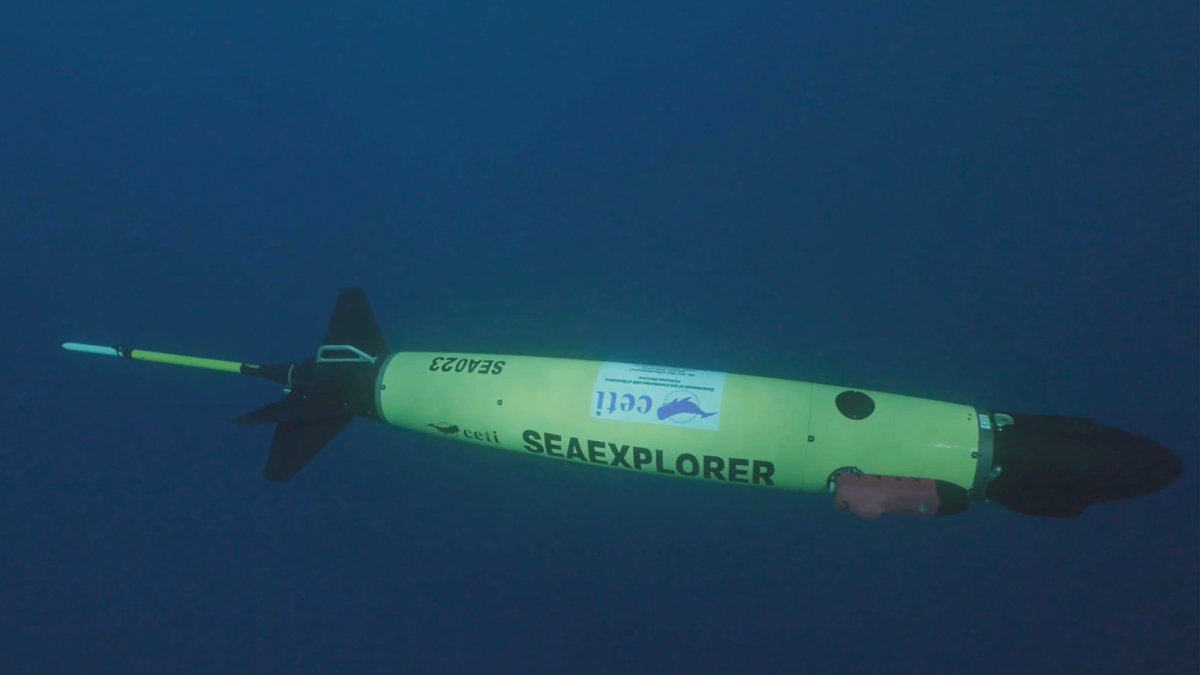
Get the Popular Science daily newsletter💡 Breakthroughs, discoveries, and DIY tips sent six days a week. Sperm whales ( Physeter macrocephalus ) go deep. They can dive 1,300 to 4,000 feet-deep and also travel as much as 15,000 miles per year. These depths and distances make sperm whales and other whale species particularly difficult for scientists to follow and study. A new autonomous underwater glider system aims to make that trek a little easier. The glider from Project CETI (Cetacean Translation Initiative), detailed in a study published in the journal Scientific Reports , follows sperm whale vocalizations without getting in their way. AI is embedded directly into the glider, which allows it to react in real-time to the whale’s sounds while underwater. AI-enabled underwater glider Why gliders?…