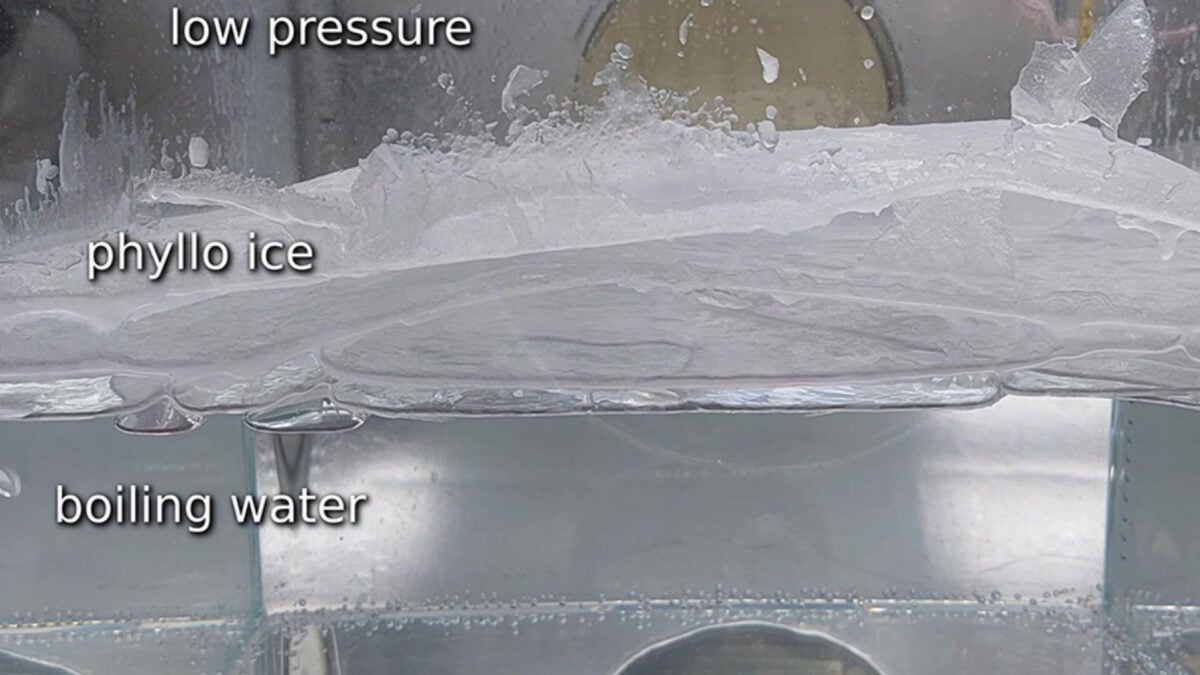
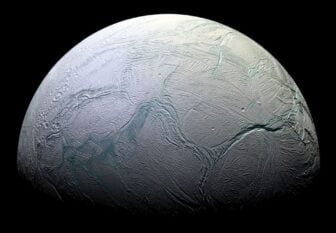
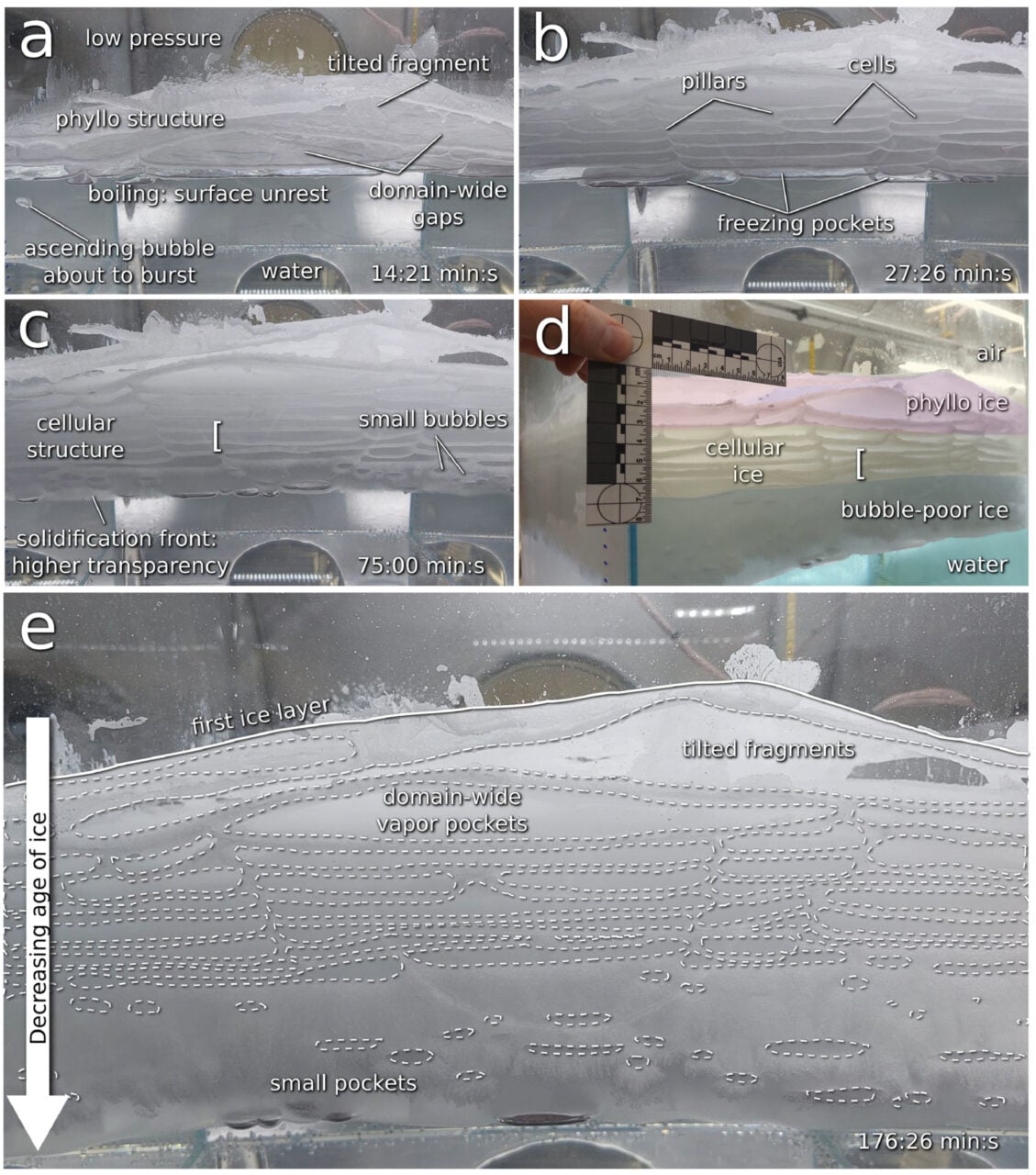
Of the hundreds of confirmed moons orbiting Jupiter and Saturn, NASA describes Europa and Enceladus as “ promising ” and “ compelling .” Researchers suspect that these icy moons have liquid water oceans beneath their frozen surface, making them top research targets for big stakeholders like ESA or NASA. But a new study identifies a strange hazard for ocean-moon-bound missions: “fluffy” ice. If, as researchers predict, cryovolcanic eruptions contribute to the formation of the moons’ icy shells, the extremely low pressures would generate a layered, highly porous ice with a texture reminiscent of, well, a croissant. In a recent Earth and Planetary Science Letters paper, the team describes a vacuum chamber experiment that simulated the low-gravity environment of Jupiter’s Europa and Saturn’s Enceladus. According to the tests, on (mock) Europa, water freezes into brittle sheets around 7.8 inches (20 centimeters), whereas on (mock) Enceladus these sheets can grow up to 787 feet (20 meters) thick.…