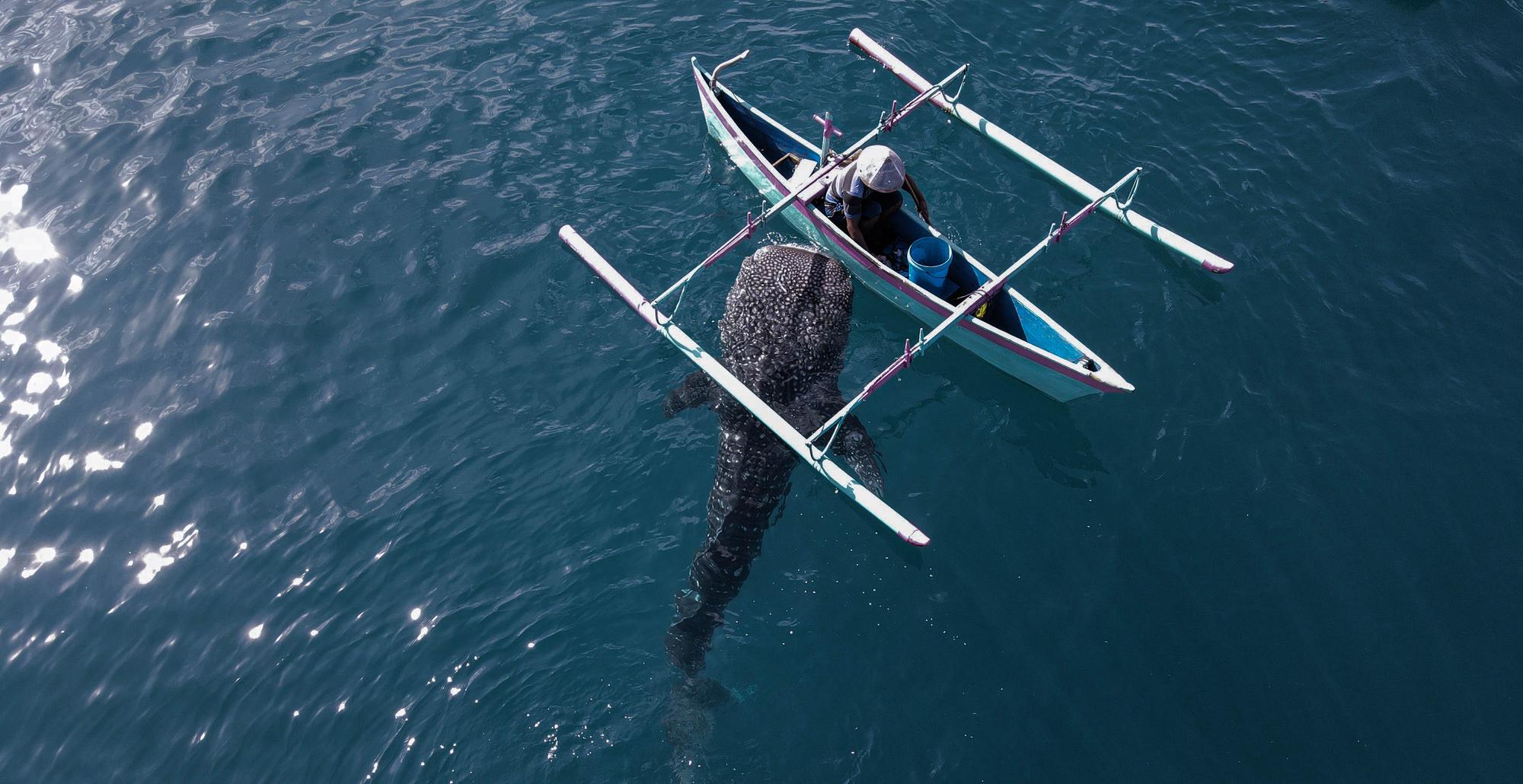
The world’s largest fish is also one of the ocean’s great vanishing acts. For years, scientists have wondered where whale sharks go to feed, reproduce and grow. Now, a decade of satellite tracking data is beginning to reveal the answer — and it has major implications for their survival. The new study , led by Konservasi Indonesia, Conservation International’s local partner, tracked more than 70 Indo-Pacific whale sharks in waters spanning 13 countries and the high seas. What they found were wayward migrations — each shark charting its own course — which may offer clues to a global mystery: how an animal the size of a school bus has remained so elusive. “Other migratory species tend to follow a script,” said Iqbal Herwata, Konservasi Indonesia marine scientist and lead author of the study. “Whale sharks have never made sense. Until now.” Researchers deploy a satellite tag on a whale shark in Saleh Bay.…