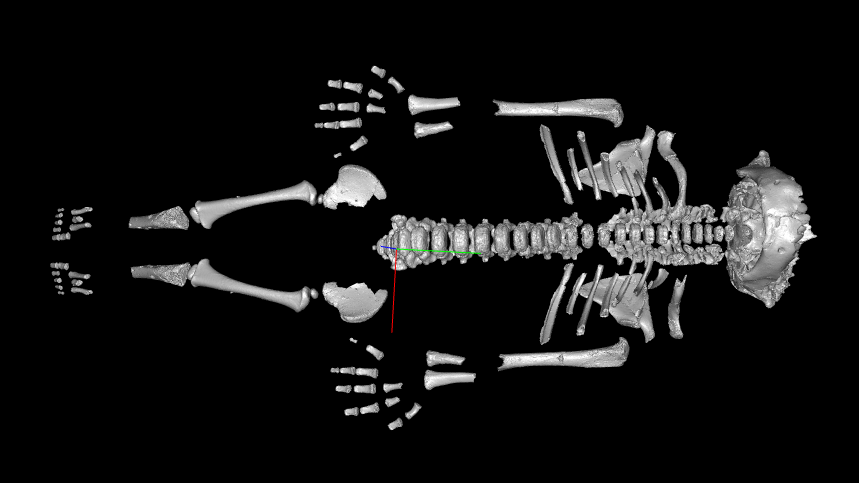
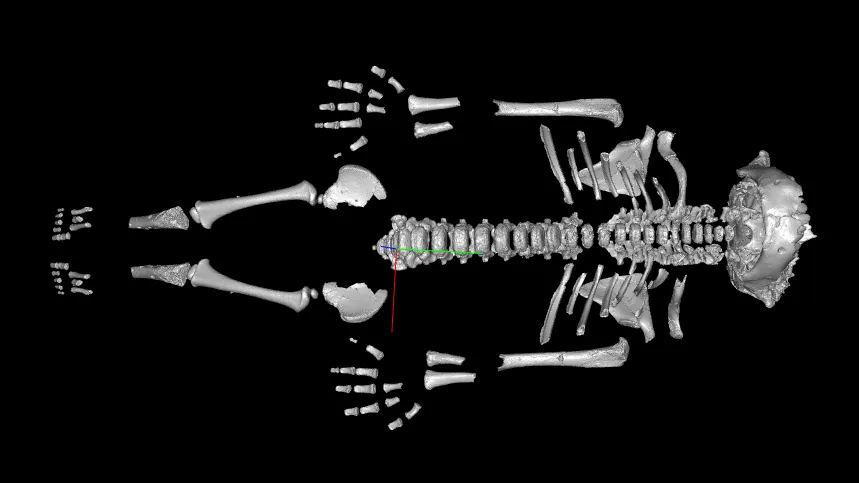
The researchers made a 3D model of the Amud 7 Neanderthal skeleton. (Image credit: Been et al. ( CC BY 4.0 )) Neanderthal toddlers grew faster than their modern human counterparts, likely as an adaptation to living in a cold, harsh environment, new research suggests. The discovery, which was made using the bones of a young Neanderthal discovered in Amud Cave in northern Israel in the 1990s, suggests that Neanderthals and modern humans ( Homo sapiens ) followed different evolutionary paths after they split from a common ancestor around 600,000 years ago, the researchers reported April 15 in the journal Current Biology . The Amud 7 skeleton was found in more than 100 pieces, which included fragments of the child's arms, legs, chest and skull, all of which displayed distinctively Neanderthal anatomical features even at the child's young age. However, because Neanderthal infant skeletons are rarely found, the actual age at death of Amud 7 has been difficult for researchers to pin down.…