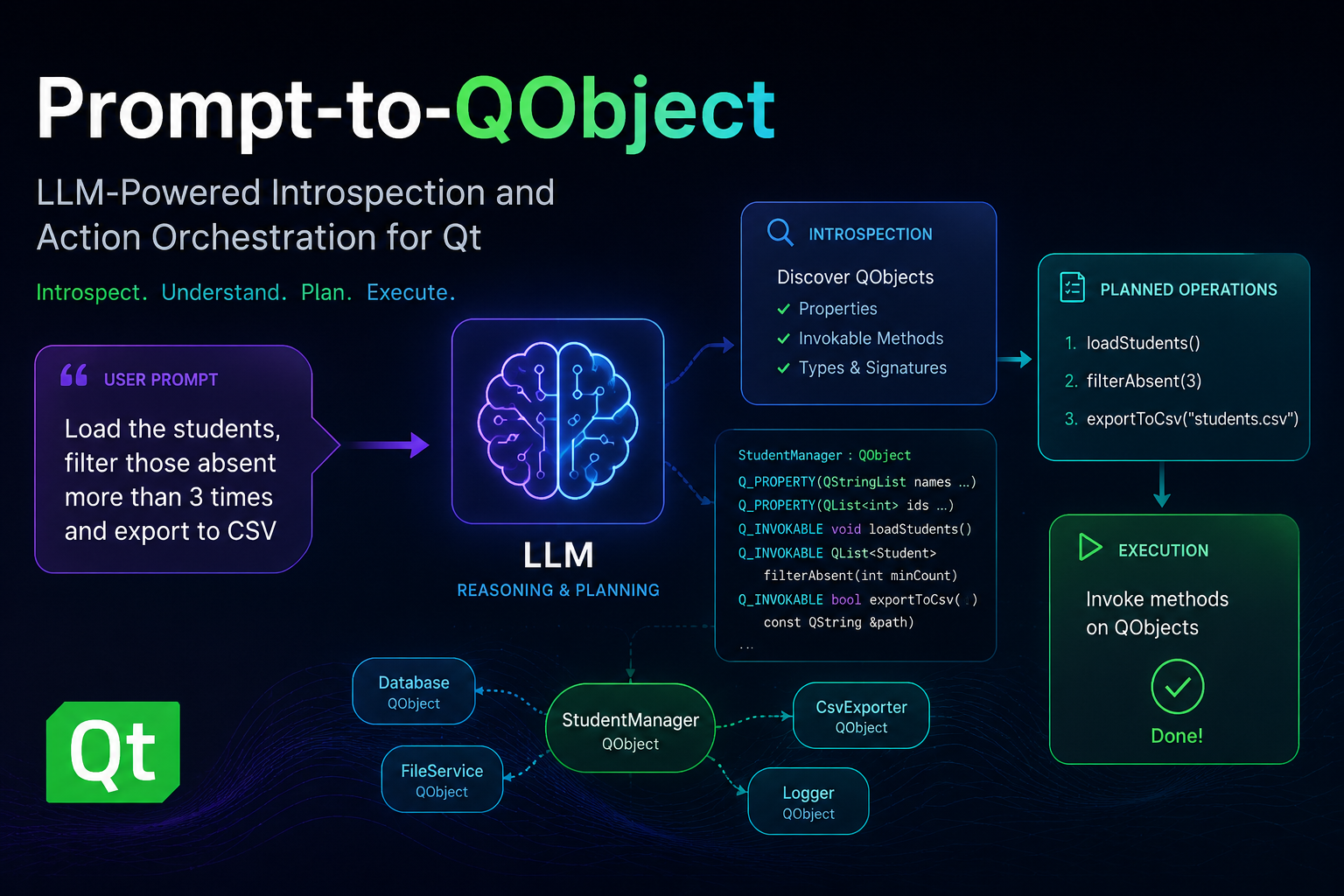
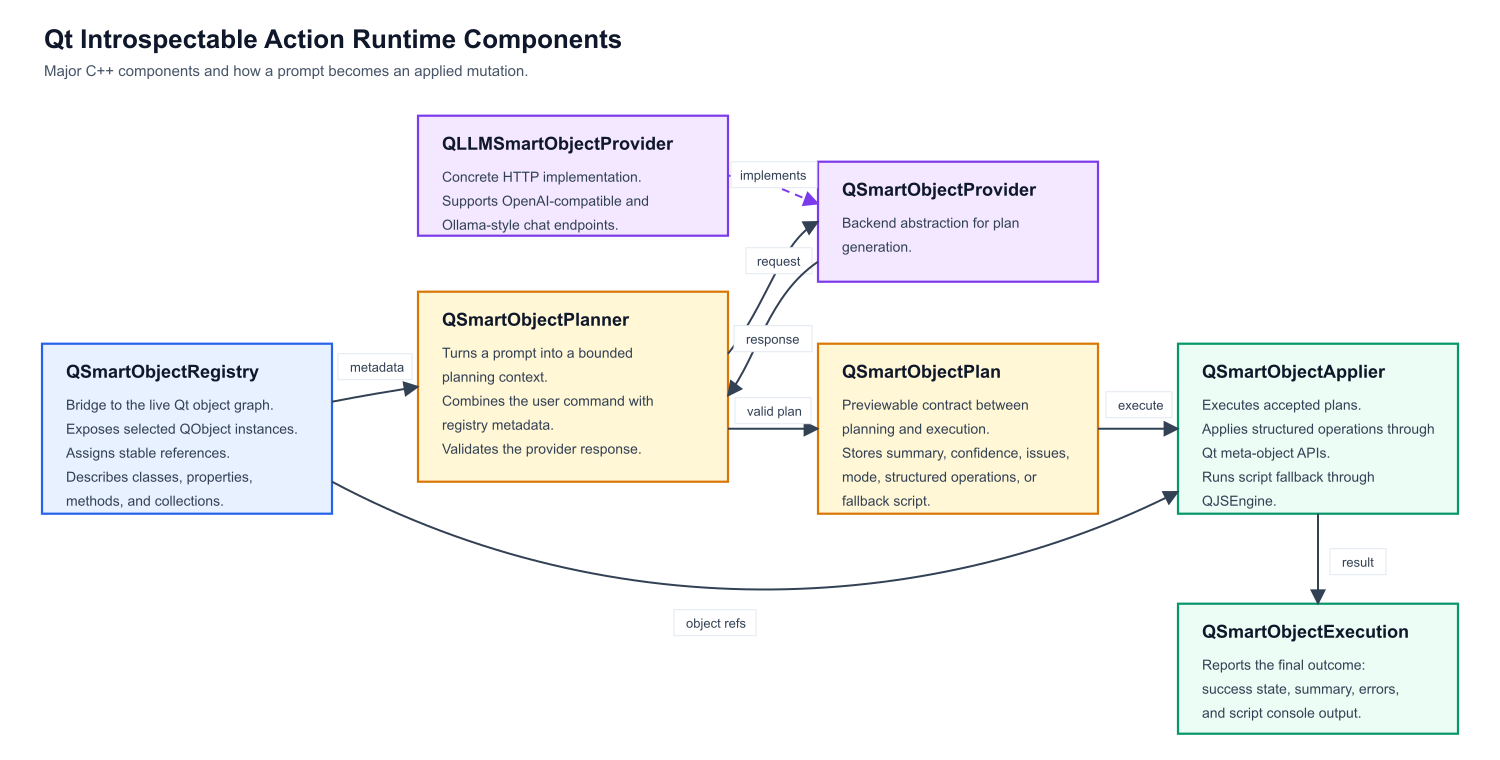
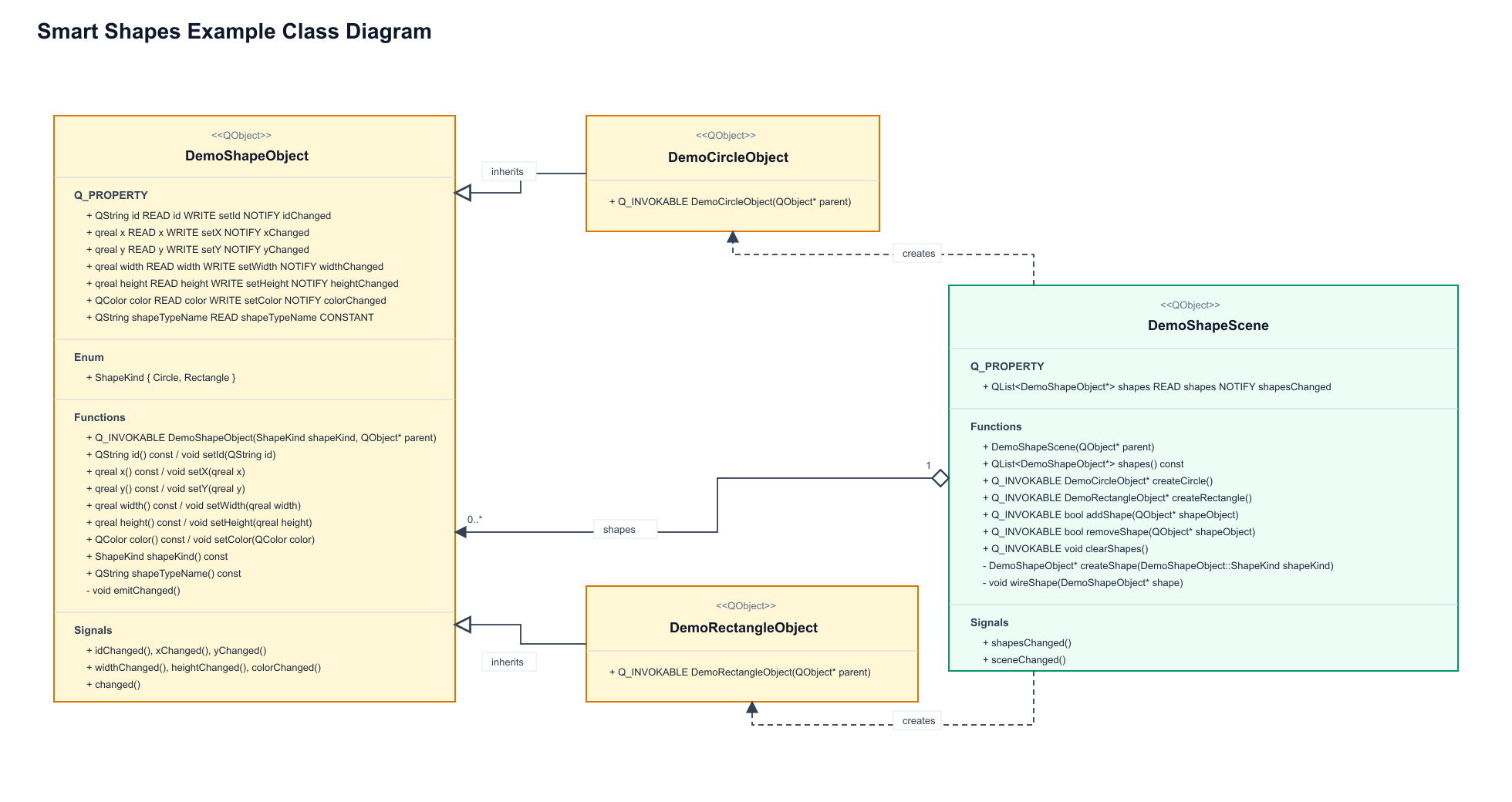
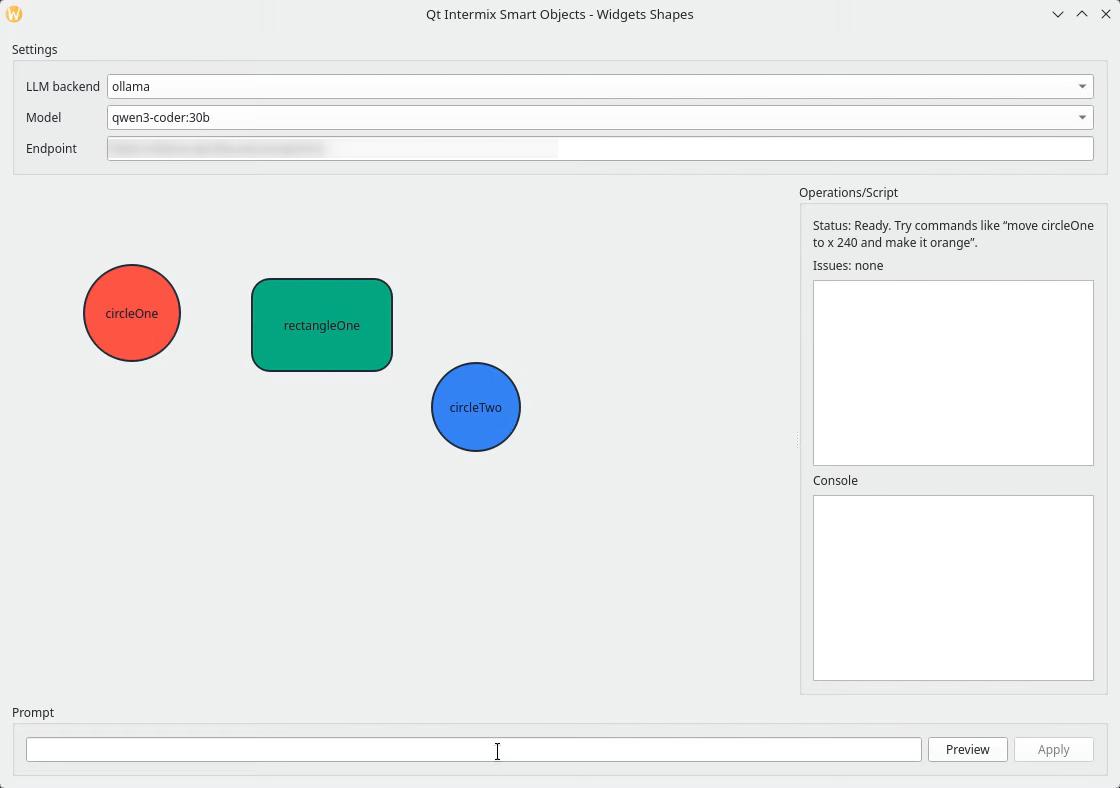
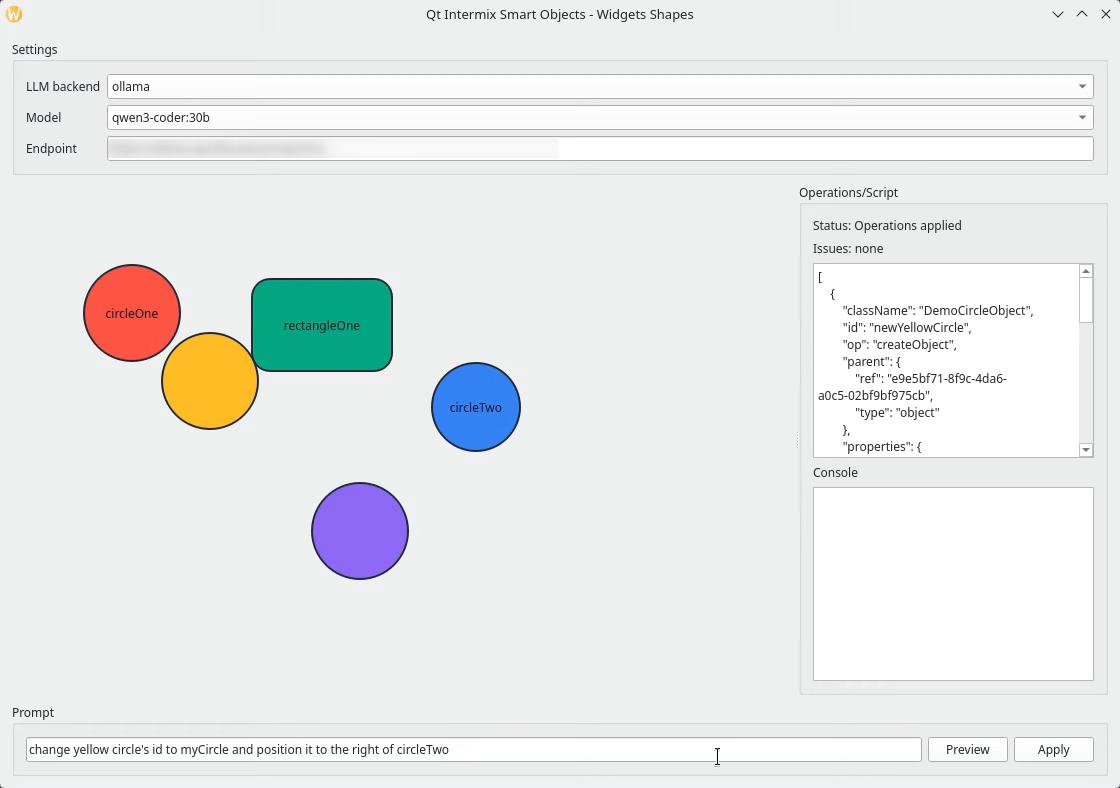
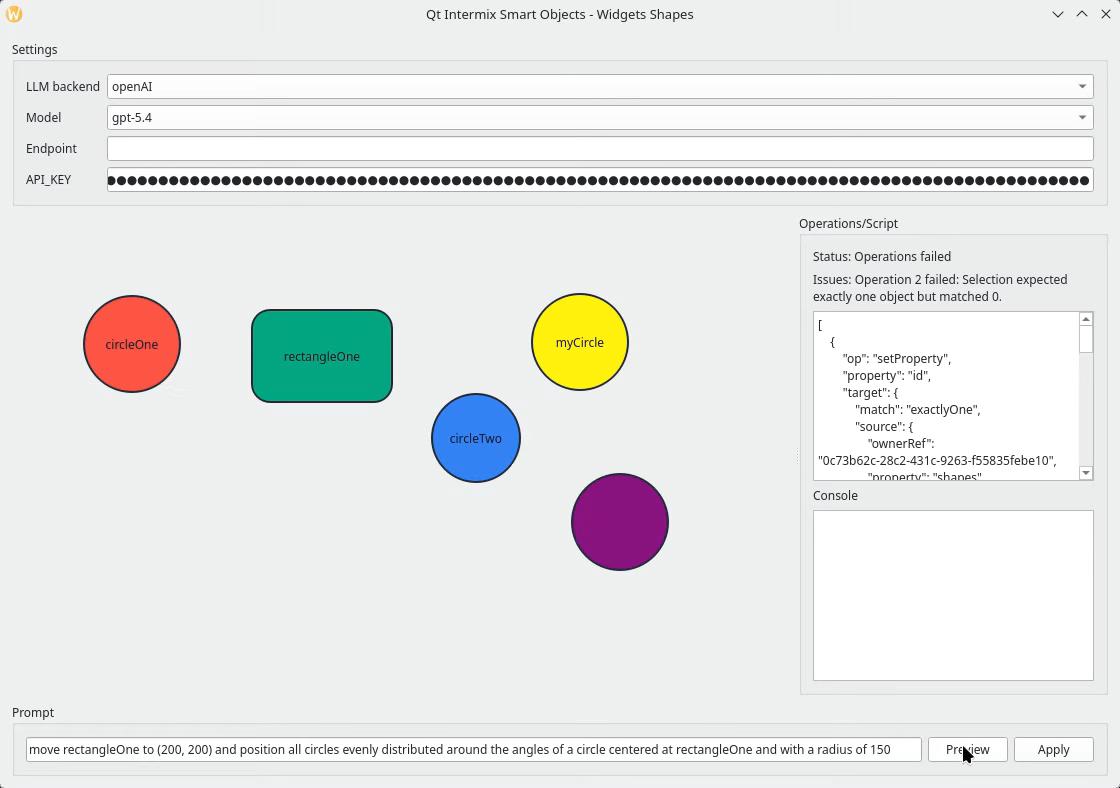
TL;DR: this post presents an introspectable action runtime for AI-enabled Qt applications, where selected QObject instances are exposed through a smart-object registry, translated into a bounded planning context, and mutated through previewable, validated plans. The approach relies on Qt’s existing meta-object system, using Q_PROPERTY, Q_INVOKABLE, object registration, recursive type discovery, and structured operations to keep LLM-generated actions constrained to the actual runtime object graph. The Smart Shapes QML and C++ examples show promising results with both a self-hosted qwen3-coder:30b model and OpenAI’s gpt-5.4 , while also exposing practical challenges around prompt refinement, context size, multi-action requests, operations versus JavaScript fallback, and domain-specific instructions. Future work points toward larger applications, stronger validation and permissions, better context management, and possibly a generic reflective MCP server for Qt applications.…