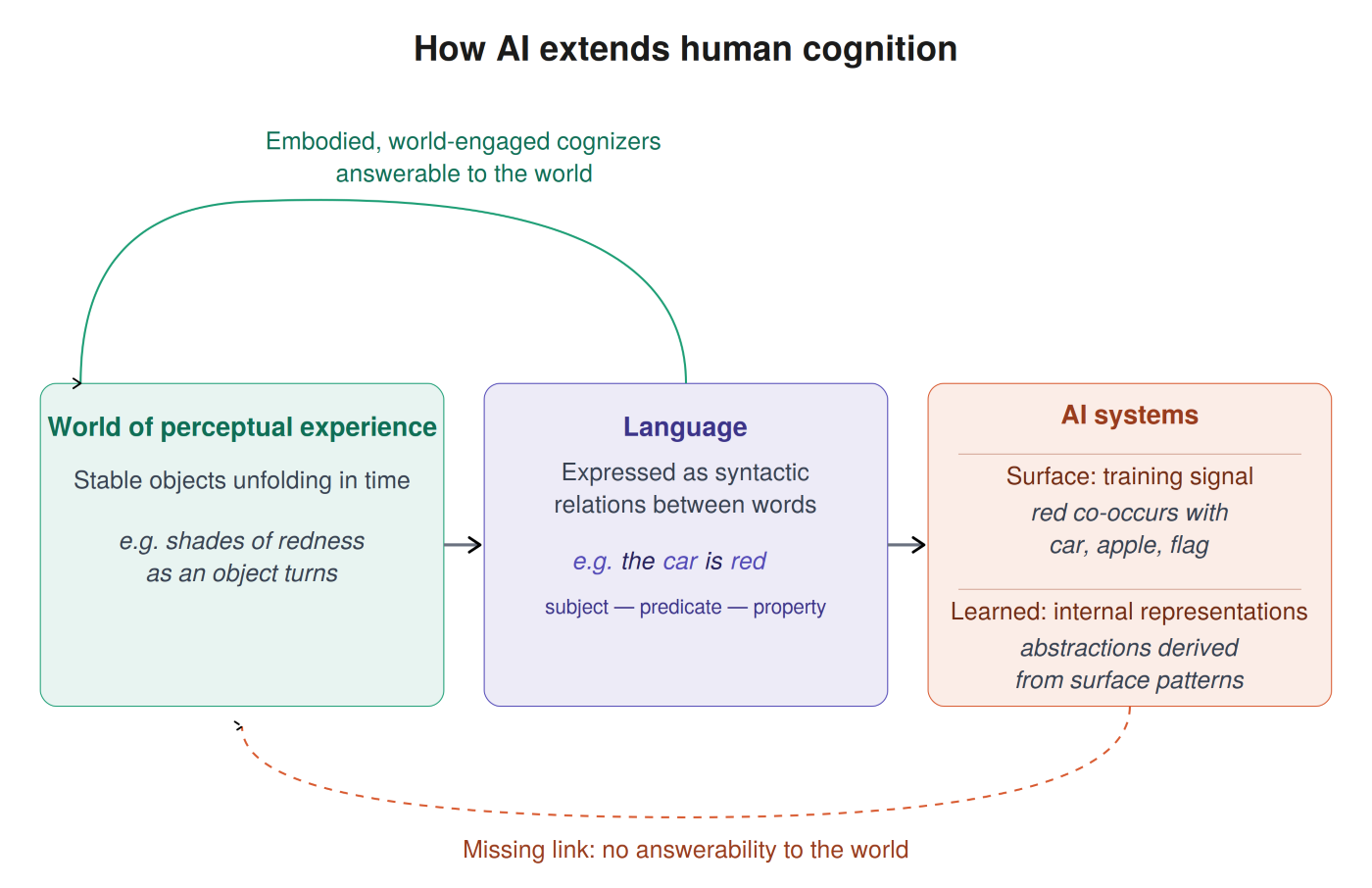
At a glance Modern AI systems are powerful not because they replicate human intelligence, but because they presuppose it, by extending structures already present in human cognition and language. This perspective helps explain both AI’s remarkable capabilities and its recurring boundaries, including hallucinations and breakdowns in reasoning. This research argues that AI safety is a system-level challenge, shifting attention from “rogue AI” narratives toward harnessing engineering and governance. Understanding AI as an extension of human intelligence—not a replacement for it—offers a more grounded path for building trustworthy AI systems. AI systems today can write essays, generate code, summarize complex ideas, and carry on conversations with remarkable fluency. Yet those same systems still struggle with tasks humans find intuitive: reliably tracking objects through change, reasoning compositionally in unfamiliar situations, or distinguishing truth from plausible fiction.…