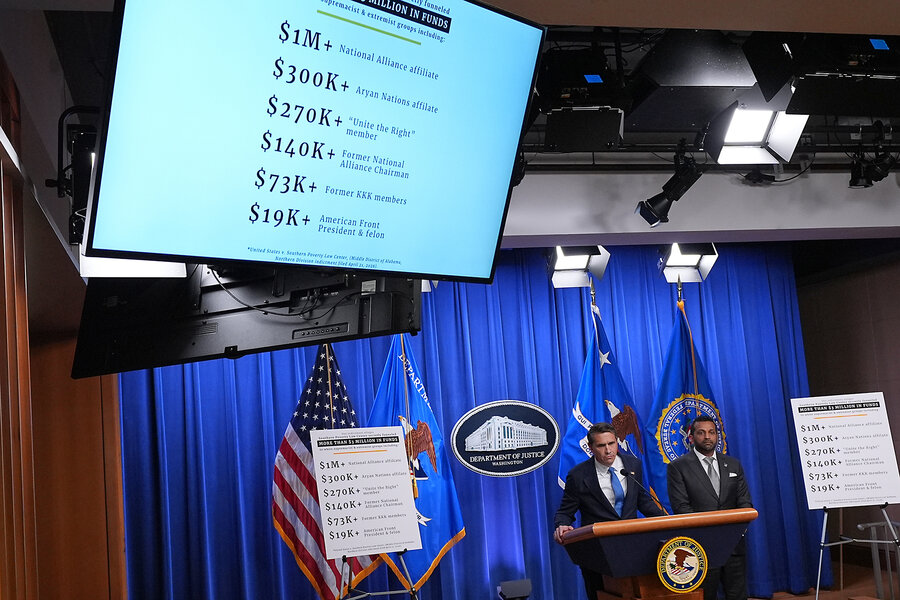
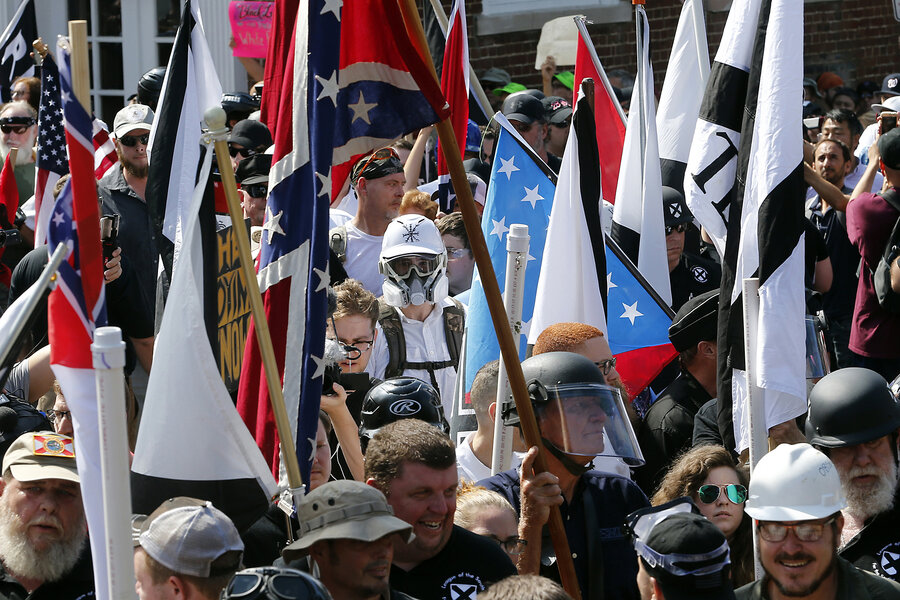
David Gletty has wrestled alligators to prove his bona fides to extremists. He once shot up an empty Florida nightclub to deter an anti-racism event, to the delight of his FBI handlers. And as a solid roller skater, Mr. Gletty, a paid informant, performed on a roller derby TV show while investigating alleged tax fraud by the show’s producers. This week’s indictment against the Southern Poverty Law Center, on charges of defrauding donors and promoting hate, centers on its use of informants such as Mr. Gletty. Since at least the 1960s, paid informants have been used not just by local and federal law enforcement but also by nonprofits across the political spectrum. These groups, including the SPLC, a well-known civil rights advocacy group, use such informants to build civil cases against extremist groups such as the Ku Klux Klan. Why We Wrote This The Trump administration’s charges against the Southern Poverty Law Center highlight concerns about how informants operate within extremist groups.…