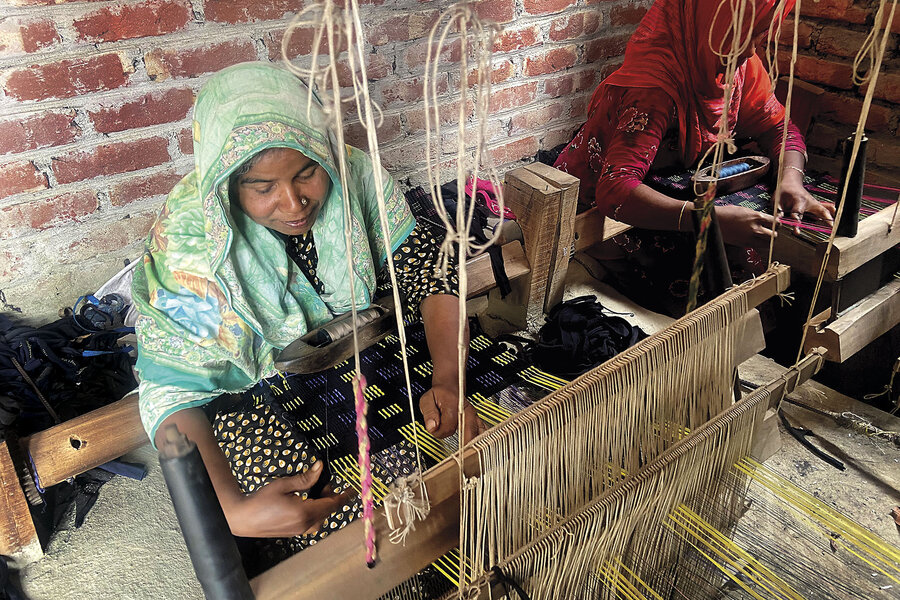
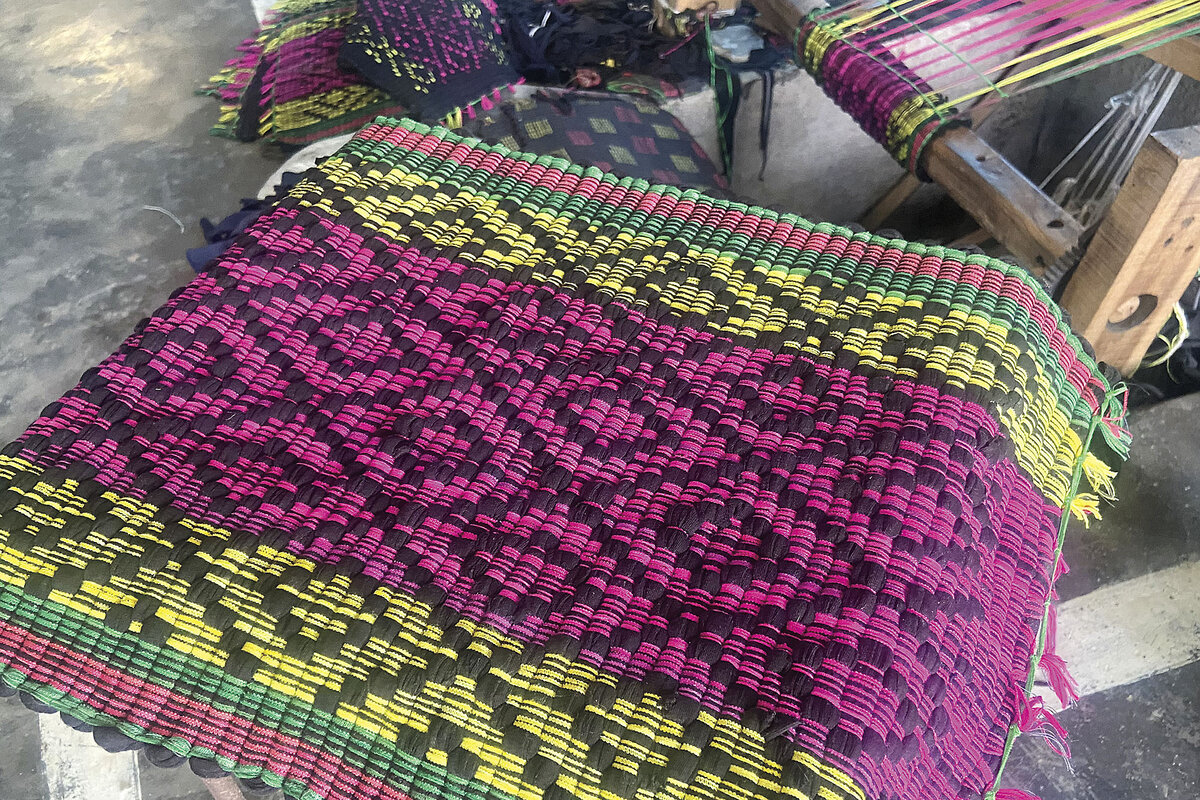
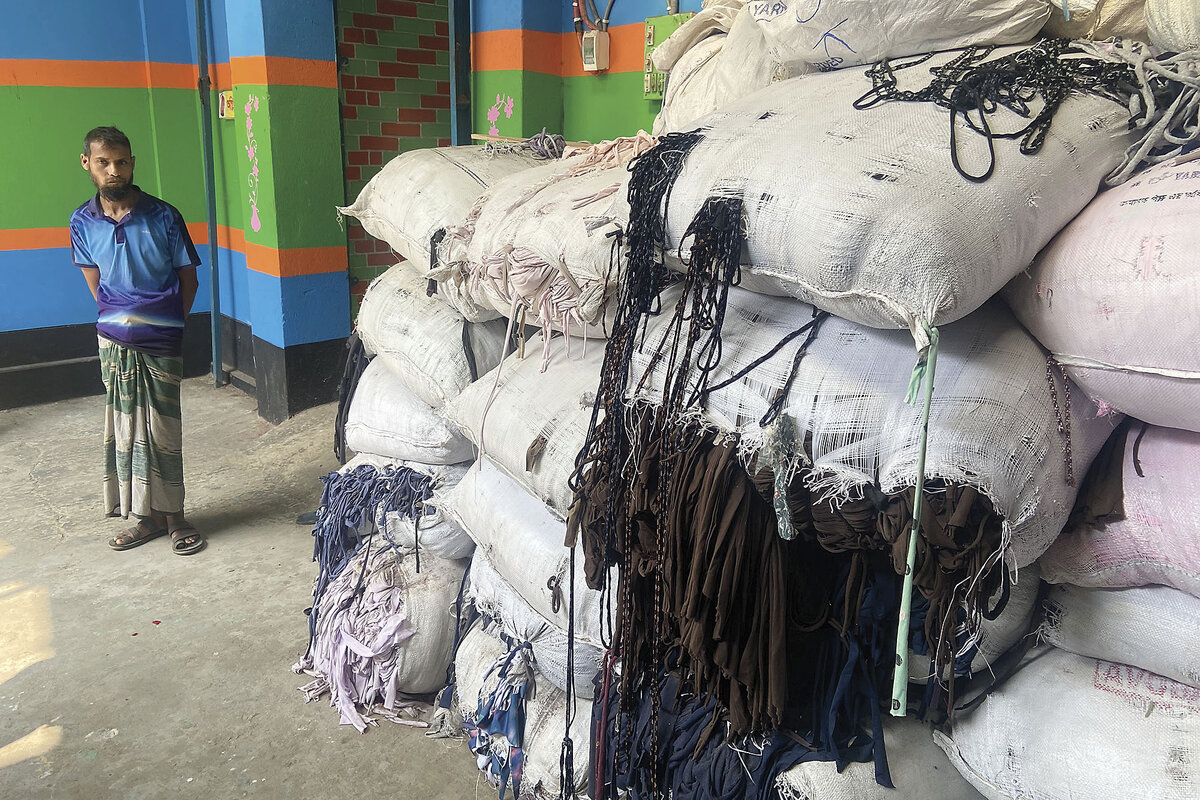
Muhammad Hazrat Ali’s cramped village factory is a far cry from the mechanized garment plants of Bangladesh’s capital, where around 4 million workers churn out billions of dollars worth of apparel for export every year. It takes all day to reach his business from Dhaka; the border with India is closer. Inside the modest cluster of buildings, the click and clack of handlooms, operated mostly by women, blend with barnyard sounds outside. But this small business, surrounded by fields of rice and wheat, is tied to Bangladesh’s booming garment industry, as evidenced by the giant bales of cotton scraps stacked at the entrance. Mr. Ali recycles this fabric into handwoven rugs and mats, known as shataranji , a traditional Bangladeshi craft that has helped uplift rural communities.…