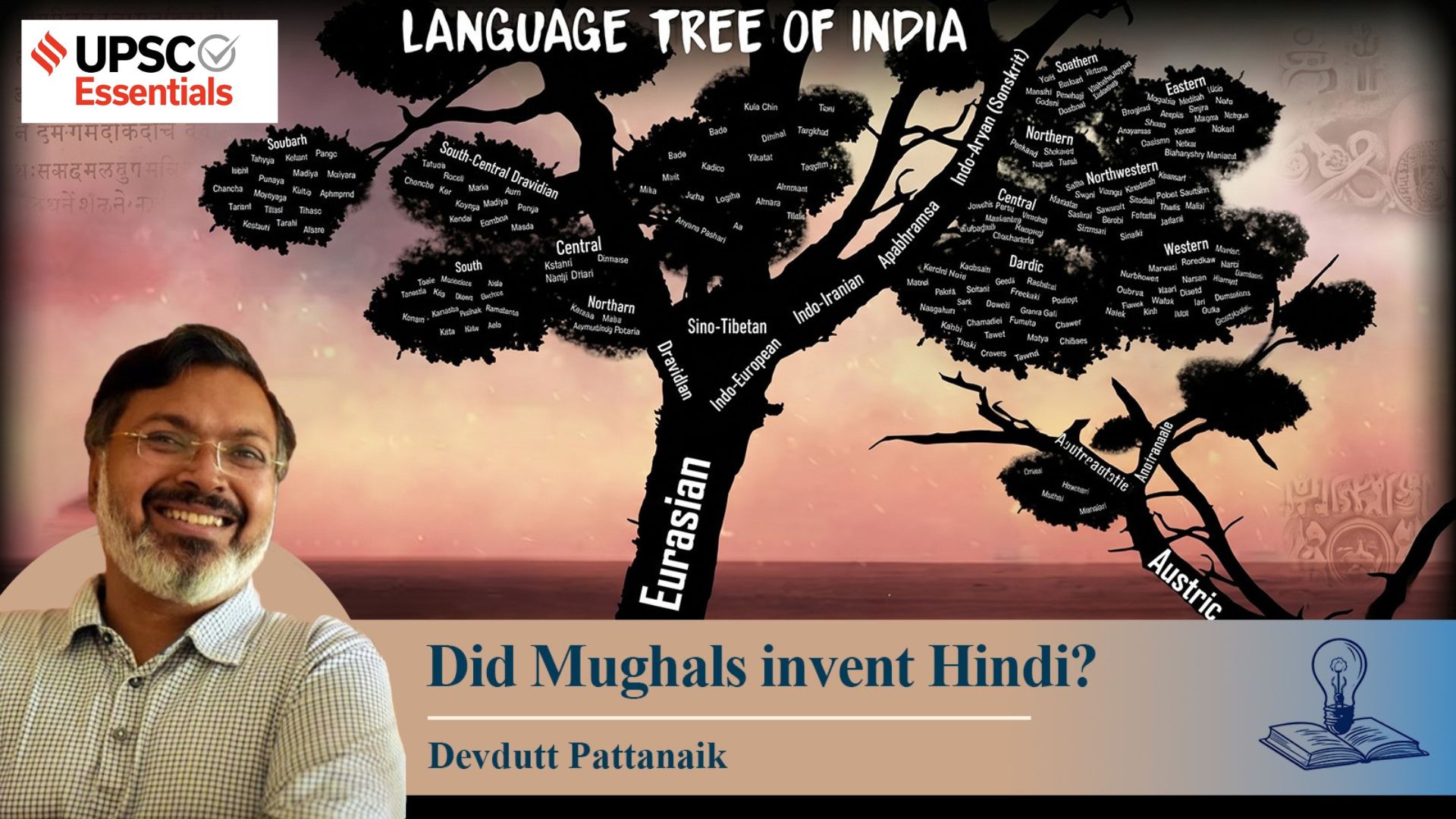
Hindi is often described as a language born in Mughal barracks, as if it were simply the speech of imperial camps. This is an attractive phrase, but it is historically incomplete. The story of Hindi is much older, far wider , and far more layered. To understand how Hindi evolved, students must look not only at the Mughal world, but also at the older Indo-Aryan roots of north India and the crucial role played by the Deccan. The foundations of Hindi were laid long before the Mughals arrived in India. Its grammar and basic structure descend from the ancient linguistic chain of Sanskrit, Prakrit, Apabhramsha, and then the early vernaculars of north India. The speech forms of the Ganga-Yamuna doab, especially around Delhi and western Uttar Pradesh, gradually evolved into what scholars call Khari Boli and Hindavi. These dialects were in existence centuries before the Mughal empire was established.…