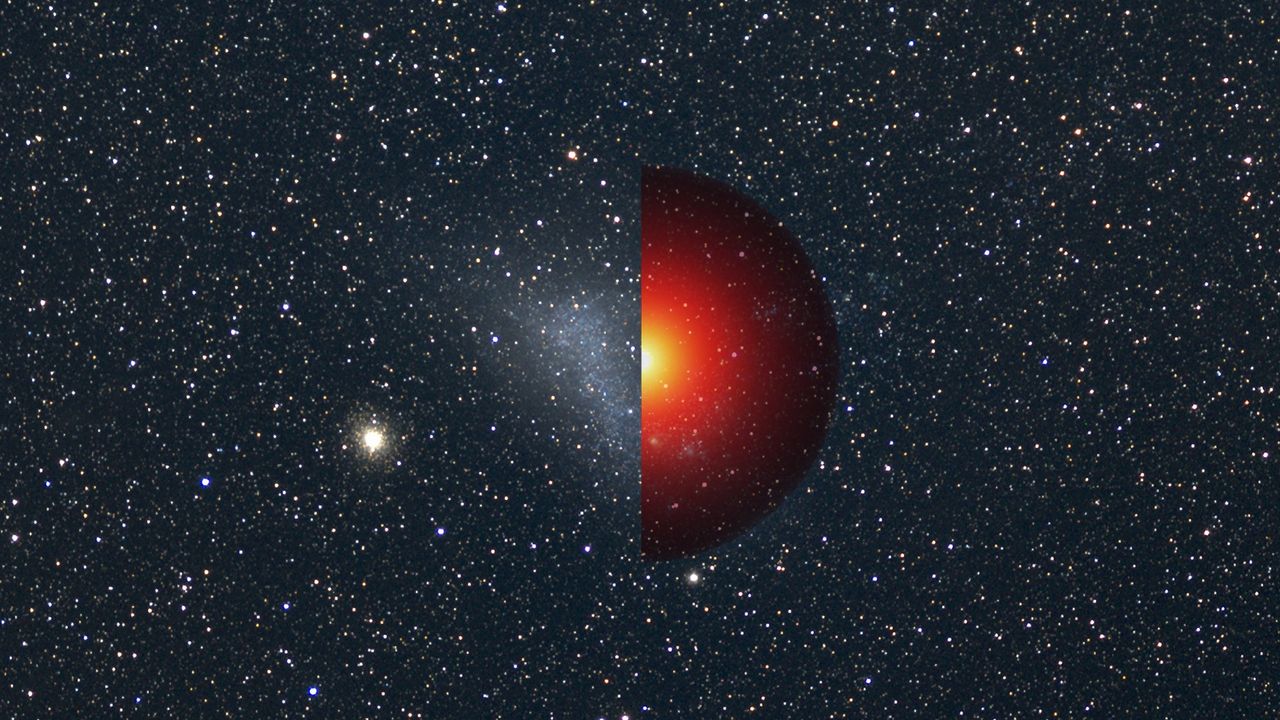
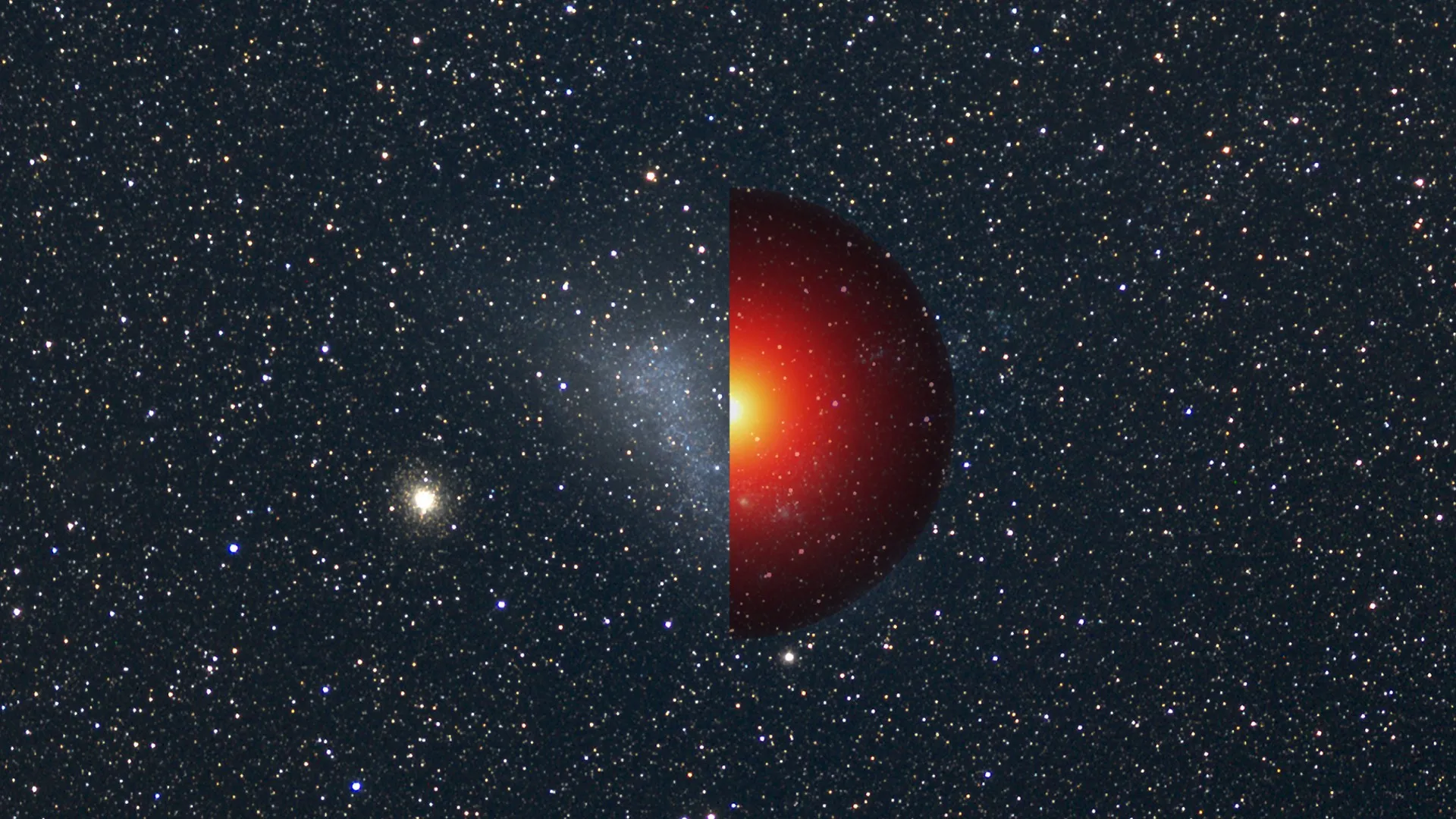
A NASA graphic depicting a galaxy with a red half-circle superimposed over it to represent the mass of dark matter believed to be found there. (Image credit: Dark matter, R. Caputo et al. 2016; background, Axel Mellinger, Central Michigan University) Anyone who has been paying attention to cosmology over the past few years is aware of problems with our best attempts to explain why the universe is the way it is. Our standard model, Lambda-CDM (or LCDM), is one of the most successful theories in the history of science. It accounts for the cosmic microwave background , the large-scale distribution of galaxies, the abundances of light elements, and basically every other large-scale observation we throw at it. The trouble lies with that capital L. Lambda is the cosmological constant, Einstein's placeholder for the energy of empty space, and it does the heavy lifting of explaining why the universe's expansion is accelerating. The trouble is that we have no idea why Lambda has the value it does.…