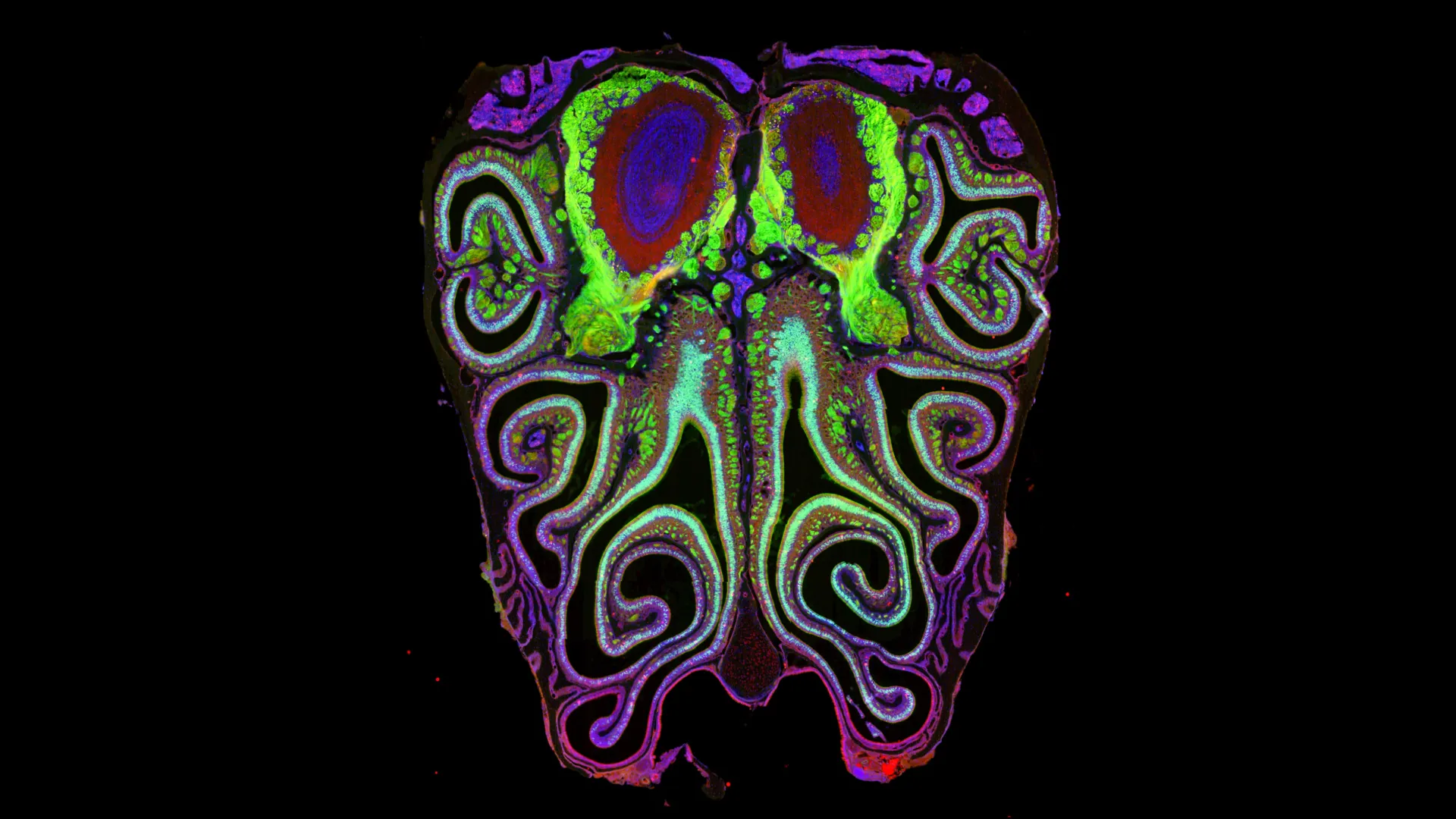
Smell shapes how we experience the world every day. It helps us detect hazards, adds depth to flavor, and connects strongly to memory and emotion. Despite its importance, scientists have struggled to fully understand how this sense works at a biological level. "Olfaction is super-mysterious," said Sandeep (Robert) Datta, professor of neurobiology in the Blavatnik Institute at Harvard Medical School. Compared with vision, hearing, and touch, the basic biology of smell has remained less understood. Scientists Create First Detailed Map of Smell Receptors In a new study using mice, Datta and his colleagues built the first detailed map showing how more than a thousand types of smell receptors are arranged inside the nose. What they found challenges long-standing assumptions. Instead of being randomly distributed, the neurons that carry these receptors are highly organized. They form horizontal bands, or stripes, running from the top of the nose to the bottom, grouped by receptor type.…