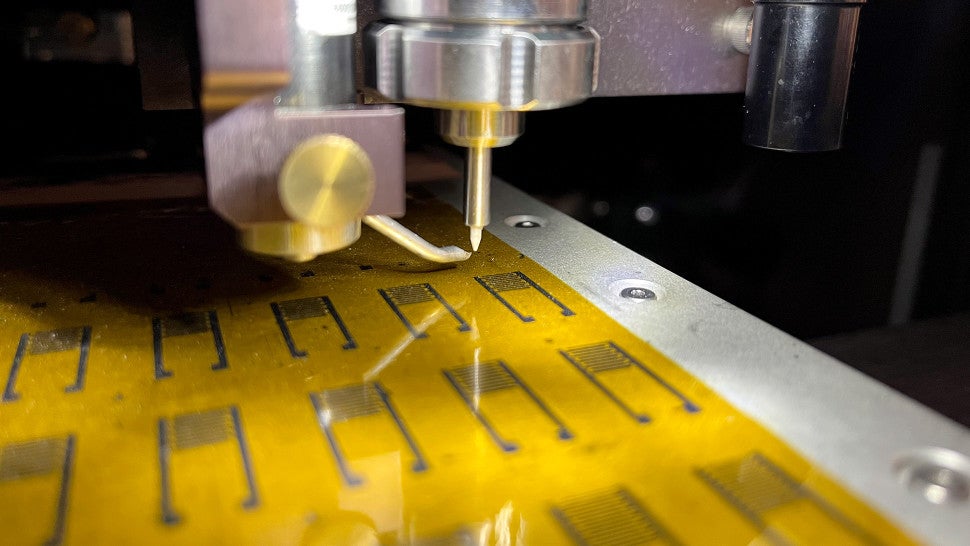
As AI demands ever more power , researchers are looking to the brain for more efficient ways to process information. A new approach uses soft, flexible electronics to create artificial neurons that can mimic biological signaling and even directly interface with living neural tissue. Researchers have long attempted to create so-called “neuromorphic” chips made of artificial neurons that mimic the spiking behavior of their biological counterparts. But there are still wide gaps between how these devices and brains operate. Real neurons in the brain display a wide variety of activity patterns, which helps them encode and process information extremely efficiently. In contrast, most artificial neurons are carbon copies of each other with highly uniform spiking behavior, forcing neuromorphic chips to use millions of these neurons to achieve even modest functionality.…