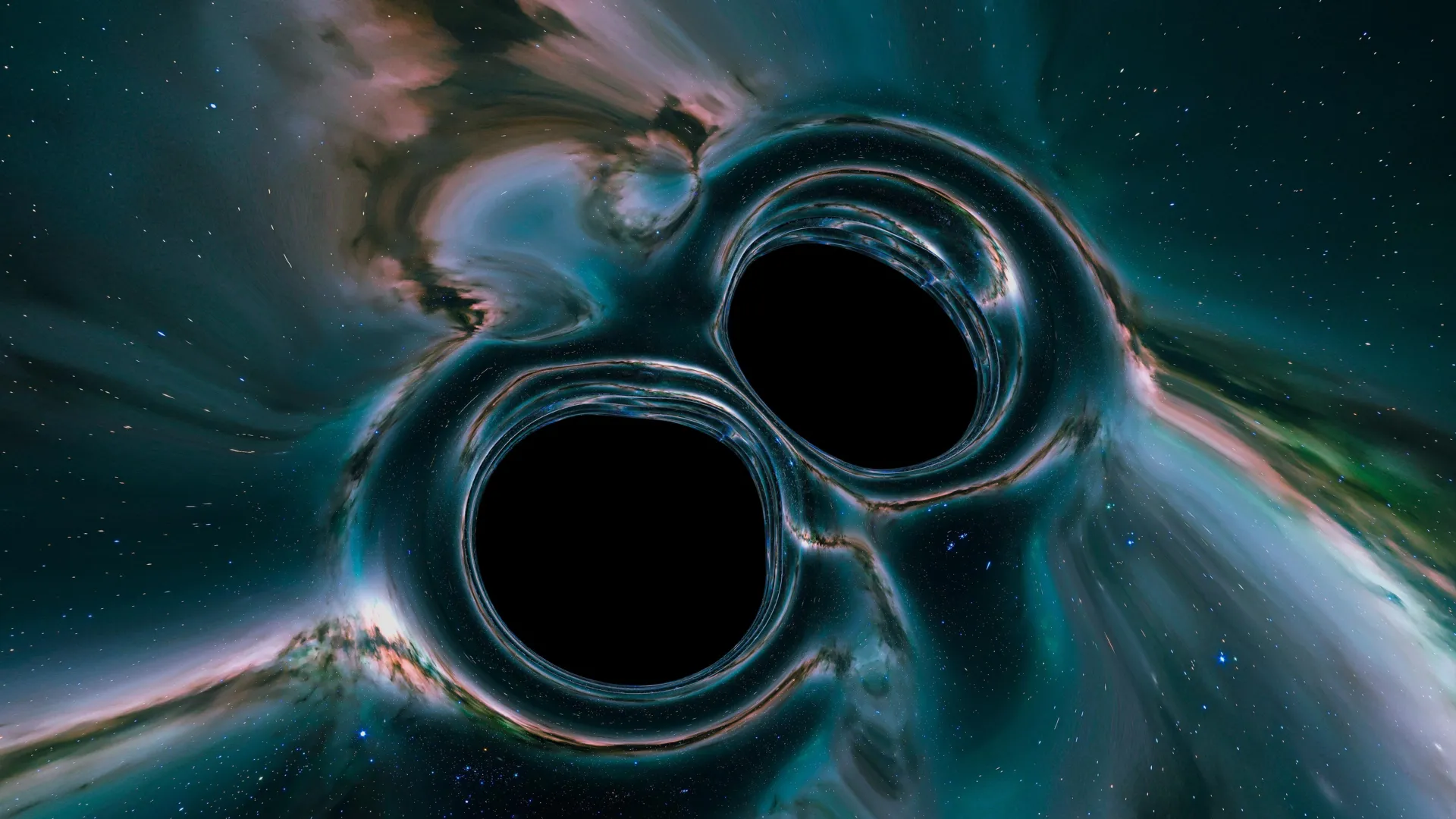
Scientists studying gravitational waves believe they may have uncovered how the Universe creates its biggest black holes. Instead of forming directly from collapsing stars, these enormous objects appear to grow through repeated black hole collisions inside extremely crowded star clusters. The new research, led by Cardiff University, examined version 4.0 of LIGO-Virgo-KAGRA's Gravitational-Wave Transient Catalog (GWTC4), which contains 153 reliable detections of merging black holes. Researchers focused on whether the largest black holes in the catalog could be "second-generation" objects. In this scenario, black holes formed from dying stars collide with each other, then merge again in dense stellar environments where stars are packed up to a million times more tightly than around our Sun. The findings, published in Nature Astronomy , suggest the most massive black holes detected through gravitational waves belong to a separate class with a very different history from smaller black holes.…