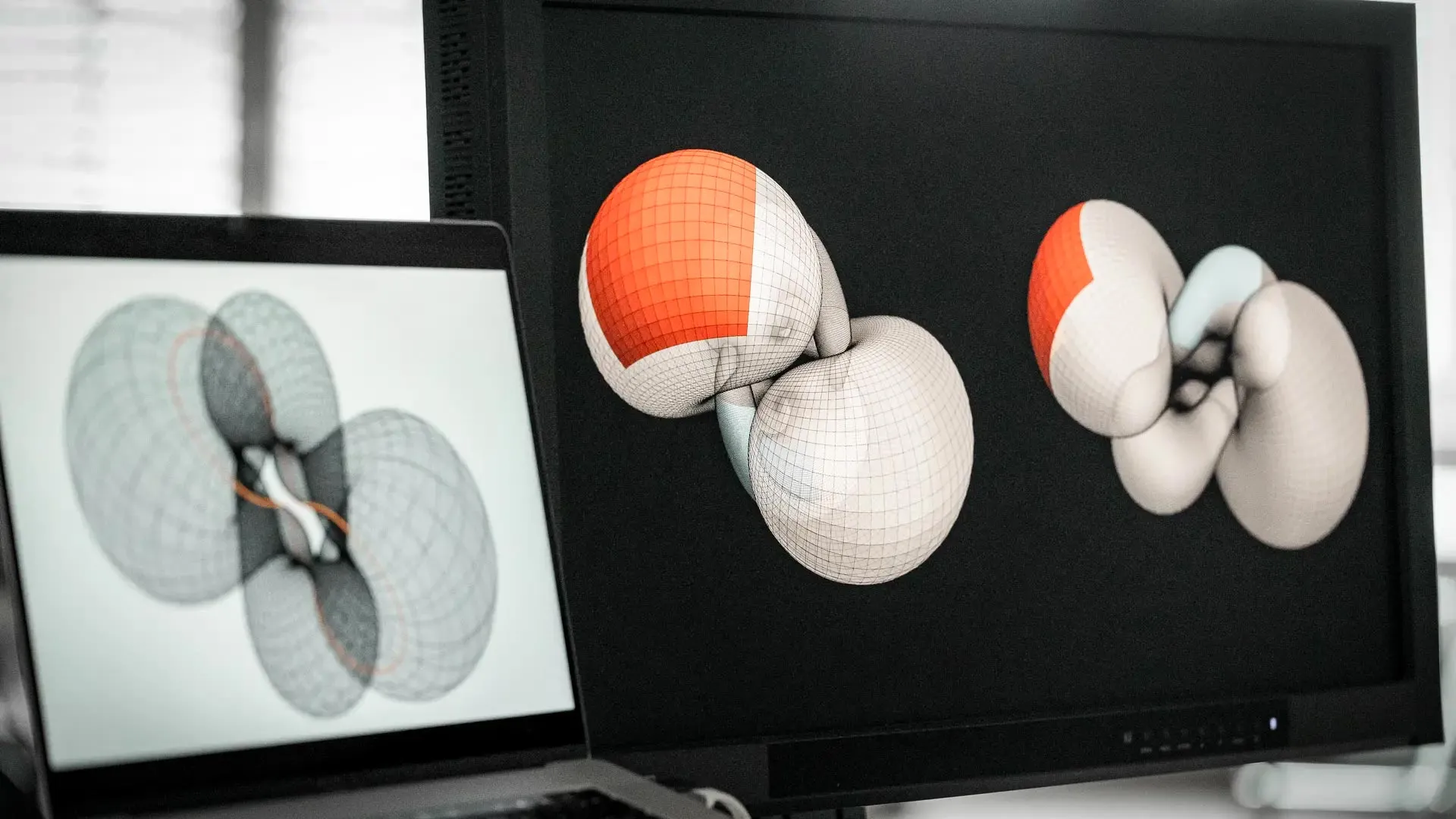
For more than 150 years, a guiding idea in geometry has shaped how mathematicians think about surfaces. Originating with the French mathematician Pierre Ossian Bonnet, the principle states that if you know two key properties of a compact surface at every point, its metric and its mean curvature, then you can determine its exact shape. A new result from mathematicians at the Technical University of Munich (TUM), the Technical University of Berlin, and North Carolina State University now shows that this assumption does not always hold. To challenge the long-accepted idea, the researchers built two compact, self-contained surfaces shaped like doughnuts, known as tori. These two surfaces share identical values for both metric and mean curvature, yet their overall structures are not the same. This type of example had been sought for decades but had never been found until now. The metric describes distances along a surface, meaning how far apart two points are when measured across it.…