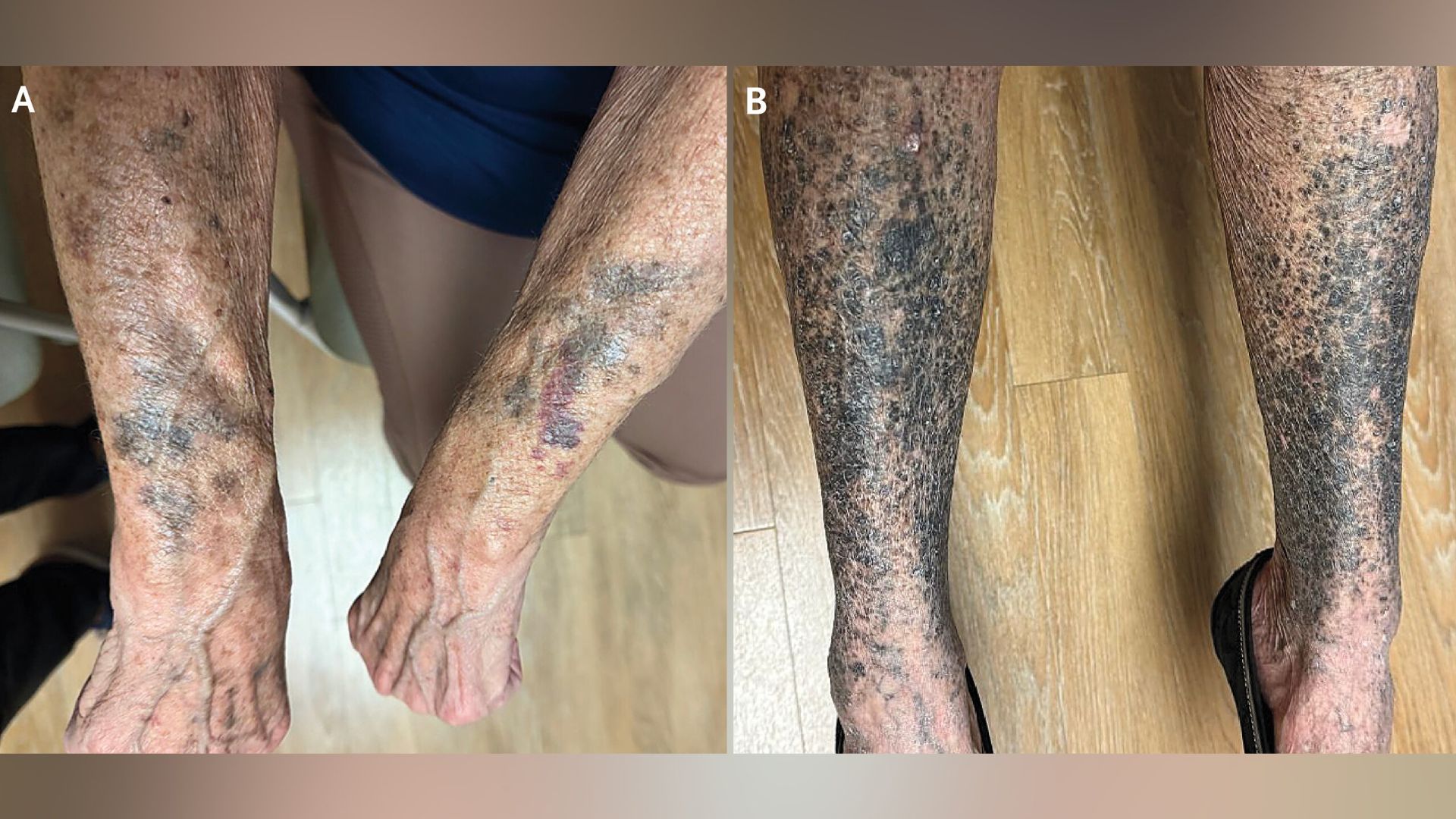
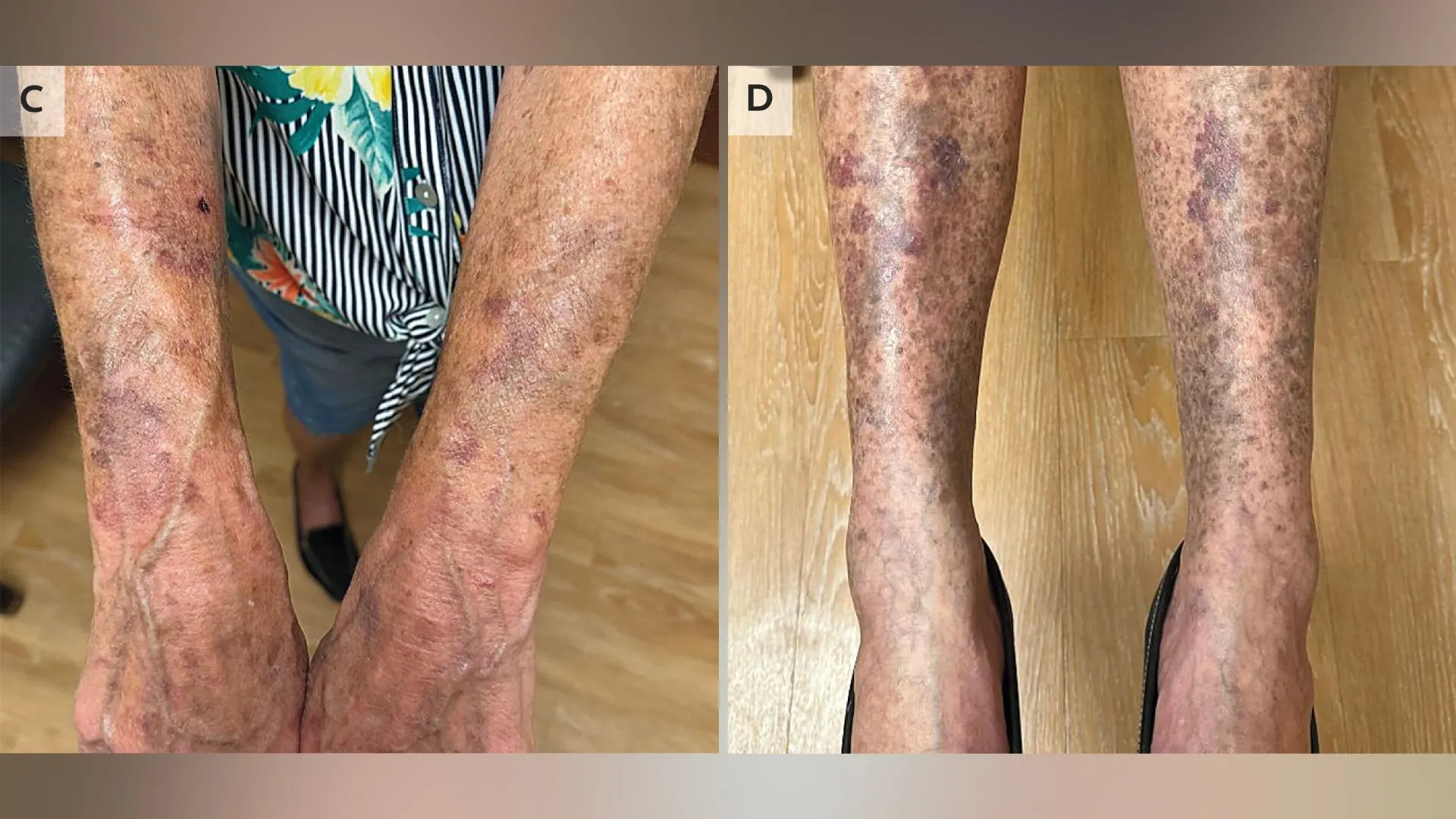
The patient: A 68-year-old woman in the U.S. The symptoms: Over the course of six weeks, dark patches appeared on the woman's arms and legs. The splotches ranged from a bruise-like dark blue and purple to jet-black. She also told doctors that, two weeks before the patches appeared, she'd started a course of minocycline , an oral antibiotic. She had been prescribed a daily 100-milligram dose of the drug to treat symptoms of rosacea, which causes chronic inflammation and redness of the face. This inflammation can drive the formation of small, red bumps and pus-filled pimples on the skin, and evidence suggests that antibiotics like minocycline can help eliminate those bumps . In addition to killing bacteria, the drug is known to have anti-inflammatory effects , the latter of which may best explain how it treats rosacea. The diagnosis: A well-established side effect of minocycline is hyperpigmentation, in which patches of skin become darker than the skin surrounding them.…