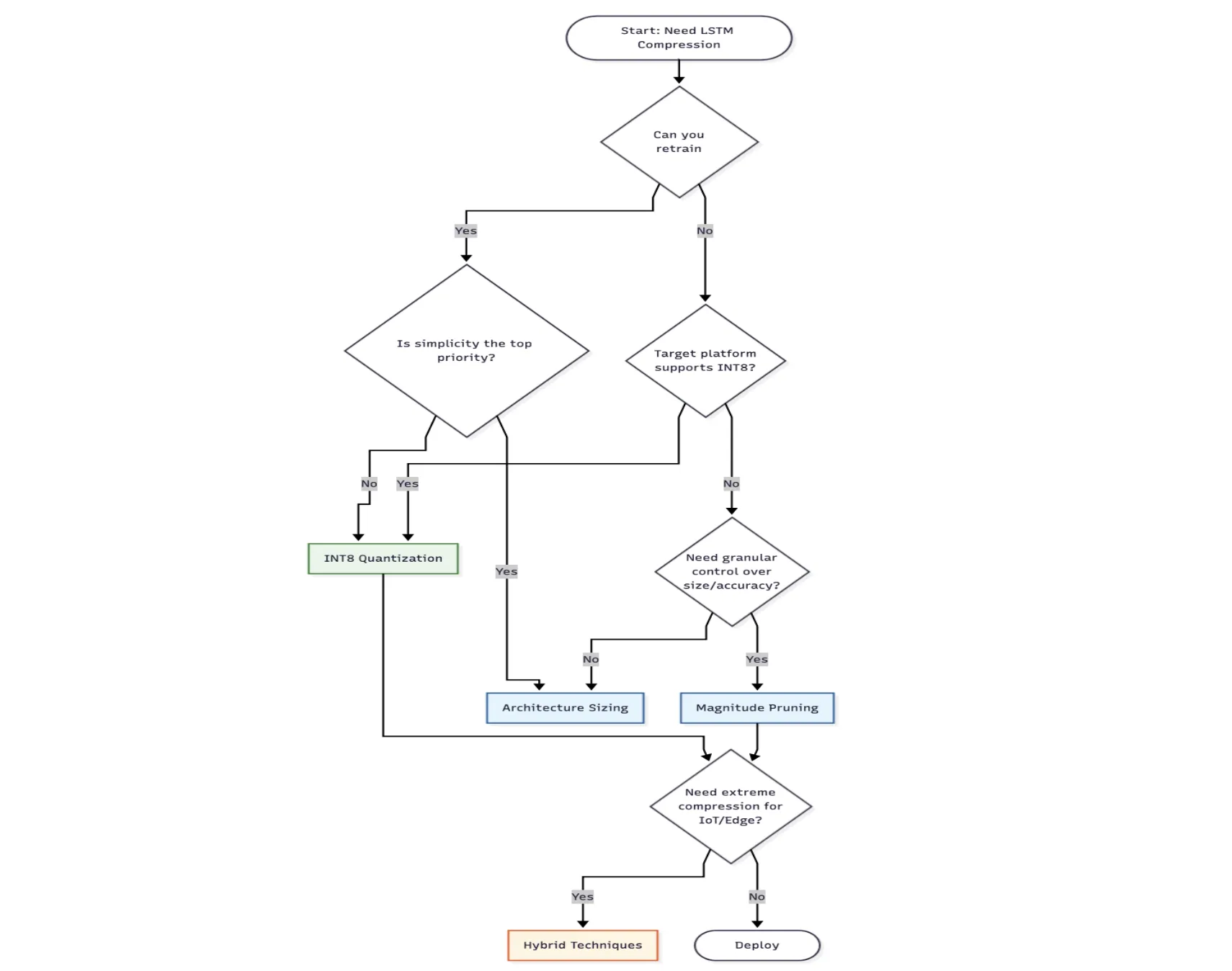
There can be some practical constraints when it comes to deploying the AI models for retail environments. Retail environments can include store-level systems, edge devices, and budget conscious setup, especially for small to medium-sized retail companies. One such major use case is demand forecasting for inventory management or shelf optimization. It requires the deployed model to be small, fast, and accurate. That is exactly what we will work on here. In this article, I will walk you through three compression techniques step by step. We will start by building a baseline LSTM. Then we will measure its size and accuracy, and then apply each compression method one at a time to see how it changes the model. At the end, we will bring everything together with a side-by-side comparison. So, without any delay, let’s dive right in.…