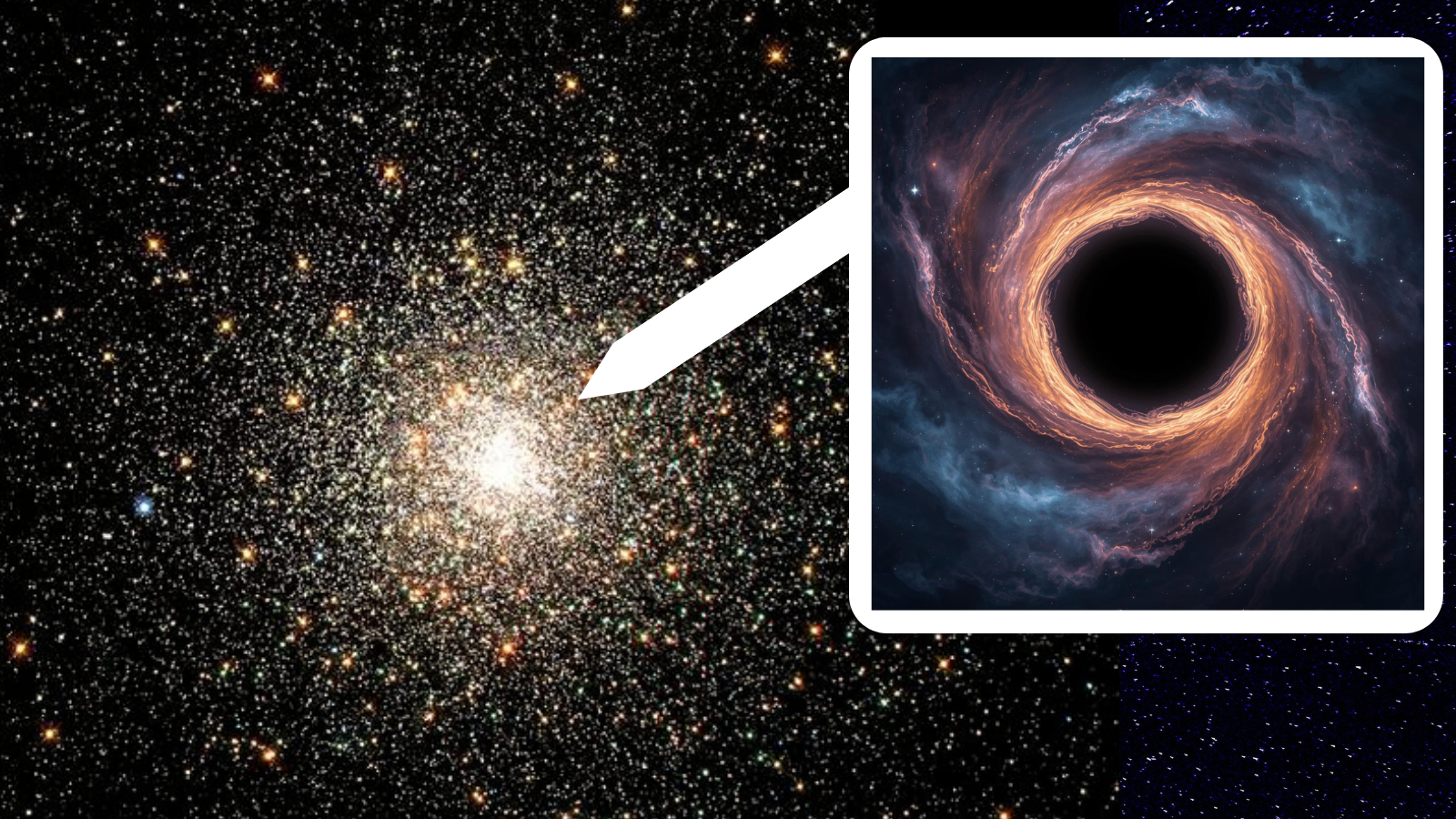
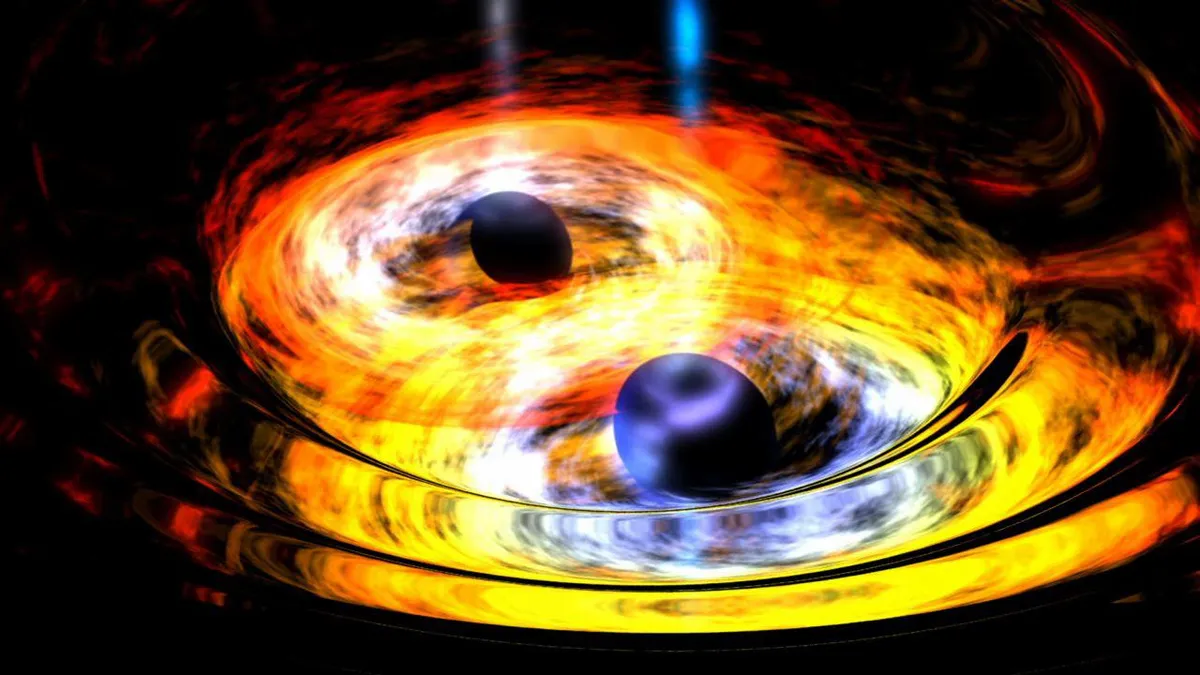
The dense stellar environment of the globular cluster M80 could drive the formation of massive black holes. (Image credit: NASA, ESA, STScI, and A. Sarajedini (University of Florida)/Robert Lea) Scientists have discovered that the universe's most massive black holes may form in the densest of stellar environments, or so-called globular clusters. It is in these clusters where violent collisions are common, suggesting a chaotic new origin for these cosmic titans of our cosmos. Scientists pinpointed this potential birthplace of massive black holes by studying ripples in space and time — unified as a single entity called spacetime — otherwise known as gravitational waves . The waves were heard" on Earth by our highly sensitive gravitational wave detectors, the Laser Interferometer Gravitational-Wave Observatory ( LIGO ), KAGRA and Virgo. Gravitational waves were first predicted by Albert Einstein back in 1915 as part of his theory of gravity, known as general relativity .…