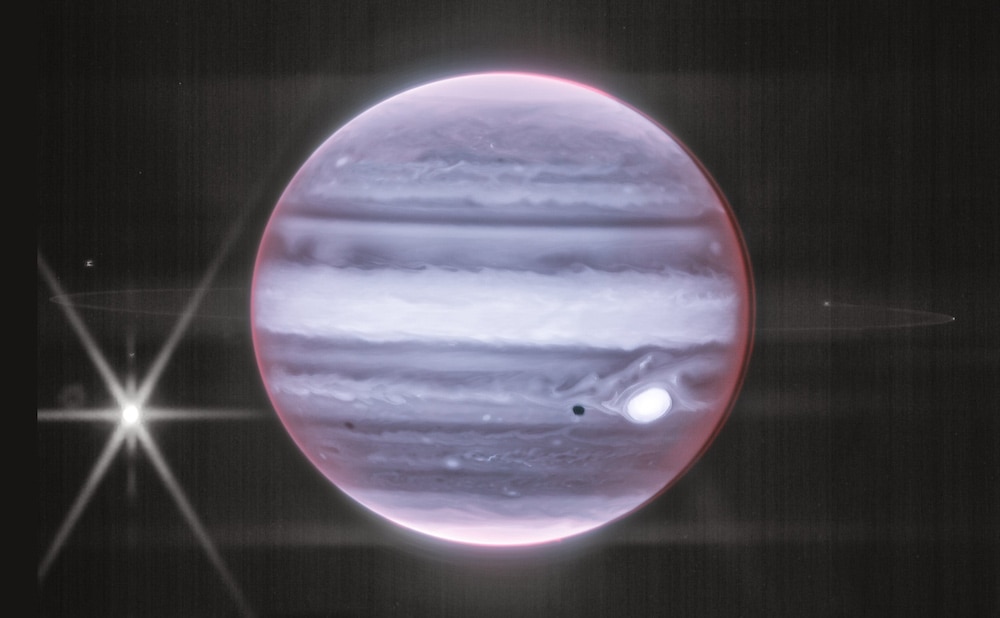
On July 12, 2022, the first images and spectra from JWST were released , and were absolutely spectacular. Galaxies, stars, nebulae, and even observations of the atmosphere of a distant exoplanet — all incredible, and all just a hint at what the space-based observatory will do in the coming years. But even before those images were released astronomers and engineers were busily running JWST through a series of tests, including seeing how well it could track objects. JWST is in an Earth-like orbit around the Sun, so deep-space objects only appear to move about 1° per day (360° around the Sun in a year divided by 365 days per year). That’s not too hard. But solar system objects move much faster. For one thing they orbit the Sun, so they move against the background stars, plus the Earth — and therefore JWST — also orbit faster than the outer planets, so that adds to their motion * . JWST needs to be able to track these targets if astronomers can hope to observe them.…