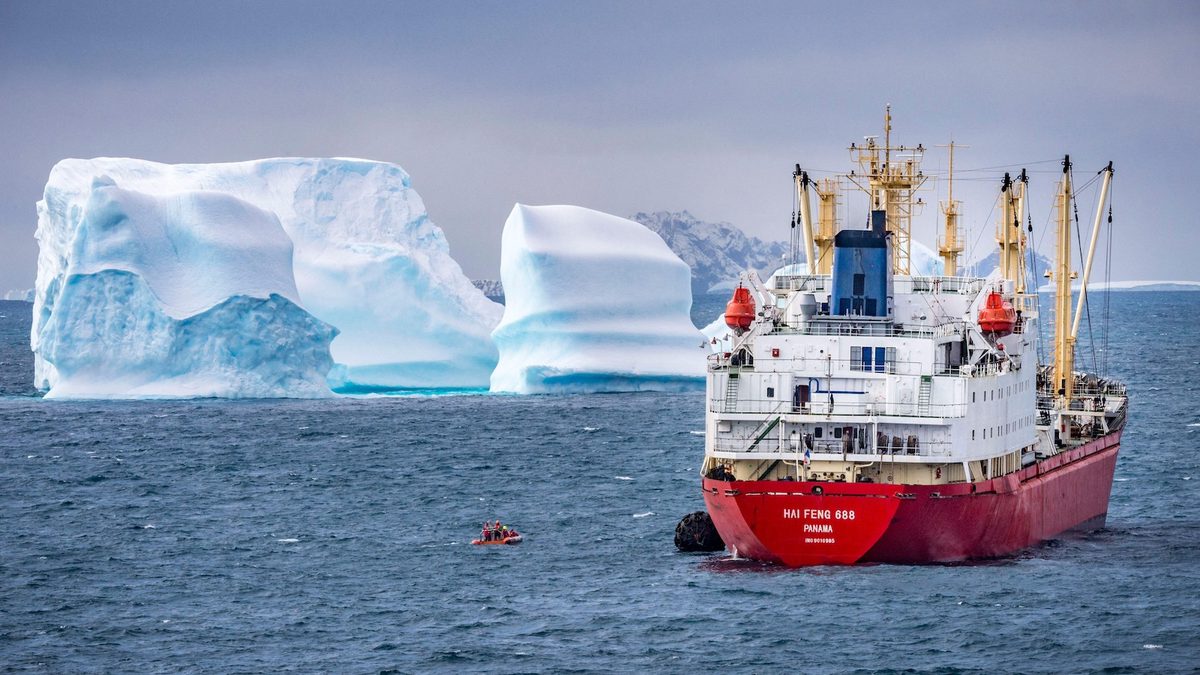
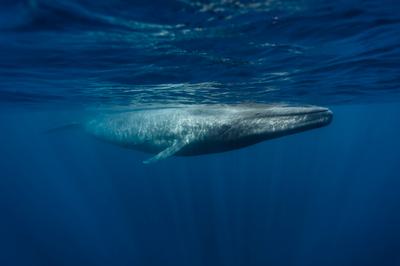
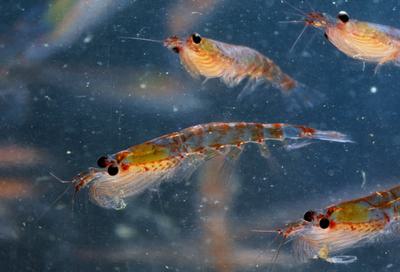
In the icy waters of the Southern Ocean, whales and other marine mammals rely on krill to survive. But as the market for human dietary supplements and animal feeds booms, and climate change reduces krill populations, scientists worry there may not be enough to go around. Maxing out at around 200 tons, the blue whale is not only the largest animal on the planet, it is also the largest animal ever to exist. These creatures become so massive by eating a diet comprised almost entirely of krill, the translucent, thumb-sized organisms that thrive in the frigid waters of Antarctica. Blue whales are baleen feeders: In place of teeth they have baleen plates, made from keratin, that serve as a sieve. Swimming toward huge concentrations of krill, they open their triple-hinged jaws to gulp in huge volumes of water and prey, then filter out the water. The only baleen whale that almost exclusively eats krill, blues can consume as much as 16 metric tons of the shrimp-like crustaceans in a day.…